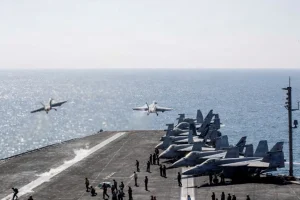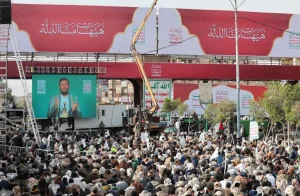

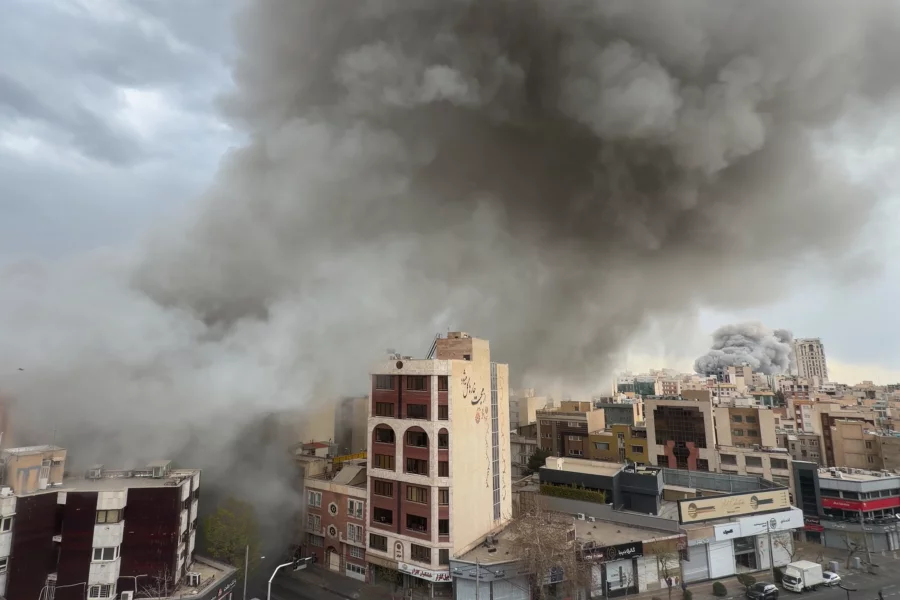
The United States has launched another wave of airstrikes against military targets in Iran following the announcement of the death of an additional American service member, as fighting between Washington and Tehran continues to intensify across the Middle East.
U.S. military officials said the latest service member was killed in Iraq during the controlled detonation of a downed Iranian drone. The announcement comes as the Pentagon continues to investigate the fate of another service member who had previously been reported missing following an earlier attack in Jordan.
Speaking after the latest military operation, President Donald Trump said the United States had carried out another round of strikes in response to attacks on American forces.
According to U.S. Central Command, the overnight operation targeted Iranian military command centers, missile and drone launch facilities, air defense systems, coastal surveillance sites, maritime capabilities, and military communications networks. The latest attacks mark the ninth consecutive night of U.S. air operations against Iranian military infrastructure.
Iranian state media reported explosions in several regions of the country but did not immediately provide casualty figures or damage assessments.
Meanwhile, regional tensions widened as Iran launched missiles toward Jordan, prompting Jordanian air defense systems to intercept multiple incoming projectiles. Jordanian authorities reported no casualties or significant damage, while Israeli officials warned that missile debris posed a potential risk to communities near the Jordanian border.
Elsewhere, Bahrain, Kuwait, and other Gulf states activated air defense systems amid concerns over additional Iranian missile and drone attacks. The U.S. Embassy in Bahrain also issued a security alert warning of possible threats in the country’s capital.
Iran’s Atomic Energy Organization said one of the U.S. strikes hit the construction site of a planned nuclear power facility in southwestern Iran. However, the International Atomic Energy Agency stated that the site was still in the early stages of construction and contained no nuclear material during its last inspection.
The conflict is also placing increasing pressure on global energy markets. A commercial vessel caught fire in the Strait of Hormuz as security risks continue to threaten one of the world’s most important oil shipping routes. The disruption has contributed to rising crude oil prices and renewed concerns over global energy supplies.
The latest escalation follows the collapse of an interim agreement that had temporarily reduced hostilities between the United States and Iran. Since then, both sides have exchanged repeated military strikes, while shipping traffic through the Strait of Hormuz has been significantly disrupted.
Despite the continued military operations, Secretary of State Marco Rubio said the United States remains open to negotiations if Iran demonstrates a genuine willingness to pursue diplomacy.
Iranian authorities say dozens of people have been killed and hundreds more injured in the latest U.S. strikes, though those figures have not been independently verified.
As military operations continue and diplomatic prospects remain uncertain, regional leaders are closely monitoring whether the conflict could spread even further across the Middle East.
Swati Montel, Reporting for SNEWS TV.