
Saudi Arabia is facing a major security crisis following a deadly attack on King Khalid International Airport in Riyadh that reportedly killed at least 12 people and injured more than 300 others. The incident has triggered condemnation from international leaders, heightened security concerns, and a warning from the Saudi-led military coalition that it will respond decisively.
Saudi officials have blamed the attack on Yemen’s Iran-backed Houthi movement, although the group had not immediately claimed responsibility. A deadly strike on Saudi Arabia’s capital has left at least 12 people dead and 309 others injured, according to the country’s General Authority of Civil Aviation.
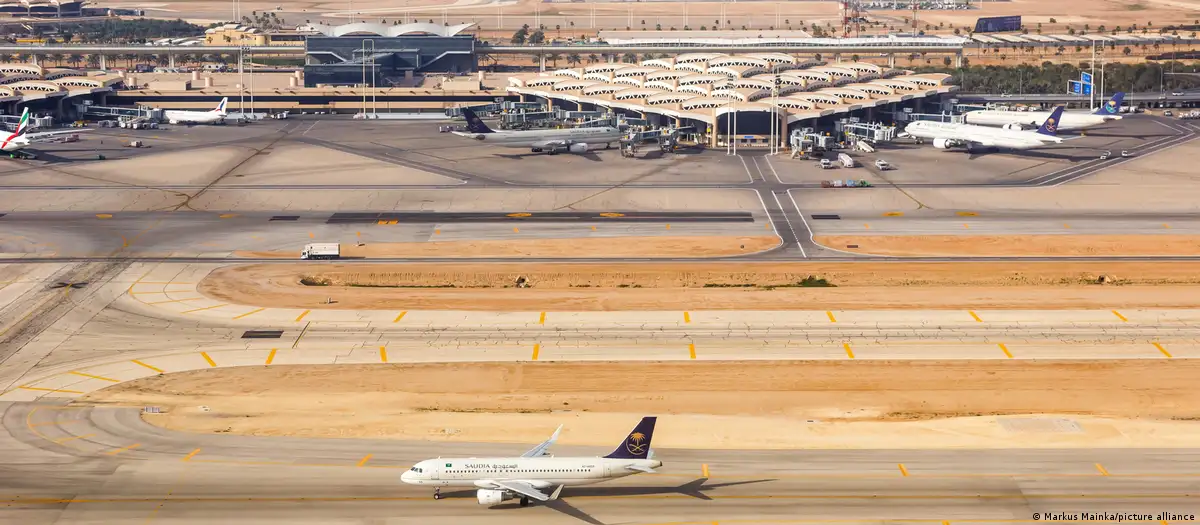
The attack targeted King Khalid International Airport in Riyadh on Saturday, raising serious concerns about the safety of civilian aviation facilities as hostilities involving Saudi Arabia and Houthi forces in Yemen continue to intensify.
In its initial statement, the aviation authority said the airport had been targeted amid what it described as continuing attacks against civilian aviation facilities across the kingdom.
Authorities later confirmed that the victims included four Saudi nationals, two Bangladeshi nationals, and citizens of the United States, Egypt, Jordan, Syria, Palestine, and Sudan.
The authority said those injured were receiving medical treatment at several hospitals. Airport operations were suspended until further notice as officials responded to the emergency. The scale of the casualties has made this one of the deadliest reported attacks on Saudi territory in more than a decade.
On Sunday, the Saudi-led military coalition supporting Yemen’s internationally recognized government accused the Houthi movement of carrying out the attack.
Coalition spokesperson Turki al-Maliki condemned the incident as a war crime and promised a decisive response.
The coalition also reported that a projectile had landed near King Fahd International Airport in Dammam, in eastern Saudi Arabia, raising further concerns about the security of the kingdom’s aviation infrastructure.
However, the Houthis had not immediately issued a direct claim of responsibility for the Riyadh airport attack.
Instead, the group’s military spokesperson, Yahya Saree, reposted an earlier message suggesting that only pre-approved humanitarian flights would be permitted to land at Riyadh airport. The message added to speculation about the group’s intentions, but did not independently establish responsibility for the strike.
The attack has drawn strong reactions from Washington and the United Nations.
U.S. President Donald Trump described the strike as unacceptable and said he would speak with Saudi Crown Prince Mohammed bin Salman, the kingdom’s de facto leader.
Asked whether the United States might participate in further military action against the Houthis, Trump said Washington would assess the situation before making a decision.
U.S. Secretary of State Marco Rubio also condemned the attacks, confirming that an American citizen had been killed.
In a statement published on social media, Rubio said the strikes demonstrated a disregard for innocent civilian life and called for them to stop immediately.
United Nations Secretary-General António Guterres said he was deeply shocked by the reported attack. He emphasized that assaults on civilians and civilian infrastructure violate international law and called for the attacks to cease.
Reports from Saudi Arabia described a major emergency response across Riyadh.
According to accounts cited by international news agencies, a missile struck a passenger terminal, leaving numerous people wounded. Medical personnel were reportedly mobilized at hospitals throughout the capital as injured passengers and other victims were transported for treatment.
Several Western embassies, including those representing Germany, the United States, Canada, and Spain, warned their citizens about the situation and urged them to avoid the airport.
The disruption also affected air travel. Etihad Airways and Qatar Airways canceled multiple flights connecting their respective hubs with Riyadh, while Kuwait Airways also canceled flights on Saturday. Some cancellations were reported to extend into Monday.
Travelers were advised to check directly with their airlines and follow official security instructions before attempting to reach the airport.
The airport attack comes amid a renewed escalation in the long-running conflict involving Yemen’s Houthi movement and the Saudi-backed Yemeni government.
The Houthis, who are supported by Iran, have carried out attacks against targets in Saudi Arabia in recent days, including reported strikes affecting Riyadh airport earlier in the week.
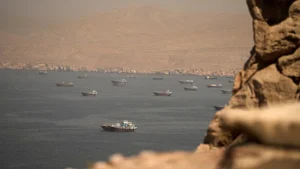
The broader conflict has also intensified around strategic locations along Yemen’s Red Sea coast. Saudi-led coalition forces have provided air support to Yemeni government troops seeking to recover territory from Houthi forces.
The latest escalation follows the breakdown of a peace arrangement and renewed efforts by Yemen’s Saudi-backed government to regain control of areas held by the Houthis, particularly in strategically important regions near the Bab al-Mandab Strait.
That waterway is a major international shipping corridor linking the Red Sea with the Gulf of Aden and the wider Indian Ocean. Continued fighting in the area could therefore have consequences extending beyond Yemen and Saudi Arabia, including risks to regional stability, commercial aviation, and international trade.
For now, questions remain over the precise circumstances of the Riyadh airport attack, the full extent of the damage, and whether the United States will become more directly involved in military operations against the Houthis.
Saudi Arabia has promised a decisive response, while international officials are calling for an immediate halt to attacks on civilians and civilian infrastructure.
As the situation develops, the priority remains the treatment of the injured, the protection of civilians, and efforts to prevent a wider regional confrontation.
Reporting for SNEWS TV by Swati Montel.