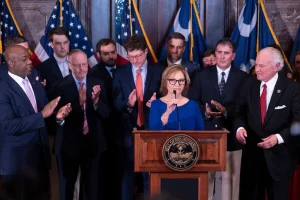


The U.S. House of Representatives has approved legislation that could permanently end the twice-yearly practice of changing clocks for daylight-saving time. The measure now heads to the Senate, where lawmakers will decide whether the proposal becomes law.
The United States House of Representatives has passed legislation that would make daylight-saving time permanent across much of the country, eliminating the long-standing practice of changing clocks each spring and fall.
The bill passed with strong bipartisan support and now moves to the U.S. Senate for consideration. If approved by the Senate and signed into law, most Americans would no longer set their clocks back each autumn, while states would continue to have the option of opting out of year-round daylight-saving time under existing law.
Supporters of the proposal say ending the twice-yearly clock changes could improve public health and safety by reducing sleep disruption, lowering the risk of traffic accidents, and decreasing workplace injuries linked to changes in sleep patterns.
Advocates also argue that maintaining daylight-saving time throughout the year would provide more daylight during evening hours, potentially benefiting businesses, outdoor recreation, and consumer activity during the winter months.
President Donald Trump has repeatedly expressed support for ending the seasonal clock changes, calling for a permanent national approach to daylight-saving time. However, the proposal continues to face opposition from some lawmakers.
Critics argue that permanent daylight-saving time would result in later sunrises during the winter, leaving many children traveling to school and commuters beginning their day before daylight in many parts of the country.
An alternative proposal that would have made standard time permanent instead of daylight-saving time was considered but did not receive enough support in the House. The aviation industry has also expressed concerns about the legislation.
Airlines representing major U.S. carriers say any nationwide time change would require careful coordination with international flight schedules, aircraft operations, airline crews, and global transportation systems to minimize disruptions.
The legislation follows years of debate over the issue. The U.S. Senate previously approved similar legislation in 2022, but the measure did not advance in the House during that session of Congress.
Currently, most states observe daylight-saving time, although Hawaii and most of Arizona do not participate in the seasonal clock changes.
The United States has experimented with year-round daylight-saving time before, including during World War II and again in the 1970s as part of efforts to reduce energy consumption. Those earlier experiments were eventually discontinued after concerns about dark winter mornings and public opposition.
Supporters of the current legislation argue that modern work schedules, commuting patterns, and lifestyles have changed significantly, making a permanent time system more practical than in previous decades.
The proposal will now move to the Senate, where lawmakers are expected to continue debating the potential benefits and challenges before any final decision is made.
If enacted, the legislation would mark one of the most significant changes to the nation’s timekeeping system in decades.
Katy Moore, Reporting for SNEWS TV.