
The Ebola outbreak in the Democratic Republic of Congo has reached another province, with authorities confirming two cases in North Ubangi, in the country’s northwest. The development raises fresh concerns about containing the epidemic as infections continue to emerge across several regions and beyond Congo’s borders.
NORTH UBANGI REPORTS TWO CASES
According to Congolese health authorities, two men in their twenties tested positive for Ebola in the Wapinda health zone of North Ubangi province. One of the patients has died.
North Ubangi borders the Central African Republic and lies between South Ubangi and Bas-Uele, two provinces previously affected by the outbreak.
The confirmation brings the number of affected Congolese provinces to eight. Health officials are facing additional challenges because poor road infrastructure and limited communications make access to some communities difficult.
THOUSANDS OF CASES AND DEATHS REPORTED
The scale of the epidemic remains alarming. Figures cited in the supplied reports indicate that more than 9,400 cases and over 4,500 deaths have been recorded since the outbreak was declared in mid-May.
Eastern Congo’s Ituri province remains the main centre of transmission, accounting for nearly three-quarters of confirmed cases in the government’s most recent data. Overall, 66 health zones have reportedly been affected.
The outbreak has also extended beyond Congo. Uganda previously reported infections but has since declared itself free of the disease, while Kenya has continued to report cases. The supplied reports differ on Kenya’s latest total, with one citing seven cases and another citing seven infections confirmed by Saturday. The latest official figure should therefore be verified before broadcast.
No confirmed Ebola cases in the Central African Republic were reported in the supplied article.
HEALTH AUTHORITIES FACE MAJOR OBSTACLES
World Health Organization Regional Director for Africa Mohamed Yakub Janabi has warned that although transmission may be declining in certain locations, the outbreak is spreading geographically.
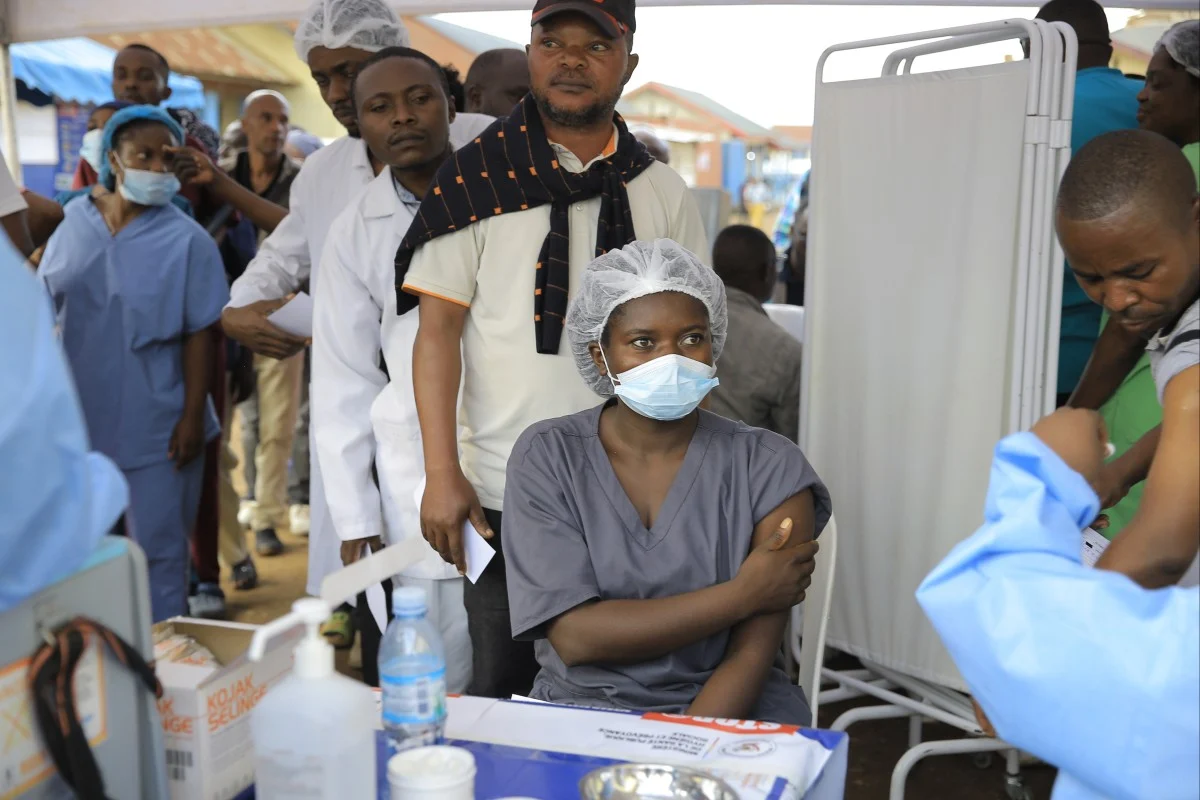
Janabi also identified a major challenge: persuading infected people to seek medical attention. Some patients die in their communities without reaching health facilities, complicating efforts to detect cases and prevent further transmission.
The response is further hindered by population movements, armed conflict, mistrust of health services and difficult working conditions for frontline medical personnel. Violence in areas near the Central African Republic border has displaced residents, with some seeking refuge in Congolese communities where Ebola is now spreading.
THE VIRUS AND THE RESPONSE
The outbreak is attributed to the Bundibugyo virus, a rare type of Ebola virus for which there is currently no approved vaccine or specific treatment, according to the supplied report.
Health authorities must therefore rely on early detection, infection prevention, isolation and supportive medical care, alongside community engagement and coordinated surveillance, to reduce transmission and save lives.
The expansion into North Ubangi underscores the importance of reaching remote communities and ensuring that people with symptoms seek medical assistance promptly.
CLOSING
With Ebola now confirmed in eight provinces, the challenge for the Democratic Republic of Congo is not only to reduce infections in existing hotspots but also to prevent the virus from establishing new chains of transmission.
Improved access to healthcare, public cooperation and coordinated action across borders will be essential in the fight against this deadly epidemic.
Reporting by Ehud Jones For SNEWS TV.
SNEWS TV — Bringing You the News That Matters.