
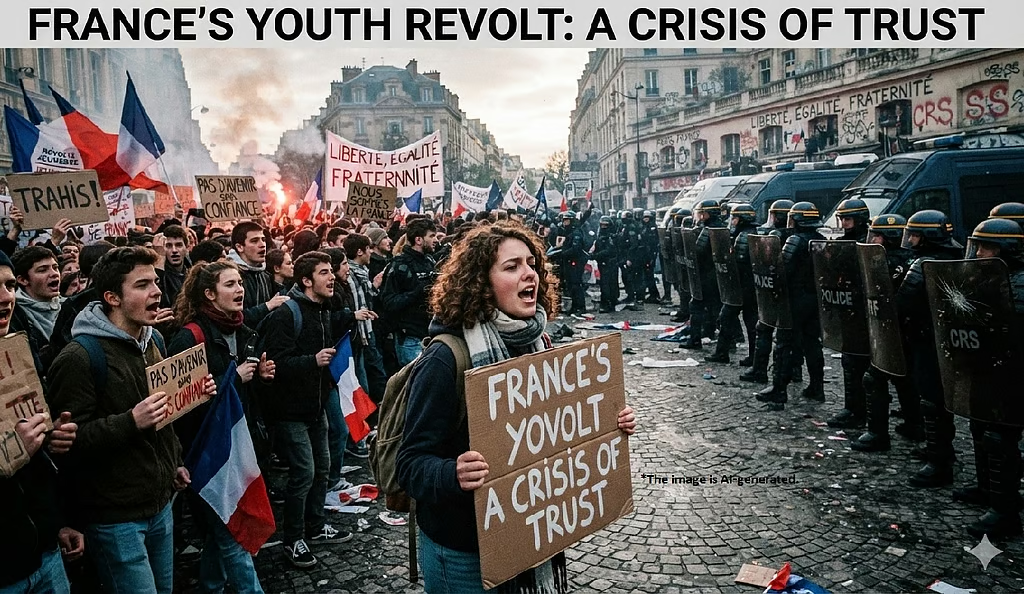
France is facing a growing political and social crisis following a wave of violent riots that swept across several major cities, causing extensive property damage and prompting renewed questions about the country’s political leadership.
Prime Minister Sébastien Lecornu acknowledged the seriousness of the situation on Monday, describing the country’s predicament as a major problem. But beyond the destruction in the streets, France is confronting a broader combination of public frustration, political divisions, economic uncertainty and declining confidence in government institutions.
With further demonstrations expected and a presidential election approaching next spring, the unrest could mark the beginning of a prolonged period of instability.
VIOLENT RIOTS SPREAD ACROSS MAJOR CITIES
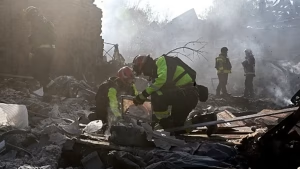
The latest wave of unrest reportedly affected Paris, Marseille, Bordeaux and other French cities. Looting and vandalism caused significant damage, while a fire severely damaged the historic city hall in Limoges, leaving its clock tower collapsed.
According to the supplied report, approximately 2,400 people were arrested during the weekend violence. The scale of the disorder also prompted Interior Minister Laurent Nuñez to offer his resignation following criticism of the authorities’ response.
The riots followed weeks of student demonstrations over deteriorating school facilities, teacher shortages and limited employment opportunities for young people.
Earlier protests reportedly resulted in more than 6,000 arrests and damage to over 100 schools.
Further demonstrations are planned, while labor unions are preparing strike action in November. These developments raise concerns that the unrest could continue into the winter months.
POLITICAL LEADERSHIP UNDER PRESSURE
President Emmanuel Macron condemned the violence in a televised address on Sunday. However, critics argued that his remarks offered few concrete measures to address the underlying causes of the crisis.
Macron also warned against politicians exploiting the disorder for political gain before departing for a diplomatic visit to Gulf countries.
Prime Minister Lecornu, meanwhile, exchanged accusations with political opponents over responsibility for the unrest.
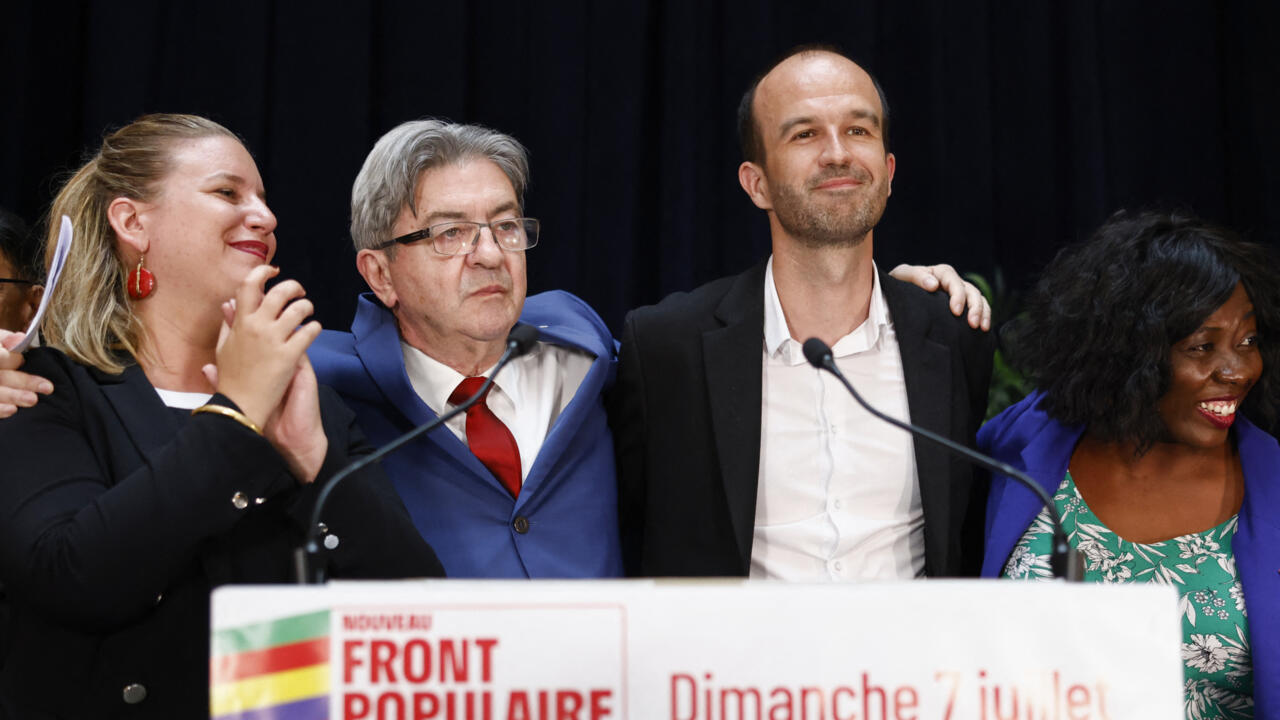
Far-left leader Jean-Luc Mélenchon criticized the government’s policing tactics, arguing that they had contributed to the escalation. Lecornu rejected that position, insisting that political leaders must not justify or excuse violence.
The disagreement illustrates the deep divisions within France’s political establishment at a time when the government is struggling to restore public confidence.
FAR-RIGHT AND FAR-LEFT PARTIES SEEK TO CAPITALIZE
The crisis is unfolding ahead of France’s next presidential election, scheduled for 2027.
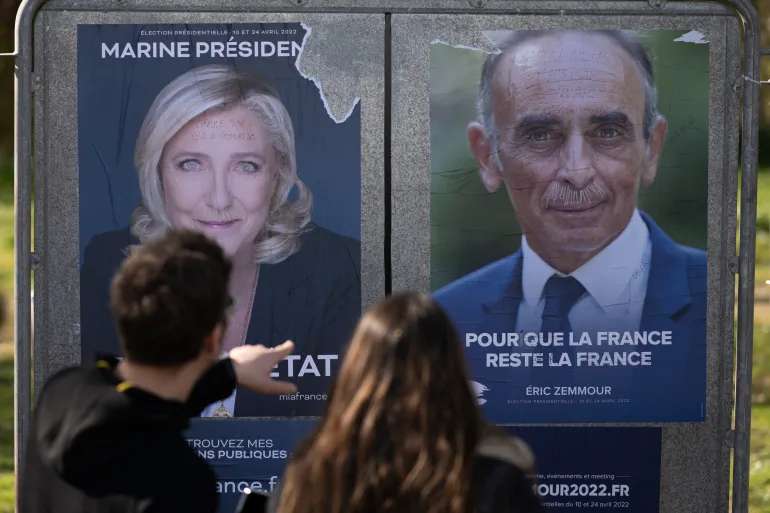
Jordan Bardella, president of the National Rally, has called for certain far-left extremist organizations and Black Bloc groups to be designated as terrorist organizations.
On the other side of the political spectrum, Mélenchon’s France Unbowed movement has criticized the government’s approach to policing and public order.
These competing positions reflect a political landscape in which both the far right and the far left are attempting to attract voters dissatisfied with the established political center.
POLITICAL FRAGMENTATION DEEPENS
France’s current instability is also linked to the fragmentation of its parliament following snap elections called by Macron in 2024. The elections failed to produce a stable governing majority, complicating efforts to pass legislation and agree on national budgets.
Analysts cited in the supplied article warn that the weakening of the political center could make the next presidential election particularly consequential.
With several centrist candidates potentially competing for support, the vote could become increasingly polarized between candidates representing sharply different political visions.
Public frustration is already widespread. An Ipsos-BVA poll cited in the article found that 85 percent of respondents believed France was in decline, while 98 percent expressed dissatisfaction with the country’s current situation.
These figures reflect the findings of that particular survey, rather than necessarily representing the views of every segment of French society.
ECONOMIC PRESSURES COMPOUND THE CRISIS
Beyond the political turmoil, France is confronting significant economic challenges. Economic growth has been sluggish, businesses have become more cautious about investment, and higher interest rates have added to financial uncertainty.
Farmers have also faced difficult conditions following an exceptionally hot and dry summer, while elevated global energy prices have contributed to inflationary pressures. Tourism, an important source of national revenue, could face additional challenges if images of violence discourage international visitors. Government debt is another major concern.
According to figures cited in the supplied article, France’s public debt reached approximately 119 percent of gross domestic product in the second quarter of 2026, substantially exceeding the European Union’s reference level of 60 percent.
The country is also expected to issue a record volume of medium- and long-term government bonds in 2027 to finance its borrowing needs.
Investors have become increasingly sensitive to France’s political uncertainty, with the reported yield on its 10-year government bonds reaching 4.9 percent on Monday.
Economists warn that prolonged political deadlock could make it harder for future governments to control public spending, restore confidence and support domestic demand.
A CRISIS OF CONFIDENCE IN FRANCE’S FUTURE
The current unrest has revived a longstanding debate about France’s international standing and national identity.
Former President Charles de Gaulle championed the idea of French grandeur — the ambition for France to maintain an influential and independent role on the world stage. When Macron entered the presidency, he was widely presented by supporters as an alternative to the pessimism surrounding France’s future.
Nearly a decade later, however, the country faces renewed doubts about its political direction. The supplied article places Macron’s approval rating at approximately 15 to 17 percent, reflecting the depth of dissatisfaction reported in recent polling.
The challenge facing France is therefore larger than restoring order after a weekend of riots. It involves rebuilding trust in public institutions, addressing economic pressures, improving opportunities for young people and finding a workable political consensus.
France stands at a critical moment as social unrest, political fragmentation and economic uncertainty converge ahead of the 2027 presidential election.
The immediate priority is to restore public order and protect communities. But lasting stability will require more than policing alone. It will also depend on the government’s ability to respond to public grievances, address economic concerns and rebuild confidence in the country’s political institutions.
Whether France can overcome these challenges remains an open question as the country prepares for a potentially turbulent political year.
Reporting by Sandra Lomami For SNEWS TV.