
Saudi Arabia has postponed its flagship annual investment conference until 2027 following a series of deadly attacks attributed to the Iran-backed Houthi movement. The decision affects a major international gathering expected to bring together some of the world’s most influential business leaders, investors and financial executives in Riyadh.
CONFERENCE POSTPONED AMID SECURITY CONCERNS
Organizers of the Future Investment Initiative, widely known as Davos in the Desert, have postponed the event’s tenth edition, which had been scheduled to take place in Riyadh from October 26 to 29.
The announcement comes amid heightened security concerns following recent Houthi attacks on Saudi territory.
Dr. Maha bint Mishari Al Saud, chief executive of the Future Investment Initiative Institute, said the postponement reflects the organization’s commitment to its partners, speakers and delegates.
She explained that organizers want the tenth edition to meet the high standards expected of such a significant milestone. The institute said new dates would be announced, although the supplied report indicates the event has been postponed until next year.
GLOBAL BUSINESS LEADERS EXPECTED TO ATTEND
The conference was expected to attract prominent figures from international finance, technology and investment. Among those listed as speakers were Yasir Al-Rumayyan, governor of Saudi Arabia’s Public Investment Fund; Meta President Dina Powell McCormick; JPMorgan Chase Chief Executive Jamie Dimon; BlackRock Chief Executive Larry Fink; and Goldman Sachs Chief Executive David Solomon.
The gathering has become an important platform for Saudi Arabia to promote investment opportunities and strengthen economic ties with international businesses.
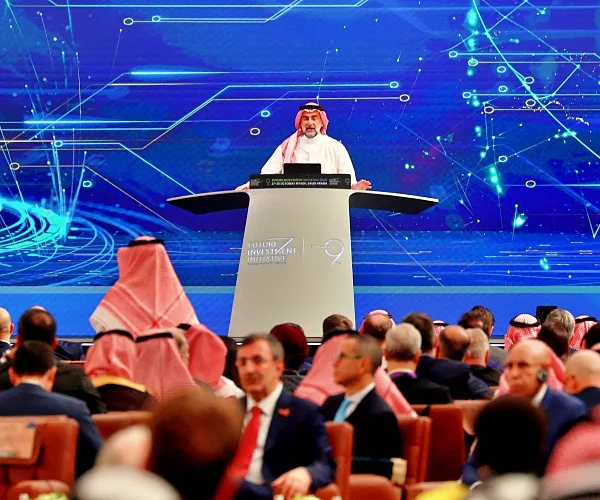
Its nickname, Davos in the Desert, reflects its ambition to serve as a major global forum comparable to the World Economic Forum’s annual meeting in Davos, Switzerland.
The conference also supports Crown Prince Mohammed bin Salman’s economic diversification agenda, which seeks to reduce Saudi Arabia’s dependence on oil by attracting foreign investment and expanding sectors such as tourism, entertainment and sports.
HOUTHI ATTACKS RAISE SECURITY CONCERNS
The Houthi movement has fought Saudi Arabia and a Saudi-led coalition during Yemen’s prolonged conflict. According to the supplied report, the group recently intensified attacks against the kingdom.
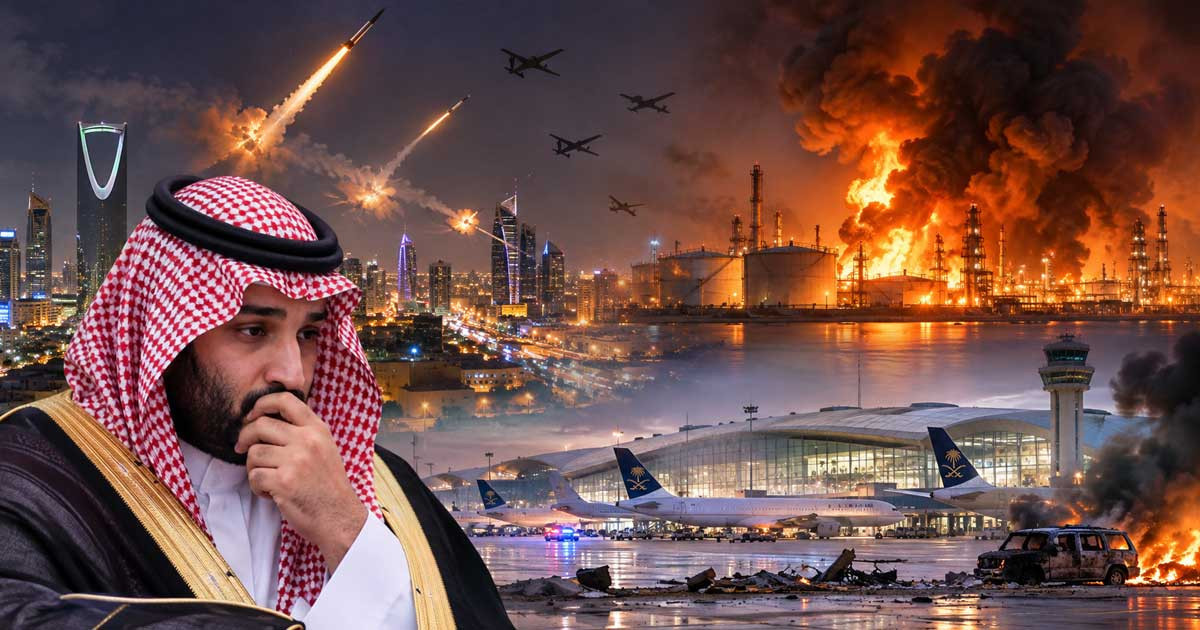
Saudi Arabia’s General Authority of Civil Aviation reported that two attacks targeting King Khalid International Airport in Riyadh killed at least 13 people and injured at least 320 others.
The Houthis also reportedly targeted King Fahd International Airport in Dammam. The group has argued that airports are legitimate targets in its conflict with Saudi Arabia, a position that has heightened concerns about the security of civilian infrastructure.
These developments have added to the uncertainty surrounding major international events and business gatherings in the kingdom.
TRUMP COMMENTS ON POSSIBLE ISRAELI SUPPORT
The situation has also drawn attention in Washington. U.S. President Donald Trump said Friday that Saudi Arabia would welcome support from both the United States and Israel in its confrontation with the Houthis.
Speaking to reporters at the White House, Trump stated that the Saudi government was receptive to Israeli and American assistance.
His remarks come as regional security concerns continue to intersect with diplomatic and military relationships involving Saudi Arabia, Israel, the United States and Iran.
The postponement of the Future Investment Initiative represents a setback for one of Saudi Arabia’s most prominent international business events. While organizers prepare to announce new dates, the broader challenge for the kingdom remains protecting its infrastructure, maintaining investor confidence and advancing its economic diversification plans amid regional instability.
Reporting by Swati Montel For SNEWS TV.