
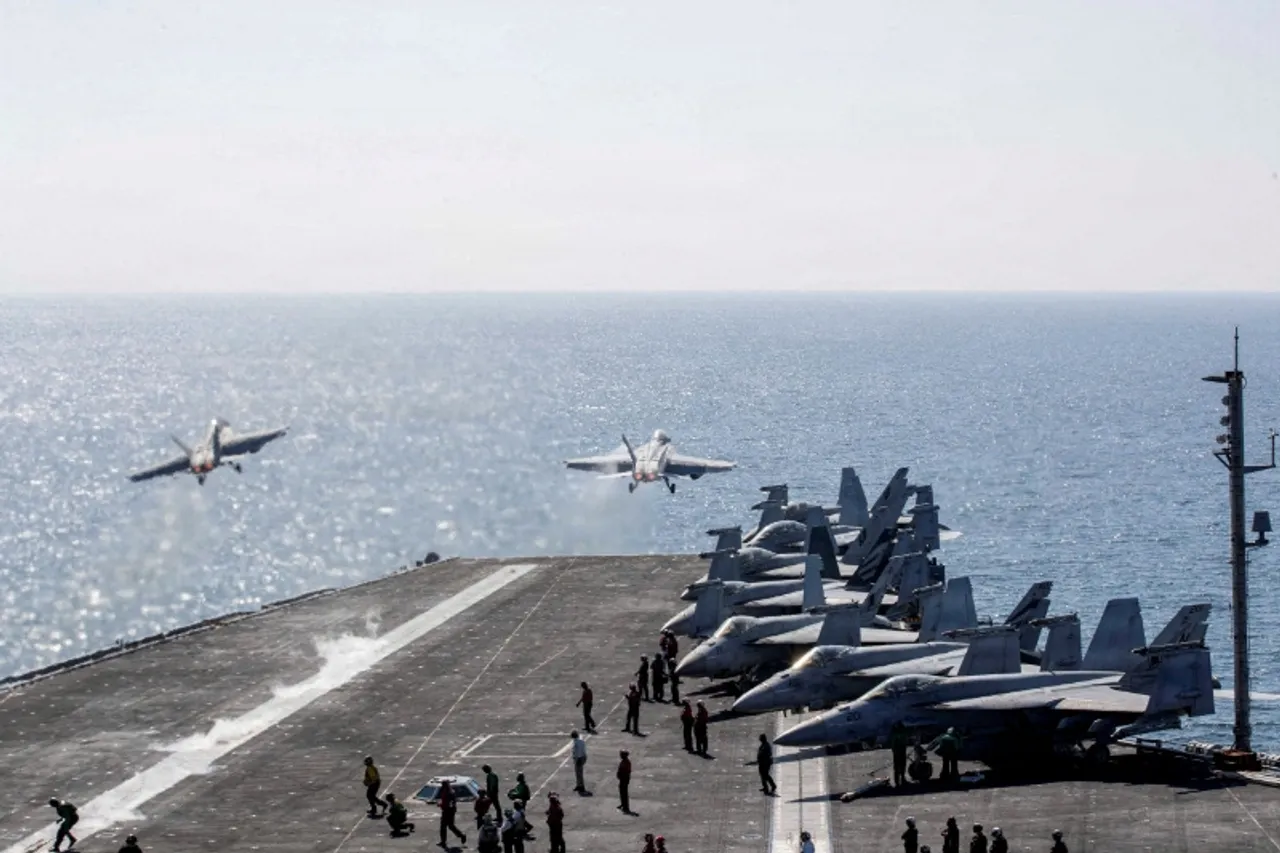
The United States has intensified its military campaign against Iran, launching a new wave of airstrikes deeper into Iranian territory while enforcing a renewed naval blockade in the Persian Gulf, marking another major escalation in the ongoing conflict.
According to U.S. officials, American forces carried out strikes early Thursday against military targets in northern and central Iran, including areas near Tehran and facilities in Semnan Province believed to be linked to Iran’s ballistic missile and aerospace programs. The strikes represent the furthest expansion of U.S. military operations inside Iran since the latest phase of hostilities began.
At sea, the U.S. military said it intercepted a commercial oil tanker sailing toward Iran’s primary oil export terminal on Kharg Island. After accusing the vessel of attempting to violate the U.S.-enforced naval blockade and ignoring repeated warnings, American forces fired on the ship, disabling it without sinking the vessel.
Iran responded before dawn by launching missiles and drones toward Bahrain and Kuwait, further widening the regional conflict and raising concerns that the violence could spread across the Gulf.
The renewed exchange of attacks has effectively collapsed the temporary agreement that had sought to reduce tensions between Washington and Tehran. Iranian officials say recent U.S. strikes have resulted in dozens of fatalities and hundreds of injuries, although those figures have not been independently verified.
The Strait of Hormuz remains at the center of the confrontation. Since the conflict began, Iran has sought to restrict maritime traffic through the strategic waterway, disrupting global energy supplies and contributing to higher prices for crude oil and other commodities.
The United States reinstated its naval blockade after accusing Iran of failing to uphold the terms of the interim agreement. Iranian parliamentary speaker Mohammad Bagher Qalibaf warned that Tehran is prepared for a broader military confrontation if diplomatic commitments are not honored.
Meanwhile, Iran’s Revolutionary Guard issued a warning that energy exports from the region could be disrupted if the blockade continues, declaring that oil and gas shipments would be “for everyone or for no one.”
President Donald Trump maintained that Iran remains interested in reaching a negotiated settlement despite the ongoing military operations. Speaking Wednesday, the president said the United States would soon determine whether diplomacy could prevail or whether the conflict would continue.
President Trump also announced that Iran had released an American citizen who had been detained since 2024, describing the move as a goodwill gesture. Iranian authorities have not publicly confirmed the release.
Military operations also continued elsewhere inside Iran. Additional U.S. strikes reportedly targeted military installations, including an armored infantry brigade in southeastern Iran, as Washington continues to pressure Tehran’s military infrastructure.
Analysts say the Strait of Hormuz remains one of the world’s most strategically important shipping lanes, and any prolonged disruption could have significant consequences for global energy markets. Brent crude oil prices have already climbed sharply since the conflict intensified, reflecting growing uncertainty over the stability of international oil supplies.
As both sides continue exchanging military strikes and diplomatic threats, international observers warn that the Middle East faces an increasing risk of a broader regional war.
Swati Montel, Reporting for SNEWS TV.