
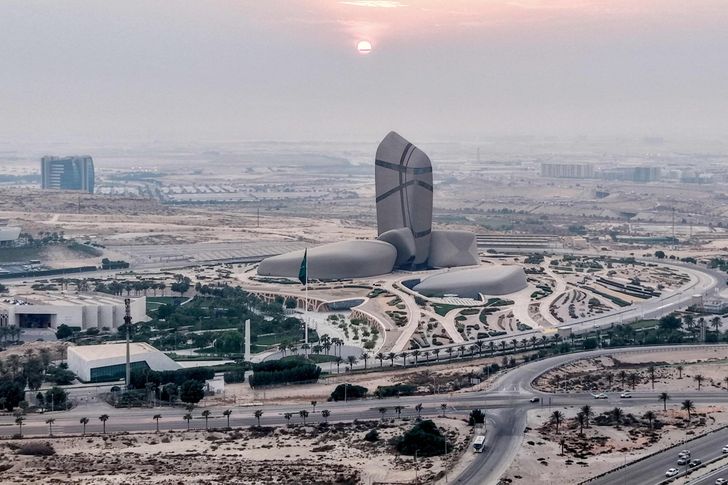
Saudi Arabia is facing a growing security challenge after Iran-backed Houthi rebels reportedly struck the headquarters of state-owned oil giant Saudi Aramco in the eastern city of Dhahran.
The overnight attack damaged the upper floors of a building used by senior company officials, including offices associated with the company’s chief executive. Regional officials said no casualties were reported at the site.
The strike comes amid an escalating exchange of attacks between the Houthis and the Saudi-led coalition, raising concerns about the security of critical energy infrastructure and the potential consequences for global oil markets.
Saudi Arabia’s energy sector has come under renewed pressure following a reported Houthi missile attack targeting the headquarters of Saudi Aramco, one of the world’s largest oil companies.
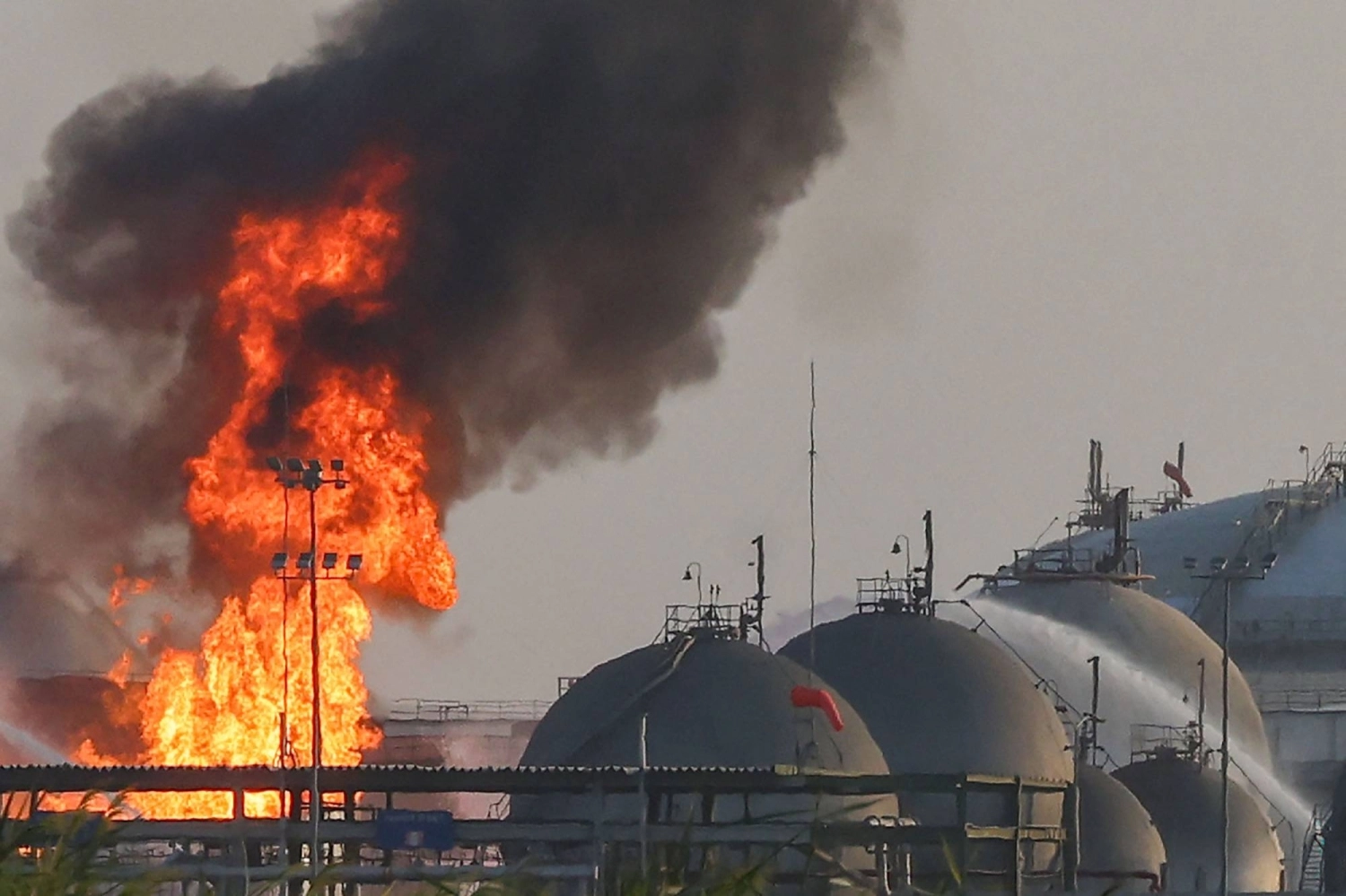
Two regional officials told The Associated Press that the strike hit the company’s headquarters in Dhahran overnight, damaging the building’s top three floors, including offices used by senior executives.
The officials spoke anonymously because they were not authorized to discuss the incident publicly.
Saudi Arabia’s Energy Ministry reported a limited fire at the building on Tuesday night. Aramco had not immediately issued a public response to requests for comment, according to the report.
The attack followed a warning from the Houthis that they were targeting Dhahran with a ballistic missile. It represents a significant escalation because the group has demonstrated an ability to threaten high-profile facilities in a country that plays a central role in global energy supplies.
Although no deaths or injuries were reported at the Aramco headquarters, the incident has intensified concerns about the vulnerability of Saudi Arabia’s energy infrastructure.
The reported strike on Aramco was part of a broader wave of attacks targeting Saudi territory.
According to the Saudi-led coalition, its air defenses intercepted two Houthi drones, four cruise missiles, and one ballistic missile aimed at Riyadh. The coalition also reported intercepting a ballistic missile targeting Dhahran and a cruise missile directed toward Al-Kharj, an important military and industrial center.
Saudi civil defense authorities separately reported that debris from an intercepted attack injured one person in Riyadh. Images released by the state-run Saudi Press Agency showed damage to a building and a vehicle with what appeared to be a missile component lodged in its hood.
The reported attacks have raised concerns about the ability of Saudi defenses to intercept repeated missile and drone barrages across the kingdom.
Saudi Arabia has reportedly sought additional military assistance from its international partners, including the United States. Regional officials cited in the report said the kingdom was facing pressure on its stocks of missile interceptors as attacks continued.
The Houthi movement has portrayed its attacks as retaliation for Saudi-led military operations in Yemen.
The group accused Riyadh of carrying out attacks against Sanaa, Yemen’s capital, and other areas under Houthi control. The Saudi-led coalition is supporting Yemen’s internationally recognized government in an offensive aimed at pushing back the rebels.
The Houthi-run Health Ministry reported that two people were killed in attacks in Yemen on Tuesday, blaming Saudi forces. These casualty claims have not been independently verified in the information provided.
The escalation has revived a conflict that had experienced several years of relative calm. The Houthis have repeatedly targeted Saudi airports, military installations, and energy facilities, while Saudi-led forces have increasingly struck fuel storage sites and other infrastructure in Houthi-controlled areas.
While military operations intensify, civilians in Yemen are facing worsening conditions.
The International Committee of the Red Cross has reported an unprecedented increase in combat casualties along several front lines, including around Marib, areas along the Red Sea coast, and the besieged city of Taiz.
The World Food Program has warned that it can no longer reach more than 600,000 people who depend on assistance in Taiz, according to the article.
Road closures, ongoing clashes, and fuel shortages have disrupted daily life. Residents have reported long queues at shops, declining public transportation, and growing concerns about access to food and other essential supplies.
Schools in Taiz were reportedly ordered to close for a month as insecurity worsened. The humanitarian situation illustrates the wider consequences of the conflict, extending far beyond the immediate targets of military strikes.
Despite the escalation, there are signs of diplomatic efforts to prevent the conflict from expanding further.
Mohamed al-Bukhaiti, a senior Houthi political official, told The Associated Press that Oman had attempted to bring the parties back to negotiations, while Russia and China had also reportedly pursued diplomatic contacts through Iran.
Al-Bukhaiti said the group was open to mediation aimed at ending the war and the blockade affecting Sanaa and Riyadh. However, he indicated that the Houthis wanted a comprehensive settlement rather than a temporary ceasefire.
The group has continued to warn that airports and oil facilities could remain targets.
Meanwhile, the United Nations special envoy for Yemen announced the release of Sami al-Kalabi, a U.N. staff member who had been detained by the Houthis since June 2024.
However, the report says dozens of other U.N. employees remain arbitrarily detained, raising further concerns about the safety of humanitarian and international personnel working in Yemen.
The continuing attacks are also affecting air travel and raising questions about the security of international energy supplies.
According to aviation analytics firm Cirium, more than 3,000 flights scheduled to depart from Saudi airports during the preceding week had been canceled or listed as not operating.
Repeated threats to airports and oil infrastructure have unsettled regional security and contributed to concerns among energy traders and investors.
Saudi Arabia is one of the most important players in the global oil industry, and a sustained disruption to its energy facilities could have consequences beyond the Middle East. However, the precise impact on global oil production and prices will depend on the extent of any operational damage and whether attacks continue.
Yemen analysts say the conflict is increasingly becoming a war of attrition, with both sides attempting to weaken the other’s ability to sustain military operations.
The reported strike on Saudi Aramco’s headquarters marks another dangerous development in the escalating confrontation between the Houthis and the Saudi-led coalition.
Although no casualties were reported at the Aramco building, the attack underscores the risks facing critical energy infrastructure as missile and drone strikes continue across the region.
With diplomatic efforts underway but fighting intensifying, the coming days will be crucial in determining whether the conflict can be contained or whether further attacks will threaten regional stability, civilian safety, and global energy security.
Reporting by Swati Montel For SNEWS TV.