Doubts are growing over a proposed peace agreement between the Democratic Republic of Congo and Rwanda, despite promises from both sides to present a final plan by Friday. Past ceasefires have repeatedly collapsed, and analysts warn that the U.S.-brokered deal may serve American interests more than regional stability.
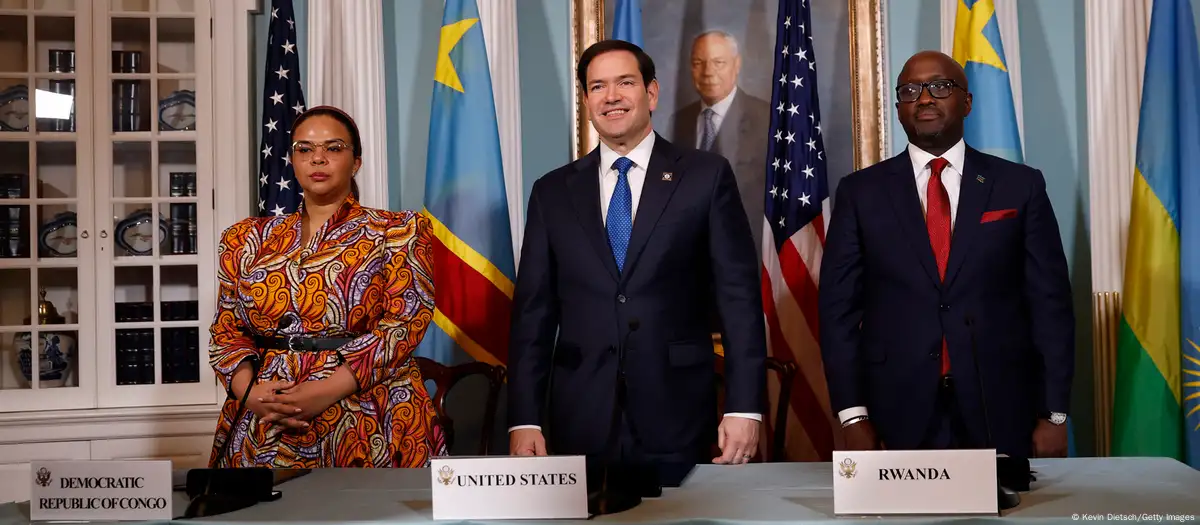
Back in April, foreign ministers from the DRC and Rwanda signed a memorandum of understanding in Washington, witnessed by U.S. Secretary of State Marco Rubio. The agreement opens the door to deeper economic ties, including U.S. investment in mineral-rich regions.”
Rwanda’s foreign minister, Olivier Nduhungirehe, hailed the talks as a step toward peace and economic growth, calling it the start of ‘new regional value chains.’ But critics argue the plan lacks key commitments, including the withdrawal of M23 rebel forces from occupied Congolese territories.
Fiston Misona, a civil society leader in eastern Congo, told SNEWS TV he’s cautiously hopeful but remains skeptical of Rwanda’s intentions. Meanwhile, German analyst Jakob Kerstan says the deal leaves too much unresolved, calling it a ‘status quo’ that favors Rwanda’s strategic gains.
Congolese economist Nico Omeonga voiced deeper concerns, warning the deal prioritizes U.S. and Rwandan access to Congo’s valuable minerals—without clear guarantees that those resources will be processed locally to benefit the Congolese economy.
Governance expert Ntal Alimasi explained the broader stakes, telling SNEWS TV: ‘This is about more than peace—it’s about controlling critical minerals and countering China’s growing influence in the region.’
“The peace push also comes as the DRC faces military and political pressure. Mediation by Qatar earlier this year led to direct talks with the M23 rebel alliance, but some Congolese officials fear this amounts to legitimizing the rebellion.”
Political scientist Bob Kabamba called the move a ‘subliminal defeat’ for Kinshasa, while Jakob Kerstan noted that Congo’s government is publicly framing U.S. mediation as a victory despite losing ground in the east.
U.S. President Donald Trump, eyeing lucrative opportunities in Congo’s resource sector, has thrown Washington’s weight behind the deal, hoping to solidify ties with both Kigali and Kinshasa.
Meanwhile, relations between Rwanda and Belgium remain frozen, after Rwanda severed diplomatic ties in March over what it called Belgium’s hostile stance. Belgian Foreign Minister Maxime Prevot told SNEWS TV that while Rwanda’s security concerns are legitimate, invading a neighbor is not justified.
As fighting flares again in South Kivu, many observers fear history may repeat itself. Since 2021, every ceasefire has been broken within months, and with trust in short supply, hopes for lasting peace remain fragile.
We’ll continue to follow this story as it develops.