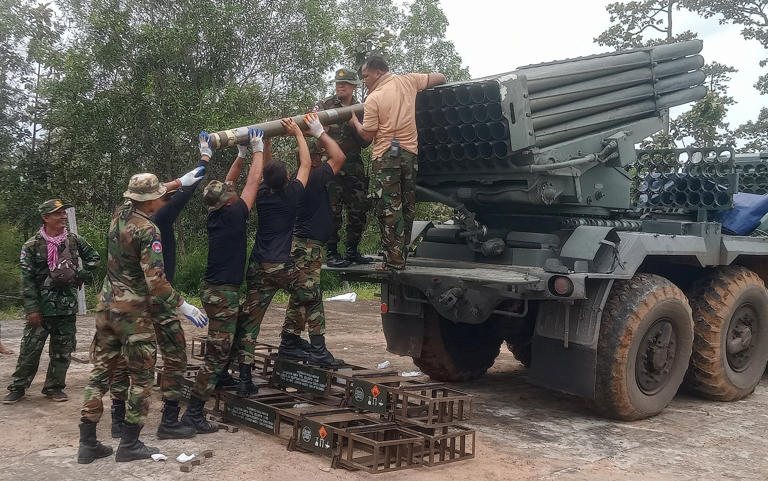
We begin with breaking news from Southeast Asia, where a long-simmering border dispute between Thailand and Cambodia has erupted into violent conflict. At least 34 people are confirmed dead, and more than 200,000 civilians have been forced to flee their homes as tensions between the two nations boil over.
Clashes ignited Thursday morning near the ancient temple complex of Prasat Ta Moan Thom, a thousand-year-old Khmer-Hindu site that straddles the contested border. Each side is blaming the other for firing the first shot, with multiple exchanges of gunfire reported at six separate locations.
Thailand responded to what it says were Cambodian rocket strikes by launching F-16 airstrikes against Cambodian positions. Cambodia has denied initiating the attacks and claims the rocket fire was retaliatory.
The roots of this conflict trace back more than a century to disputed colonial-era maps created during French and Siamese rule. The International Court of Justice ruled in 1962 that the historic Preah Vihear Temple belonged to Cambodia, but Thailand never relinquished its claim to the surrounding land.

Tensions reignited in 2008 when Cambodia attempted to register the temple as a UNESCO World Heritage Site, triggering renewed hostilities. Several deadly skirmishes followed in the years since, and in 2011, the ICJ reaffirmed Cambodia’s claim—but left adjacent zones unresolved.
Violence had largely abated over the past decade. But in May, a Cambodian soldier was killed during a border altercation. Since then, the conflict has escalated rapidly. Landmines have maimed multiple Thai soldiers, with Bangkok accusing Phnom Penh of fresh deployments. Cambodia, in turn, blames unexploded ordnance from earlier conflicts.
The diplomatic fallout has been swift and severe. Both countries have expelled each other’s ambassadors, closed land crossings, and suspended bilateral trade in goods like fuel, produce, and media content.
The crisis deepened after a leaked phone call revealed Thai Prime Minister Paetongtarn Shinawatra making deferential remarks to Cambodian strongman Hun Sen, sparking political backlash at home. The scandal has shaken Thailand’s ruling dynasty and inflamed nationalist sentiment, especially among the military. Observers say both leaders now face domestic pressure to stand firm, making compromise politically risky.
Experts warn that continued violence could destabilize the region. China has voiced “deep concern” and called for peaceful dialogue. The international community, including ASEAN, the U.S., and the European Union, are urging restraint.
U.S. President Donald Trump, in a surprising move, warned he may block future trade deals with both nations unless they de-escalate.
In a bid to avert further bloodshed, leaders from both countries will meet for emergency peace talks this Monday in Malaysia. Whether diplomacy can prevail over nationalism remains uncertain.
We will continue following this story closely. For now, the world watches and waits as two neighbors at war prepare to meet at the negotiating table.
Reporting by Carl Montel.