Serious questions remain about the future of Iran’s nuclear program following U.S.-led air strikes and a wave of diplomatic confusion. Just 72 hours after President Donald Trump authorized air strikes targeting Iran’s key nuclear enrichment sites at Fordow and Natanz, intelligence assessments are at odds over the true scale of destruction—and over what comes next.
President Trump has claimed the nuclear facilities were “obliterated.” However, leaked preliminary findings from the U.S. Defense Intelligence Agency paint a more cautious picture, describing the damage as “moderate to severe,” and warning that confidence in those assessments remains low at this early stage.
Why does this discrepancy matter? Because it determines whether Iran’s ability to enrich uranium to weapons-grade levels has truly been eliminated—or merely delayed.
While Israel insists Iran was on the verge of building nuclear weapons, Tehran strongly denies such ambitions, stating its nuclear program is strictly for peaceful, civilian purposes. Even U.S. intelligence, as recently as March, concluded there was no active Iranian weapons program—contradicting President Trump’s recent statements.
In his first public comments since the strikes, Iran’s Supreme Leader Ayatollah Ali Khamenei downplayed the impact, insisting the attack did “nothing significant.” The head of Iran’s Atomic Energy Organization, Mohammad Eslami, said that preparations for recovery had already been planned, with efforts underway to prevent any disruption in operations.
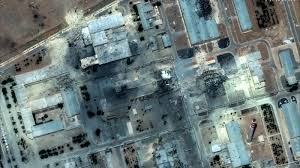
Satellite imagery suggests considerable physical damage at both Natanz and Fordow. And while the U.S. and Israel have reportedly assassinated key Iranian nuclear scientists, Iran claims its enriched uranium stockpiles were removed prior to the bombings—a move that would insulate its nuclear capability.
The International Atomic Energy Agency (IAEA) recently accused Iran of enriching uranium to 60%, dangerously close to the 90% needed for a nuclear weapon. Asked whether uranium was smuggled out before the attacks, President Trump insisted nothing was moved and that strikes hit before evacuation could occur.
Conflicting voices within the U.S. government add to the confusion. CIA Director John Ratcliffe claims Iran’s nuclear infrastructure was destroyed and could take years to rebuild, while the DIA believes the setback could be only months. Trump’s intelligence chief Tulsi Gabbard now aligns with the president, despite earlier testimony that Iran had suspended its weapons program years ago.
IAEA Chief Rafael Grossi offered a more tempered assessment: “Destroyed is too strong. But yes, there was enormous damage.” Meanwhile, Israeli authorities say the facilities are “totally inoperable.”
Secretary of State Marco Rubio echoed that view, pointing to the obliteration of Iran’s conversion facility at Isfahan as proof Iran is no longer capable of making a bomb—at least for now.
This renewed confrontation casts a long shadow over the 2015 Joint Comprehensive Plan of Action, or JCPOA, the historic nuclear deal negotiated by global powers, then abandoned by Trump in 2018. Despite its success at limiting Iran’s enrichment activities, the U.S. never returned to it. Today, Trump remains noncommittal, saying “I don’t think it’s that necessary” when asked about reviving a similar accord.
The IAEA says its inspectors remain in Iran and are ready to resume verification work, but that may soon be impossible. Iran’s Guardian Council has just passed a law suspending cooperation with the U.N. nuclear watchdog—an alarming sign that Tehran may be closing the door on transparency.
What’s next? Iran shows no signs of abandoning its right to enrich uranium—an activity allowed under international law for civilian energy purposes. But Washington and Tel Aviv are demanding a full dismantling of the program. President Trump has made his stance clear, saying this week, “Iran will never rebuild their nuclear facilities.” He added, ominously, that if Iran tries, the U.S.—or someone else—will act.
As the NATO summit closed in The Hague, the president was asked if another war could erupt between Israel and Iran. His answer? “Maybe soon.”
Reporting by Carl Montel.