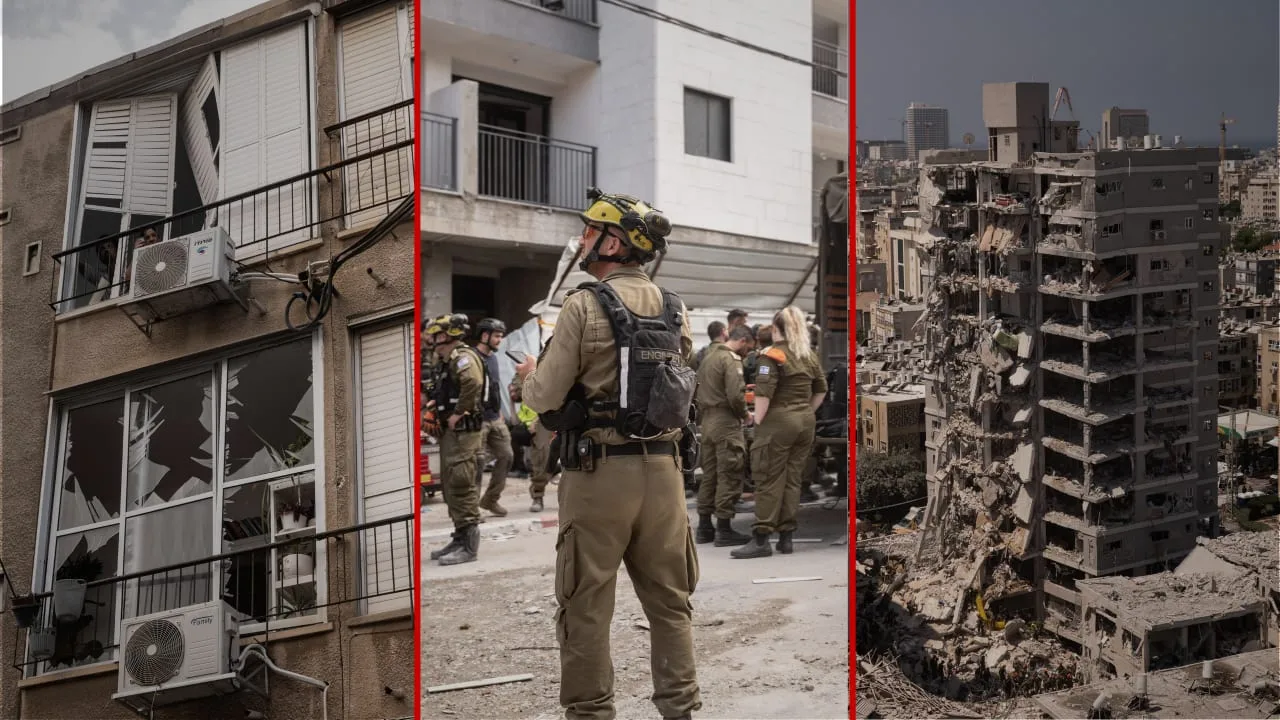
We begin with urgent revelations from within Israel’s own borders. A new warning from a top government watchdog suggests that millions of Israeli citizens remain dangerously exposed as the country continues its military conflict with Iran.
State Comptroller Matanyahu Engelman issued a stark statement Monday during a visit to missile-struck areas in Ramat Gan and Bat Yam. “We are in the midst of a war against Iran,” Engelman said. “A strong home front is essential for the State of Israel.”
According to Engelman, the vast majority of Israeli civilians still lack adequate protection from rocket attacks. A 2020 report from his office revealed that some 2.6 million residents were living in areas without sufficient shelters or protective infrastructure. Fast-forward to today—and not much has changed.
Despite repeated warnings, Engelman says critical government funds earmarked for civil defense were never spent, and key protection programs remain stalled or completely unfunded. In his latest draft report, already submitted to senior Israeli officials, Engelman cited continuing problems: malfunctioning public shelters, inadequate tracking of vulnerable populations, and serious shortfalls in emergency preparedness.
In his plea, Engelman urged Prime Minister Benjamin Netanyahu, the Defense and Security Ministries, and the Home Front Command to act swiftly. “These protection gaps are a direct threat to civilian safety,” he said.
This warning comes after a devastating missile strike over the weekend on the Arab city of Tamra in the Lower Galilee. That attack claimed the lives of four family members: Manar al-Qasem Abu al-Heija Khatib, her daughters Hala and Shada, aged 13 and 20, and their relative Manar Diab Katib. Approximately 20 others were injured, some critically.
The tragedy reignited criticism of overprotection inequality, especially in Arab and lower-income communities. Member of Knesset Ofer Cassif demanded immediate action from the Knesset Internal Affairs and Environment Committee, highlighting widespread vulnerability in Arab towns, South Tel Aviv, and parts of the Negev.
“Millions live in unfortified homes, without access to any public shelters,” Cassif wrote in a formal letter. He emphasized that previous discussions and promises to form an inter-ministerial team had yielded no measurable results.
Three civil society organizations—Injaz Center, the National Committee for Arab Local Leaders, and Sikkuy-Aufoq—have submitted a policy paper to the Knesset committee. Their findings? Grim. Out of 39 communities surveyed in northern Israel, 23—mostly Arab towns—have no public shelters at all.
In Tamra, Sakhnin, and several other Arab-majority towns home to roughly 150,000 residents, zero public shelters exist. In contrast, neighboring Jewish-majority cities with similar population sizes—like Safed, Acre, and Nahariya—boast more than 600 fortified shelters combined.
The policy paper also revealed that nearly 60% of those killed in northern Israel since the beginning of the war have been Arab citizens.
As tensions rise and rocket sirens become a daily reality for millions, calls for equity and urgency in homefront protection grow louder. But for now, countless families across Israel—especially in its underserved communities—remain exposed and unprotected.
We will continue to track the government’s response and whether these calls for action result in real change.
Reporting by Carl Montel.