
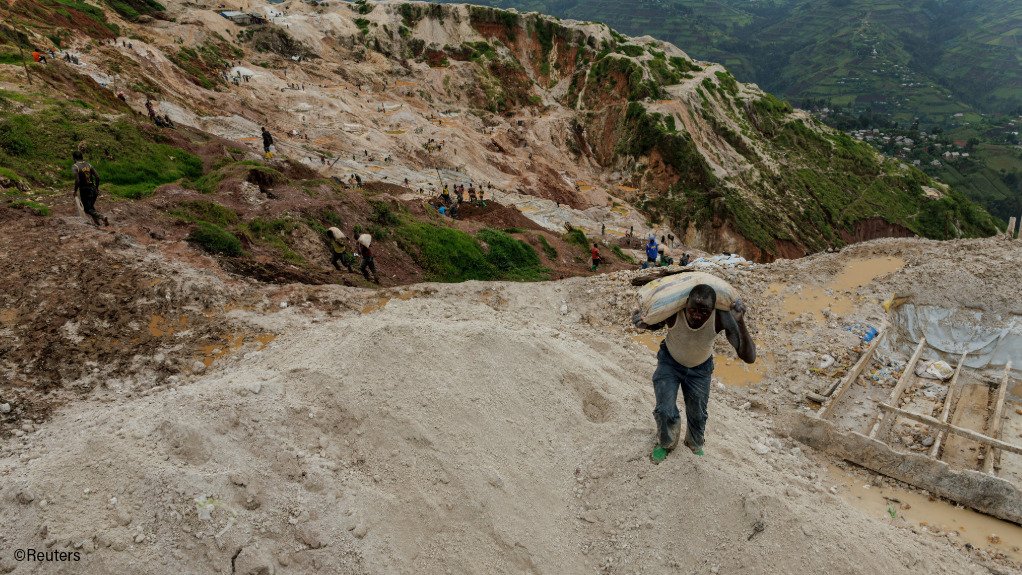
In a potentially groundbreaking development, U.S.-brokered peace talks may soon reshape the flow of critical minerals in Central Africa. According to sources close to the negotiations, minerals from the Democratic Republic of Congo — including tin, tantalum, and tungsten — could soon be exported legally to Rwanda for processing, under terms of a peace deal currently in the works.
For years, Congo has accused neighboring Rwanda of illegally extracting and profiting from its vast mineral wealth, an issue at the heart of the ongoing conflict between Congolese forces and the Rwanda-backed M23 rebel group in the country’s eastern region. Each month, Kinshasa claims that tens of millions of dollars’ worth of minerals are smuggled over the border and marketed from Rwanda.
The United States is now stepping in with a proposal that aims not just to end the violence, but to open up the region to significant Western investment. U.S. presidential adviser on Africa, Massad Boulos, confirmed that Washington is pushing for a peace accord to be signed this summer. As part of the deal, American officials are advocating for industrial-scale mineral partnerships that could generate billions of dollars.
In a recent social media post, Boulos revealed that the U.S. has already submitted an initial draft of the agreement to both parties, though details remain confidential.
According to sources briefed on the talks, the idea is simple: give Rwanda a legal stake in Congo’s mineral sector to reduce its incentive to interfere militarily. One diplomat stated, “If Rwanda can profit through legitimate processing, the temptation to plunder disappears.” For Congo, the benefits could include increased tax revenues, better oversight of mineral supply chains, and a reduction in the power of armed militias operating in the region.
Still, challenges remain. A senior Congolese official, speaking anonymously, emphasized that no cooperation will move forward unless Rwandan forces and their M23 proxies fully withdraw. Kinshasa insists on full sovereignty over its territory — and its resources.
Meanwhile, the U.S. hopes that formalizing this mineral trade will help counter China’s dominant role in the region’s mining industry. A recent declaration signed in Washington between the U.S., Congo, and Rwanda outlines a shared commitment to creating transparent and lawful mineral value chains, stretching from mine to finished product.
Though the scale of American investment is still unclear, Boulos told Reuters that roughly 30 U.S. investors have expressed interest in getting involved, particularly in mineral processing. The U.S. International Development Finance Corporation is expected to back these ventures with financial support.
Yet, analysts caution that while such deals may eventually stabilize the region, they won’t deliver immediate peace. The conflict — rooted in decades of violence since the 1994 Rwandan genocide — remains complex. One diplomat warned that mining contracts alone can’t resolve deep-seated issues: “These projects might take years. But there are urgent challenges that need to be solved now.”
It’s not the first time Congo and Rwanda have tried to cooperate. In 2021, the two countries signed a deal on joint gold commercialization. But it was suspended the following year, after Congo accused Rwanda of backing M23 rebels in the capture of the strategic town of Bunagana — charges Rwanda denies.
Despite ongoing mistrust, both sides continue to engage with U.S. mediators. Whether this latest push will succeed where past efforts have failed remains to be seen.
We will continue to follow this story closely.
Reporting by Ehud Jones.