U.S. corporations are moving quickly into the Democratic Republic of Congo, even before a newly signed peace agreement with Rwanda has been fully implemented.
The deal, brokered by the United States on June 27 in Washington, was hailed as a “historic turning point” aimed at ending years of conflict in eastern Congo between the M23 rebel group, supported by Rwanda, and the Congolese state. A month later, the two countries agreed to a Regional Economic Integration Framework, linking the peace process to cross-border economic cooperation.
However, analysts caution that the promise of peace is fragile. The M23 controls much of eastern Congo, and the agreement largely sidelines the rebel group, focusing instead on Rwandan troop withdrawal and Kinshasa taking action against FDLR rebels. This creates a potential stalemate: M23 is unlikely to give up territory, and Rwanda may not withdraw without FDLR neutralization.
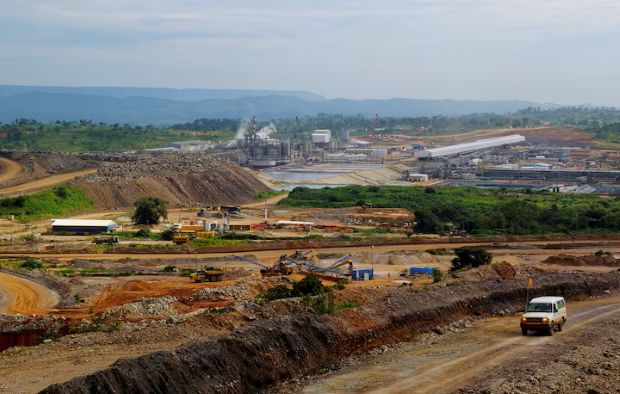
Meanwhile, U.S. firms are moving swiftly to secure mining interests. KoBold Metals, backed by Jeff Bezos and Bill Gates, signed an exploration deal covering over 1,600 square kilometers in Manono, targeting lithium development. Another U.S. consortium is positioning itself to acquire the Chemaf copper and cobalt mine, blocking a potential sale to Chinese state-owned Zijin Mining.
These moves highlight a key reality: Congo’s minerals are now a geopolitical battleground, and the United States is leveraging the peace process to strengthen its strategic foothold in the region.
Despite the economic momentum, the conflict on the ground continues. M23 has refused to engage fully in talks and continues to control large swaths of territory. U.N. reports document at least 319 civilian deaths in North Kivu between July 9 and 21 alone.
The peace deal has eased political pressure on President Felix Tshisekedi, allowing him to form a new government, but many opposition voices and civil society groups remain excluded from negotiations. Critics warn that without broader inclusion and sustained diplomatic engagement — particularly with M23 — the deal risks becoming a temporary stability pact rather than a lasting peace agreement.
While the June 27 agreement offers hope, experts say its economic and political foundations remain fragile. The U.S. must not only support investments but also commit to ongoing political mediation to ensure that this peace deal delivers tangible results for the people of eastern Congo.
We will continue to follow this developing story on U.S. involvement and ongoing conflict in the DRC.
Reporting by Ehud Jones.