President Donald Trump announced today that he is temporarily halting his efforts to deploy National Guard troops to Chicago, Los Angeles, and Portland, Oregon, after facing legal challenges that stalled the deployments.
In a social media post Wednesday, President Trump said the move is just a pause for now. “We will come back, perhaps in a much different and stronger form, when crime begins to soar again — only a question of time!” he wrote.
The deployment plans had faced strong resistance from Democratic state and local officials, as governors typically have control over their National Guard forces. Trump had moved to federalize the troops in these major cities, citing a need to crack down on rising crime, immigration enforcement, and ongoing protests.
While troops were previously removed from Los Angeles after earlier deployments this year, legal challenges prevented National Guard members from fully deploying on the streets in Chicago and Portland. Trump credited the military presence with contributing to crime reductions in all three cities, though city officials point to local law enforcement and safety programs as the primary drivers.
When Chicago’s deployment was contested in court, a Justice Department attorney clarified that the Guard’s mission was limited to protecting federal properties and personnel — not to address all crime citywide.
Portland’s mayor stressed that the city’s declining crime rates were the result of local policing efforts. Similarly, Chicago officials noted that the city recorded 416 homicides in 2025, the lowest number since 2014.
The President’s push to deploy troops in these Democratic-led cities has been repeatedly blocked in courts. The U.S. Supreme Court last month declined to allow National Guard deployment in the Chicago area, marking a significant legal defeat for the administration.
Illinois Governor JB Pritzker responded on social media, saying, “Trump lost in court when Illinois stood up against his attempt to militarize American cities with the National Guard. Now Trump is forced to stand down.”
In Portland, hundreds of federalized troops were deployed, but a federal judge barred them from patrolling the streets. That injunction was made permanent in November after a brief trial.
Oregon Governor Tina Kotek welcomed the move, saying her office had not yet received formal notice to send troops home but applauded the decision if it meant following court orders. “This is a big win for Oregonians and for the rule of law,” she said.
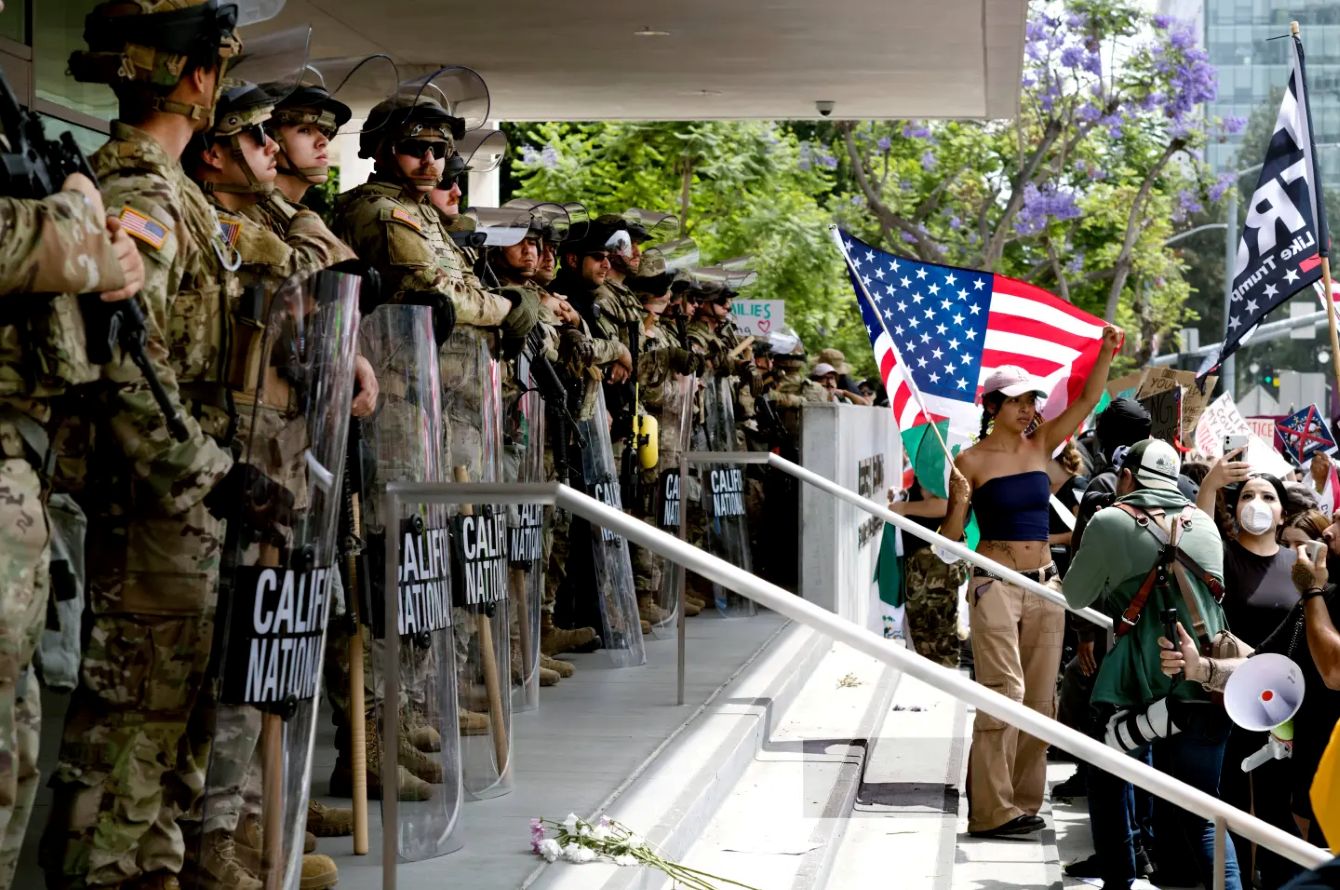
The Trump administration first federalized National Guard troops in Los Angeles this past June amid protests triggered by immigration raids. About 4,000 troops and 700 Marines were initially deployed to protect federal buildings and assist agents conducting immigration arrests.
By mid-December, only a few hundred troops remained, but a lower court ruling returned control of the Guard to California Governor Gavin Newsom. Though an appeals court paused this transfer, a recent filing from the Trump administration indicates they are no longer seeking to maintain control.
On Wednesday, the Ninth Circuit Court ordered the Guard’s control returned to Governor Newsom. The governor celebrated the decision, calling the federal takeover “illegal.”
While National Guard deployments have been halted in these cities, troops continue to operate in others. In Washington, D.C., the Guard remains after a court stayed a ruling calling for their removal. In Memphis, Tennessee, Guard deployment continues despite legal challenges, supported by Republican Governor Bill Lee. And in New Orleans, approximately 350 National Guard troops recently arrived to assist with security through the Mardi Gras season, backed by both state and city officials.
That’s the latest on the National Guard deployments. We will keep you updated on any further developments.
Reporting by Kathy Moore.