Our top story tonight — escalating violence and targeted attacks in Sudan’s Darfur region are raising alarm across the international community. Armed militias, backed by drone technology, are reportedly conducting systematic operations against Black communities in Darfur, with devastating consequences.
Humanitarian groups warn this campaign of violence could rival some of the most horrific genocides in modern history. Here’s what we know so far.
The conflict in Darfur has taken a grim turn, with the Rapid Support Forces — an Arab-led militia commanded by Lieutenant General Mohamed Hamdan Dagalo — deploying drones and execution squads to assert control over the region’s Black population.
Since seizing the strategic city of El Fasher, the largest urban center in Darfur, the militia’s attacks have intensified. Local groups like the Sudan Doctors Network have documented chilling scenes of unarmed civilians shot at close range, bodies scattered in the streets, and vehicles burned to ashes.
In what is being described as a massacre, the World Health Organization reported the killing of 460 people inside El Fasher’s main hospital, including patients, caregivers, and medical staff. Experts warn the scale and nature of these atrocities may surpass the horrors witnessed during the 1994 Rwandan genocide.
The Rapid Support Forces, or RSF, are equipped with advanced Chinese-made drones—specifically Wing Loong II and FeiHong-95 models—supplied by the United Arab Emirates. U.S. intelligence officials report that the UAE has also been providing the militia with heavy weaponry, including howitzers and mortars, escalating their offensive capabilities. Despite these allegations, UAE officials deny any support for either side in the ongoing Sudanese civil war.
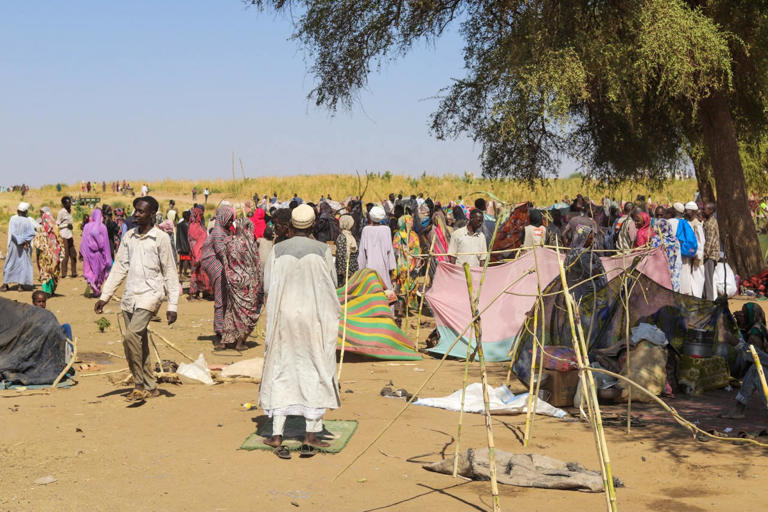
The consequences for the indigenous Black population of Darfur are catastrophic. Armed militia fighters dressed in sand-colored fatigues conduct door-to-door searches, detaining and executing black men and boys. Reports detail widespread sexual violence against Black women, the detainment of aid workers, and forced displacement of thousands.
One survivor, Awil Mohamad, recounts fleeing with her grandchildren after witnessing the killings of dozens of men. She and half a million others have been uprooted, facing severe shortages of food and clean water.
The violence stems from a deep political and ethnic struggle within Sudan’s fractured leadership. The conflict began over two years ago between two powerful ethnic-Arab leaders vying for control — Lt. Gen. Abdel Fattah al-Burhan and Dagalo.
While the Sudanese army controls the capital and key ports, the RSF dominates much of Darfur. El Fasher, a city of roughly one million, has been under siege since April, with the RSF encircling the city and forcing many residents to flee.
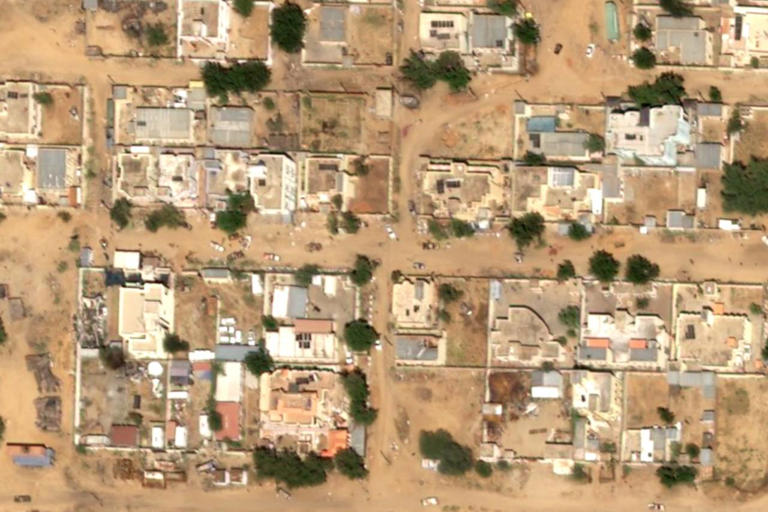
© Airbus DS 2025/AP
“The level of violence we’re seeing in Darfur is unprecedented in my 25 years documenting war crimes. This militia has what is effectively an air force — no one can hide from their drones. The scale of killings rivals that of Rwanda, and the suffering is unimaginable.”
The United Nations confirms that over 2,000 people have been killed since the RSF overran government forces in El Fasher. The Sudan Doctors Network reports particularly brutal attacks, including the massacre of hundreds at the Saudi Maternity Hospital.
In response, Sudan’s military has condemned the RSF’s actions but withdrew forces from the city to protect civilians, pledging to continue fighting the militias.
Dagalo has promised investigations into human rights abuses but insists the RSF will maintain operations until “stability” is restored.
As the crisis deepens, the humanitarian toll continues to mount, with tens of thousands displaced and urgent needs for aid. The world watches as Sudan’s Darfur region faces a potential humanitarian catastrophe — a stark reminder of the consequences of unchecked conflict and ethnic violence.
We will continue to monitor developments closely. Stay with SNEWS TV for ongoing coverage.
Reported by Ehud Jones.