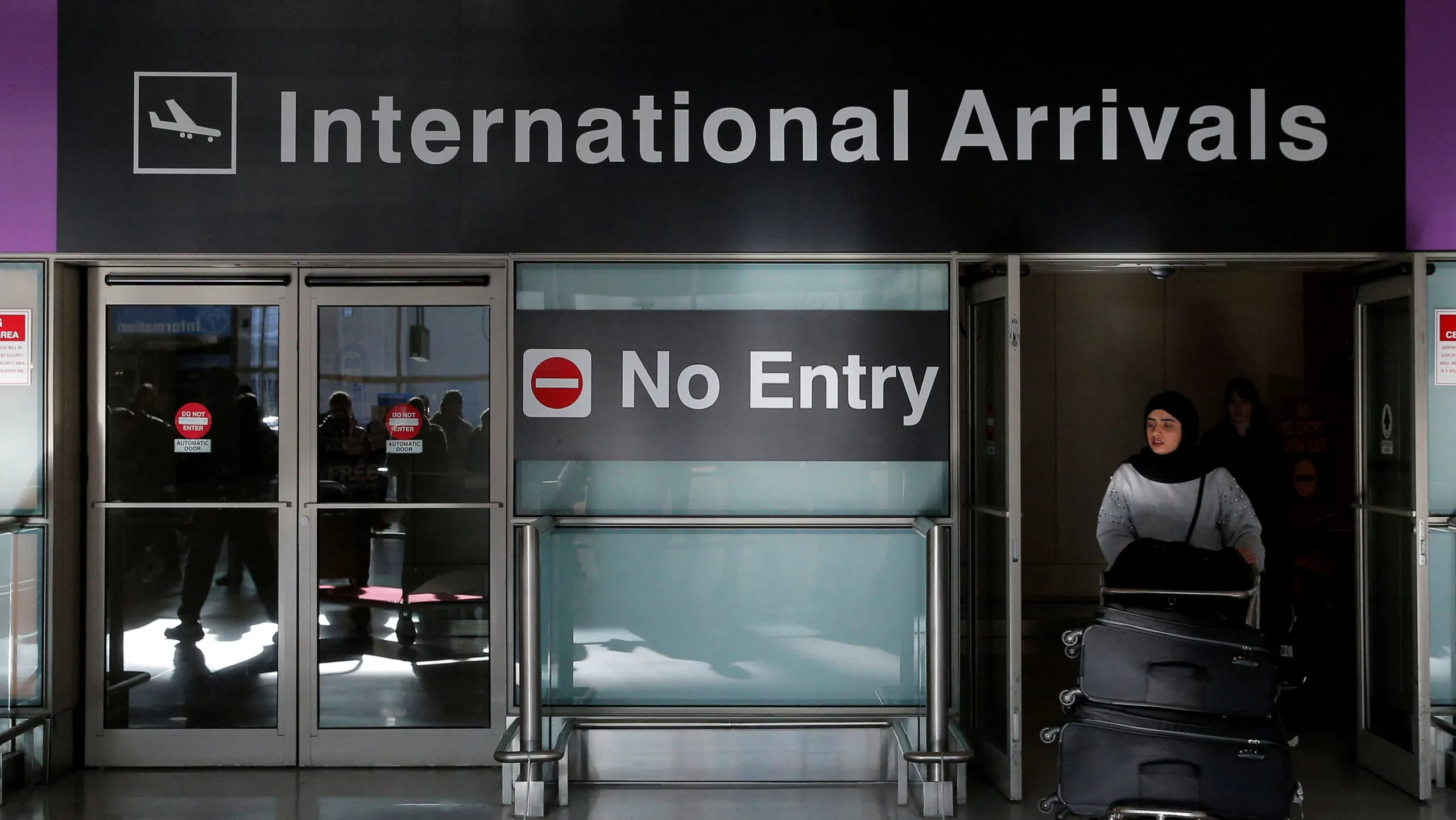
U.S. airports are seeing heightened security and anxious travelers following the enforcement of former President Donald Trump’s latest travel ban. Though the new restrictions took effect with less chaos than in 2017, stories of intense scrutiny and concern are emerging from multiple terminals across the country.
The latest directive—signed into effect just last week—targets nationals from over a dozen countries, mainly across Africa and the Middle East. Among those affected are citizens from nations such as Afghanistan, Iran, Libya, Sudan, and Yemen, with additional restrictions imposed on travelers from countries like Cuba, Venezuela, and Laos.
The administration claims the new policy is aimed at tightening national security by focusing on countries with what it describes as “deficient screening systems” or those that refuse to repatriate citizens who overstay their visas.
However, the human cost of this policy was evident today at Miami International Airport. Vincenta Aguilar, a Guatemalan citizen, described being questioned for nearly an hour alongside her husband—despite Guatemala not being listed under the new ban. The couple, holding valid tourist visas, was visiting their son in Florida for the first time in over two decades.
Meanwhile, Haitian government employee Narayana Lamy was held temporarily while his documents were double-checked, and Cuban green card holder Luis Hernandez reported no issues after a weekend trip to Havana. These mixed experiences underscore both the uncertainty and the deeply personal consequences many face as the policy takes hold.
Unlike Trump’s original travel ban—rushed out during his first term and quickly met with legal challenges—this new version appears more carefully constructed. It focuses specifically on the visa issuance process, and existing visas are, for now, still valid. Still, critics argue that the move is less about safety and more about political division.
Oxfam America President Abby Maxman called the measure “a cruel policy that vilifies communities seeking safety and opportunity.”
And in Haiti, leaders of the transitional presidential council issued a formal plea, urging the U.S. administration to reconsider their inclusion on the banned list, warning that the policy “risks indiscriminately affecting all Haitians.”
In Venezuela, where diplomatic ties with the U.S. were severed years ago, the impact is more indirect. Many would-be travelers, like José Luis Vegas in Caracas, are now giving up entirely, citing extreme delays and costly journeys to embassies in third countries to even apply for a visa.
President Trump has linked the ban to national security concerns, even referencing a recent terrorist attack in Boulder, Colorado. The suspect in that case reportedly overstayed his visa, though he was from Egypt—a country not on the restricted list.
As enforcement continues, it remains to be seen whether the courts—and the American public—will accept this renewed crackdown on immigration and travel, or whether it will spark fresh opposition in the months ahead.
Reporting by Katy Moore.