Good evening. I’m Katy Moore, and tonight we bring you a story of fragile calm on the subcontinent. For the second straight day, a ceasefire between nuclear-armed rivals India and Pakistan is holding — bringing a pause to the most intense fighting between the two neighbors in over five decades.
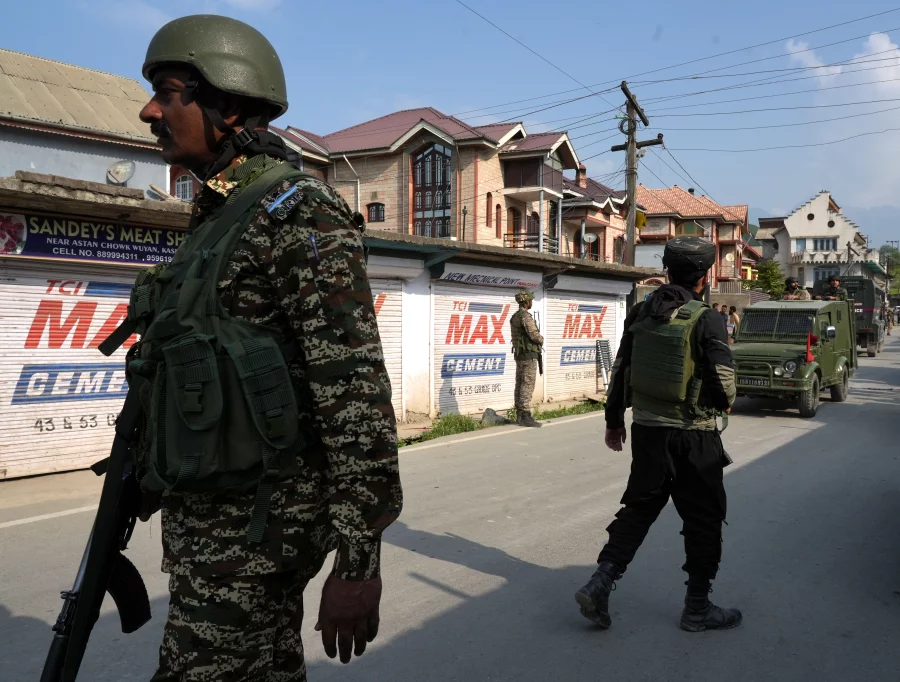
On Monday, life cautiously returned to normal. Schools reopened, airports resumed operations in border areas, and families began burying the dead after days of cross-border violence that left dozens killed — many of them civilians.
The hostilities erupted last Wednesday when Indian forces launched airstrikes deep into Pakistani territory — reportedly hitting targets near Lahore and even reaching the outskirts of Islamabad. India said the strikes were retaliation for a deadly militant attack that killed 26 people, mostly tourists, in Indian-administered Kashmir on April 22.
The Indian government blamed Pakistan for harboring the attackers, an accusation Islamabad denied. In a televised address Monday evening, Prime Minister Narendra Modi doubled down, declaring that future talks with Pakistan would be limited to two issues: terrorism and the status of Pakistan-administered Kashmir.
Modi also ruled out any reconsideration of India’s decision to suspend a critical water-sharing treaty with Pakistan — a treaty Pakistan’s U.N. ambassador called an ‘existential threat’ to his country.
Despite the heavy rhetoric, both governments now claim credit for initiating the ceasefire, brokered over the weekend by U.S. President Donald Trump. Indian and Pakistani military officials held talks Monday to reinforce the truce, according to India’s defense ministry.
On the ground, civilians in both countries expressed cautious relief. In Bahawalpur, a Pakistani city struck by Indian forces last week, resident Babar Rashid welcomed the pause but warned that India should avoid ‘further misadventures.’
In Indian-administered Kashmir, families mourned young victims like 13-year-old twins Zain Ali and Urwa Fatima, killed in the shelling. Their father, still recovering in the hospital, has not yet been told they are gone.
Hundreds remain displaced on both sides of the Line of Control — the de facto border in Kashmir. In the Indian town of Pargwal, farmers described fleeing under fire, taking shelter in irrigation canals before being evacuated by bus.
And across the line in Pakistan-administered Kashmir, villagers emerged from bunkers after days without food or water. ‘We want this ceasefire to last forever,’ said one resident. ‘Those who celebrate war,’ he added, ‘are ignorant.
Militaries on both sides reported success in striking strategic targets, including airbases and garrisons. Pakistan claims it shot down five Indian jets — including at least one French-made Rafale fighter. India has not confirmed those claims, but a senior Air Marshal acknowledged, quote, ‘Losses are a part of combat.
The current truce is credited largely to President Trump’s mediation efforts — his second major ceasefire intervention in as many weeks, after brokering talks in the Middle East. As global attention remains focused on South Asia, the world watches to see whether this fragile peace will hold — or collapse under the weight of old rivalries and new provocations.
For now, the guns are silent. But the wounds remain fresh. And the road to lasting peace — uncertain. We will continue to monitor developments on the India-Pakistan front.
Reporting by Carl Montel.