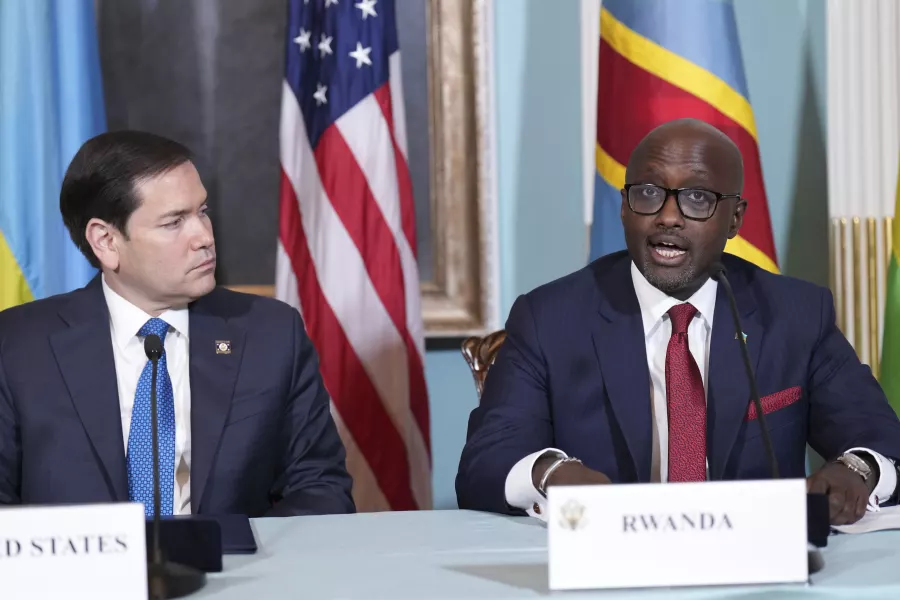
Rwanda has confirmed that it is in the early stages of negotiations with the United States regarding a potential deal to accept migrants deported from American soil. Speaking to state television, Rwandan Foreign Minister Olivier Nduhungirehe stated that discussions with Washington are underway but still in preliminary phases.
“We are now in talks with the U.S. about a deal on migration,” he confirmed, addressing speculation that had been circulating for days.
While no formal agreement has yet been reached, Minister Nduhungirehe emphasized that Rwanda has prior experience with migrant resettlement, suggesting this would not be unprecedented for the East African nation.
In response to inquiries, the U.S. State Department declined to comment on the specifics but underscored the importance of ongoing international partnerships to address illegal migration and border security. The initiative appears to align with former President Donald Trump’s hardline immigration stance. Just last month, Secretary of State Marco Rubio said the administration was exploring agreements with other countries to receive deportees—even those not originally from those nations.
Rubio stated bluntly, “We are working with other countries to say, ‘We want to send you some of the most despicable human beings to your countries… and the further away the better, so they can’t come back across the border.’”
Rwanda, located in East Africa’s Great Lakes region and sharing a border with the Democratic Republic of Congo, has shown willingness to explore such partnerships. However, the idea is not without precedent—or controversy.
Just last year, a similar migrant transfer plan between the United Kingdom and Rwanda collapsed after the U.K. reportedly spent nearly a billion dollars on the project. The Rwandan government is still seeking unpaid funds from the failed deal. British Prime Minister Kier Starmer recently dismissed the plan as “an insult to anyone’s intelligence” and “a gimmick.”
Human rights advocates and analysts are raising alarms over the potential U.S.-Rwanda deal. Critics argue that Rwanda’s record under President Paul Kagame makes it unsuitable for resettlement programs.
Jeffrey Smith of Vanguard Africa called Rwanda under Kagame’s leadership “a totalitarian police state by any standard.” Journalist Michela Wrong echoed the sentiment, describing a pattern of political repression, media censorship, and violence against opposition figures.
“This is a country where elections are rigged, opposition leaders are jailed or worse, and journalists are forced into exile,” said wrong, who also questioned the timing of the discussions amid ongoing conflict in the neighboring DRC.
Rwanda has been accused of backing rebel forces in the Congo, and some experts believe that the deportation talks may serve as a bargaining chip in broader geopolitical negotiations. The United States is currently playing mediator in the Congo conflict and has promised significant investment in the region’s minerals sector if peace can be brokered.
Yesterday, Trump’s senior Africa adviser, Massad Boulos, confirmed that both Kigali and Kinshasa had submitted draft proposals toward a peace settlement. Still, concerns persist. Wrong warns that a migration deal might weaken U.S. leverage over Rwanda’s role in the Congolese conflict.
We will continue to follow this story closely as it unfolds.
Reporting by Ehud Jones.