Rising instability in Africa’s Sahel region is drawing international attention as Russian mercenaries replace Western forces, while ISIS and other jihadist groups expand their influence. Analysts say the withdrawal of U.S. and European troops has left a security vacuum that extremist groups are exploiting.
The Sahel—a belt of countries stretching just below the Sahara Desert—is now the epicenter of global terrorism. In 2024 alone, the region accounted for nearly 3,900 deaths, roughly half of all terrorism-related fatalities worldwide, according to the Global Terrorism Index.
Countries including Mali, Niger, and Burkina Faso, now governed by military juntas, have expelled Western forces. The U.S., after 11 years in Niger, was asked to halt drone operations from two bases last year, and French troops were ejected from Mali in 2022 after nearly a decade of combating Islamist groups.
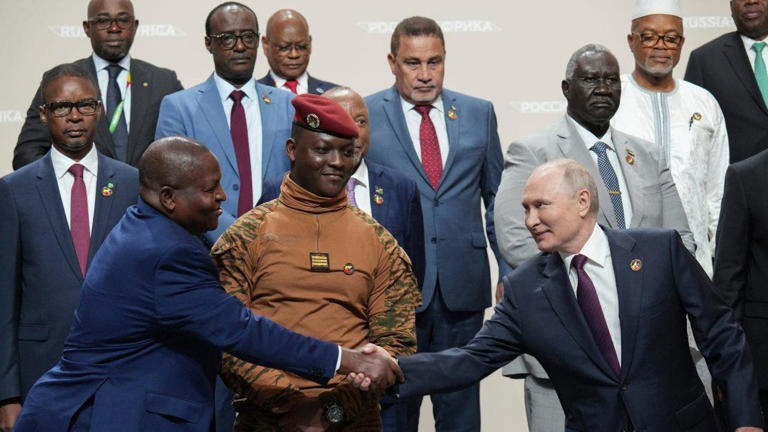
In response, these governments have turned to the Kremlin’s private army, the Africa Corps—formerly known as the Wagner Group—for security. But reports indicate the Russian mercenaries are more focused on extracting mineral resources than countering jihadist threats.
Civilians are paying the highest price. In western Niger last month, Islamist gunmen on motorbikes attacked Tillaberi village, killing 22 people, including families attending a child naming ceremony. In northern Mali, Russian mercenaries reportedly joined government forces in executing 10 civilians, including a 2-year-old boy.
Experts warn that groups linked to ISIS and al-Qaeda continue to expand, exploiting weak governance and security gaps, with their influence now reaching littoral West African nations such as Benin and Togo.
Bill Roggio, senior fellow at the Foundation for Defense of Democracies, told Fox News Digital, ‘The situation in the Sahel has rapidly deteriorated since the U.S. and French withdrew. Jihadist advances were already significant, but the Western drawdown has worsened the crisis.’ He added that Russia’s focus on securing mineral resources, rather than civilian protection, is fueling insurgencies further.
Frans Cronje noted that anti-Western sentiment in Niger was amplified prior to the 2023 coup through political and media campaigns portraying Western influence as imperialist interference. He argued that even without the coup, Western forces faced enormous challenges in countering the jihadist threat in the region.
A U.S. State Department spokesperson emphasized that America remains engaged with Sahelian countries through pragmatic diplomacy, focusing on commercial opportunities and counterterrorism priorities to mitigate threats to U.S. personnel and interests.
With ISIS and al-Qaeda gaining ground and Russian forces filling the void left by Western troops, the Sahel faces an uncertain and increasingly dangerous future.
Reporting by Ehud Jones.