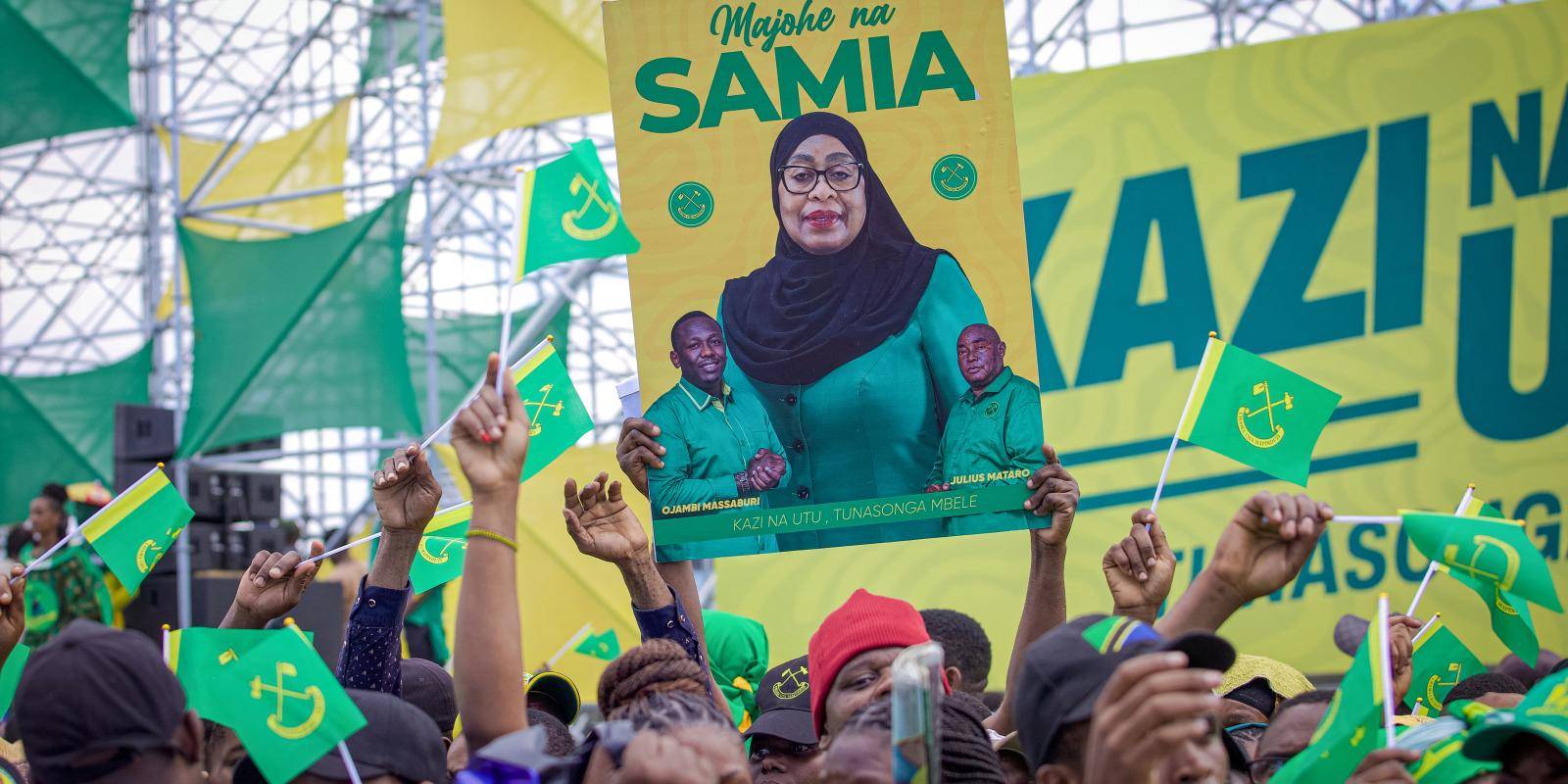
Tanzania’s digital battlefield is heating up as the country approaches its crucial general election on October 29. With the capital, Dodoma, abuzz, the political contest has spilled over into social media, creating a fierce online campaign war.
In Dodoma’s Jamhuri Stadium, singer and CCM supporter Zuwena Mohamed, better known as Shilole, energized crowds with songs in support of President Samia Suluhu Hassan and her ruling party, Chama Cha Mapinduzi, or CCM. Shilole’s social media presence, boasting over 11 million followers, amplifies pro-government messaging, reflecting the digital battleground shaping Tanzania’s electoral atmosphere.
However, not all voices are aligned. Many opposition supporters, whose parties have been barred from participating, are turning to anonymous accounts and pseudonyms online, expressing concerns about political repression and the narrowing of civic space. With opposition leaders like Chadema’s Tundu Lissu detained on serious charges, debates have largely migrated to the internet, where people feel safer voicing dissent.
Abel Kinyondo, a political analyst from the University of Dar-es-Salaam, told SNEWS TV that the move of political discourse to online platforms was “inevitable” given the restrictions on free speech. With over 49 million internet users and a youthful population under 18 making up more than half the country, platforms like TikTok and X (formerly Twitter) have become hubs of political expression — from protest calls to satirical criticism of the government’s policies.
Social media activists, both inside Tanzania and abroad, have rallied support for planned protests, prompting warnings from authorities about criminal penalties for discouraging voting or promoting unrest. Deputy Police Commissioner David Misime emphasized the government’s ability to track online activity, signaling a tightening grip on the digital space.
Meanwhile, CCM supporters, including prominent figures like former Miss Tanzania Faraja Nyalandu, actively promote the party’s achievements and President Hassan’s leadership online. The party insists that critics still have a voice, and that constructive criticism is welcome.
Yet digital rights groups paint a different picture, warning of a systematic government campaign to control the online narrative. Since May, popular platforms have faced disruptions, and the Tanzania Communications Regulatory Authority recently suspended a major social networking site, JamiiForums, citing disrespectful posts about the government.
Tech & Media Convergence, a local digital rights organization, warns that this crackdown is shrinking civic space and silencing dissent just when access to information is most vital for a fair election. They caution that this control risks voter apathy and an information vacuum that only benefits state propaganda.
As security forces ramp up their presence in cities and concerns rise about election fairness, analysts urge the ruling party to shift focus from managing digital narratives to delivering tangible improvements — including job creation, better healthcare, education, and infrastructure.
Tanzania stands at a crossroads. With its rich resources and strategic location in East Africa, the country has immense potential for growth. But as the digital election war unfolds, the real challenge lies in whether leadership can respond to the needs of its young, increasingly connected population.
Reported by Ehud Jones.