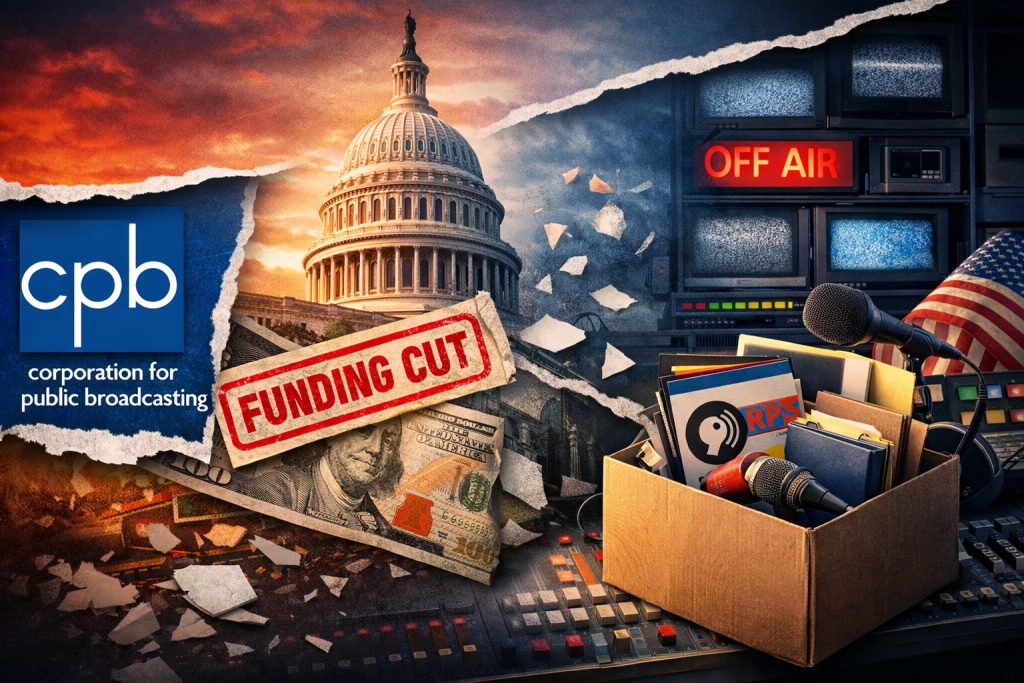
A major chapter in American public media history is coming to an end tonight. The Corporation for Public Broadcasting, the organization that for nearly six decades helped fund and sustain PBS, NPR, and hundreds of local radio and television stations, has voted to dissolve itself following the loss of all federal funding.
The decision was made Monday by CPB’s Board of Directors, marking the end of an institution created by Congress in 1967 under the Public Broadcasting Act. Rather than continuing as an unfunded shell organization, CPB leaders say dissolving was the only responsible option.
CPB President and CEO Patricia Harrison said the move was intended to safeguard public media from further political pressure.
She explained that allowing the organization to remain defunded and vulnerable could have opened the door to additional attacks, potentially threatening the independence and integrity of the public media system.
The shutdown follows action by Congress last summer to rescind all federal funding for CPB, a move encouraged by President Donald Trump and backed by Republican lawmakers who have long accused public broadcasting—particularly its news coverage—of political bias.
Ruby Calvert, Chair of CPB’s Board, called the defunding “devastating,” but expressed confidence that public media itself will endure.
Calvert said she believes a future Congress will eventually revisit public media’s role, emphasizing its importance to children’s education, American culture, historical preservation, and democracy.
For decades, CPB served as the financial backbone of a nationwide public media system made up of more than 1,500 locally owned stations. It supported iconic educational programs such as Sesame Street and Mister Rogers’ Neighborhood, provided emergency alerts during disasters, and funded investigative journalism relied upon by communities across the country.
As part of its closure process, CPB says it will responsibly distribute any remaining funds in line with congressional intent. The organization will also continue supporting the American Archive of Public Broadcasting, which preserves historic radio and television content.
CPB’s own records, dating back to its founding, will be archived and made publicly accessible in partnership with the University of Maryland.
While the corporation itself is ending, leaders stress that the mission of public media lives on through local stations, journalists, educators, and producers who will continue serving their communities.
Harrison said public media remains essential to a healthy democracy and expressed hope that future generations will recognize its value and defend its independence.
Reporting by Kathy Moore.