Tensions are rising as Israeli Prime Minister Benjamin Netanyahu presses the United States for increased military strikes against Iran, even as President Donald Trump advocates for diplomacy and a reduced American role in the Middle East.
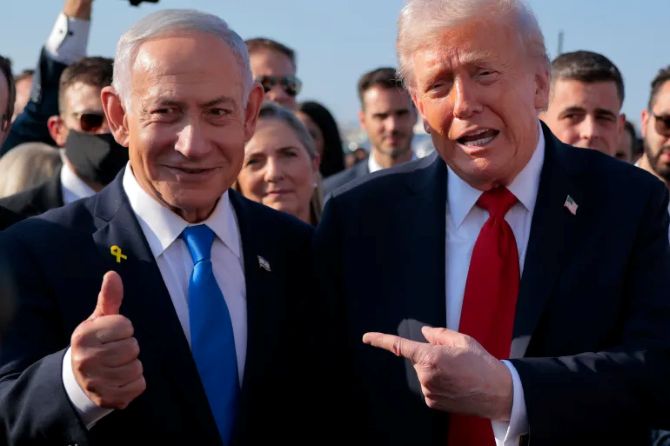
Netanyahu, who has long warned of a severe Iranian threat to Israel and the region, is returning to the U.S. this weekend to meet Trump at Mar-a-Lago in Florida. This time, his focus is on Iran’s missile program, urging the U.S. to take decisive action.
Israeli officials and their American allies are sounding the alarm about Tehran’s ballistic missile capabilities, claiming they pose an urgent danger. However, experts say Netanyahu’s push clashes with Trump’s stated foreign policy, which prioritizes economic cooperation and diplomatic partnerships in the region, not further military conflict.
Sina Toossi, senior fellow at the Center for International Policy, told SNEWS TV that Netanyahu’s drive for continued U.S. military engagement reflects Israel’s desire for regional dominance, which conflicts with Washington’s goal of stability and less direct intervention.
Meanwhile, Trump highlights his role as a peacemaker, pointing to recent efforts to broker truces and foster cooperation in the Middle East. His administration’s National Security Strategy emphasizes a diminishing U.S. footprint in the region as local partnerships strengthen.
Since the U.S. bombed Iranian nuclear sites in June, claiming to have dismantled Tehran’s nuclear program, Israel has shifted its concerns toward Iran’s missile arsenal to maintain pressure on the regime. Trita Parsi of the Quincy Institute explains that Netanyahu’s continued push for conflict aims to keep Iran under constant threat, potentially leading to an endless cycle of confrontation.
Iran, for its part, insists its nuclear program is peaceful and has never launched unprovoked missile attacks against Israel. Yet, Israeli leaders, backed by influential groups like AIPAC, warn that Iran’s missile stockpile remains significant, citing estimates of thousands of missiles still intact despite recent strikes.
Senator Lindsey Graham, a strong supporter of Israel, recently echoed these concerns, warning Iran’s missile capabilities could overwhelm Israel’s Iron Dome defense system.
Domestically, Trump faces pressure from two opposing camps: his Republican base, which largely opposes new military engagements in Iran, and pro-Israel hawks and megadonors urging stronger action.
Right-wing media figures such as Tucker Carlson have criticized Netanyahu’s demands, calling them a “parasitic relationship” and warning against repeated U.S. involvement in Middle Eastern conflicts. Yet, Trump’s administration still includes prominent hawks, and influential donors continue to push for a tough stance on Iran.
With the 2026 midterm elections approaching, analysts say this divide between voters and donors complicates Trump’s decision-making on Iran.
While Trump was able to claim success after the June strikes without dragging the U.S. into a prolonged war, experts caution that renewed attacks could provoke a harsher Iranian response and potentially ignite a wider conflict.
Trita Parsi warns that Israel may initiate future strikes unilaterally, relying on U.S. support to escalate the conflict gradually.
He urges Trump to take a clear “America First” stance by preventing Israel from starting another war.
As Trump’s National Security Strategy signals a retreat from Middle East conflicts, the key question remains: will the U.S. uphold this vision or be pulled into another cycle of confrontation?
We will keep monitoring this developing story.
Reporting Carl Montel.