
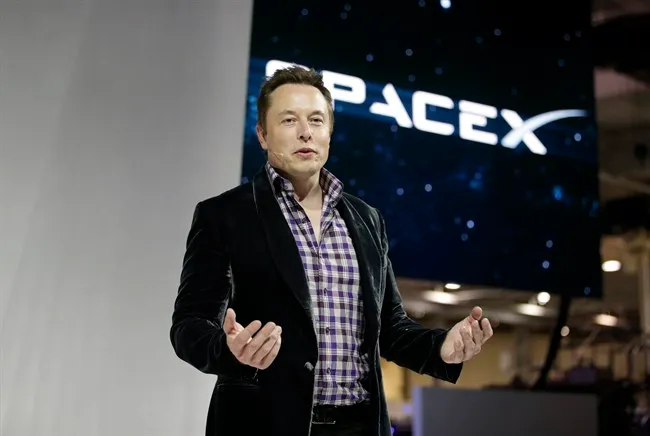
In a surprising reversal, Elon Musk has walked back his recent threat to retire SpaceX’s Dragon spacecraft — a workhorse of American space exploration that has ferried astronauts and cargo to the International Space Station (ISS) for over a decade.
The initial suggestion to wind down Dragon operations sparked widespread concern among NASA officials, aerospace analysts, and fans of commercial spaceflight. Musk, known for his bold statements and unpredictability, had hinted via social media that SpaceX would soon phase out the capsule in favor of Starship, the next-generation spacecraft currently under development. But in a follow-up announcement this week, the billionaire entrepreneur clarified that Dragon would remain in service for the foreseeable future.
Reversal Sparks Relief
“Dragon will continue flying missions as long as NASA and international partners need it,” Musk said during a press briefing. “We are committed to supporting human spaceflight and ensuring crew access to low Earth orbit until Starship is fully operational, proven safe, and certified for regular use.”
Musk’s initial comments came during a heated social media exchange where he criticized regulatory delays and funding gaps related to the Starship program. At the time, he hinted that SpaceX might divert resources away from Dragon to accelerate development of its newer, more ambitious platform. That statement triggered a wave of speculation about the company’s priorities, especially given the Dragon capsule’s central role in current space missions.
The Crew Dragon variant, specifically, has been instrumental in returning American astronauts to orbit after the retirement of the Space Shuttle program in 2011. Since its first crewed flight in 2020, the spacecraft has successfully completed multiple crewed and cargo missions under NASA’s Commercial Crew and Commercial Resupply Services contracts.
NASA Reassures Partners
In response to Musk’s earlier remarks, NASA Administrator Bill Nelson assured the public that the agency remains in active coordination with SpaceX and that there are no imminent changes to the launch schedule. “Dragon is a reliable vehicle that continues to meet all mission requirements,” Nelson stated. “We appreciate SpaceX’s continued partnership and commitment to safe and consistent transport to the ISS.”
Sources inside NASA acknowledged that while the agency is enthusiastic about Starship’s long-term potential — including its use for lunar and Mars missions — Dragon remains the only certified spacecraft capable of carrying astronauts from U.S. soil to orbit. As such, its ongoing availability is essential not only to NASA but to global space collaboration.
Balancing Ambition with Responsibility
SpaceX’s long-term goal remains the development of Starship, a fully reusable super-heavy lift vehicle capable of carrying large payloads and dozens of passengers to deep space destinations. However, despite successful test flights, the spacecraft has not yet met the rigorous safety requirements for human spaceflight certification.
Analysts say that Musk’s walk-back is a strategic recalibration more than a retreat. “Elon wants to focus on Starship, that much is clear,” said Dr. Laura Chen, an aerospace industry analyst. “But it’s also clear that he recognizes the practical necessity of Dragon in the near term — especially as Starship remains years away from routine crewed operations.”
Industry Watchers Call for Stability
Space industry stakeholders have increasingly called for consistency and clarity from leadership at both SpaceX and NASA. With competition heating up from international programs — including China’s Tiangong space station and growing interest in commercial space stations — reliable crew and cargo transport remains vital to maintaining the U.S.’s competitive edge.
Musk’s reaffirmation of support for Dragon was welcomed by many, including international astronauts and spaceflight organizations that rely on the capsule for ISS missions. “We’re glad to hear that Dragon’s retirement has been postponed,” said ESA astronaut Luca Parmitano. “It’s a remarkable piece of engineering that continues to push the boundaries of human spaceflight.”
Looking Ahead
SpaceX currently has several Dragon missions scheduled through 2026, including a mix of crewed flights and science payload deliveries. While the company remains focused on advancing Starship, Musk’s latest statement signals that there will be no abrupt transition away from the systems currently in place.
For now, Dragon will continue soaring above Earth — and Musk, known as much for his vision as his volatility, seems content to let the veteran spacecraft fly a little longer.
Reporting by Katy Moore.