Uganda has gone to the polls in a highly charged election widely viewed as a critical test of President Yoweri Museveni’s authority and staying power.
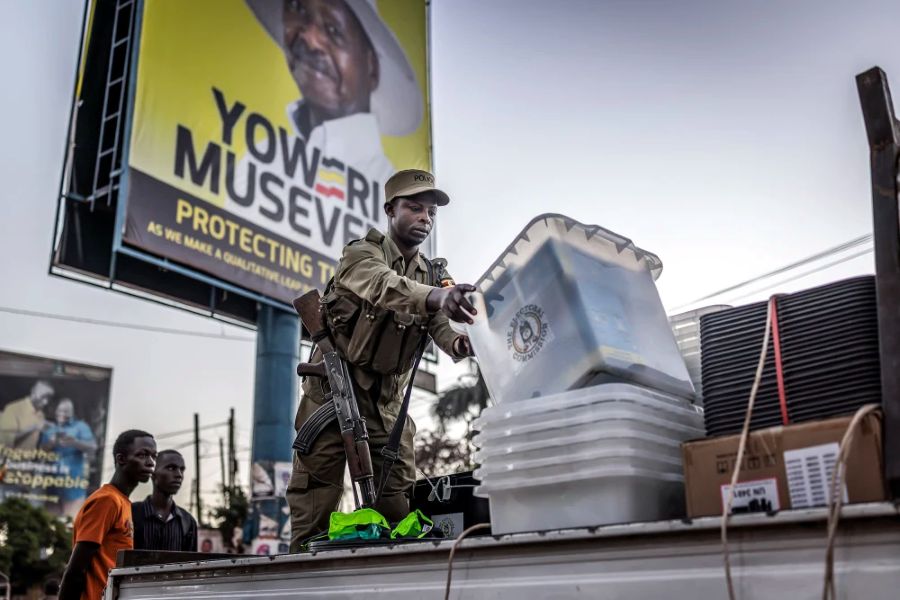
Ugandans voted Thursday amid heavy security, a nationwide internet shutdown, and lingering tension following a violent campaign season. President Museveni, now 81 years old and in power since 1986, is seeking to extend his rule into a fifth decade — a move supporters frame as a guarantee of stability, and critics see as an entrenchment of power.
Speaking to reporters after casting his ballot in western Uganda, Museveni said he expected a decisive victory, predicting he could secure up to 80 percent of the vote, provided the process was fair. He dismissed the possibility of an upset by his main challenger, opposition leader and pop star Bobi Wine, whose real name is Robert Kyagulanyi.
The election is being closely watched both at home and abroad, as analysts say it could determine whether Uganda avoids the kind of post-election unrest seen in neighboring countries. It also comes amid growing speculation over Museveni’s eventual succession after nearly four decades in office.
Museveni has campaigned on promises to “protect Uganda’s gains,” pledging to maintain peace and push the country toward middle-income status. His government highlights economic growth prospects tied to the launch of oil production later this year, as well as Uganda’s role as a regional security partner to Western nations.
Opposition candidate Bobi Wine, 43, has drawn strong support from young voters frustrated by unemployment and limited opportunities in one of the world’s youngest populations. Known as the “Ghetto President,” Wine has accused the government of repression and intimidation, particularly during the campaign.
Security forces have repeatedly broken up opposition rallies, arresting hundreds of Wine’s supporters and fatally shooting at least one person. The government says those actions were necessary to restore order, a claim strongly disputed by human rights groups.
On voting day in the capital Kampala, police were deployed in large numbers, and some polling stations opened late due to technical problems with biometric voter machines. Election officials say the issues are under investigation.
Voters expressed mixed emotions. Some voiced fatigue with long-serving leaders, while others stressed the need for stability. First-time voter Juliet Zawedde told SNEWS TV that leadership transitions should happen democratically, warning against political dynasties.
“In Africa, too many leaders promote family members,” she said. “They need to give others a chance.”
Museveni is widely believed to favor his son, army chief Muhoozi Kainerugaba, as a future successor — though the president denies grooming him for power, and analysts say the idea remains divisive within the ruling party.
Authorities shut down internet access nationwide earlier this week, citing concerns over misinformation. Many Ugandans turned to offline messaging platforms to communicate.
Polling stations are set to close later this evening, with official results expected within 48 hours. For now, there have been no major reports of unrest.
This election could mark a defining moment for Uganda’s political future — and for the longevity of one of Africa’s longest-serving leaders.
Reporting by Ehud Jones.