The Democratic Republic of the Congo—rich in resources but ravaged by war. Despite being home to some of the world’s most valuable minerals used in smartphones, electric vehicles, and renewable energy, the DRC remains engulfed in one of the world’s most devastating and overlooked conflicts. The mineral riches that could transform lives have instead become fuel for violence.
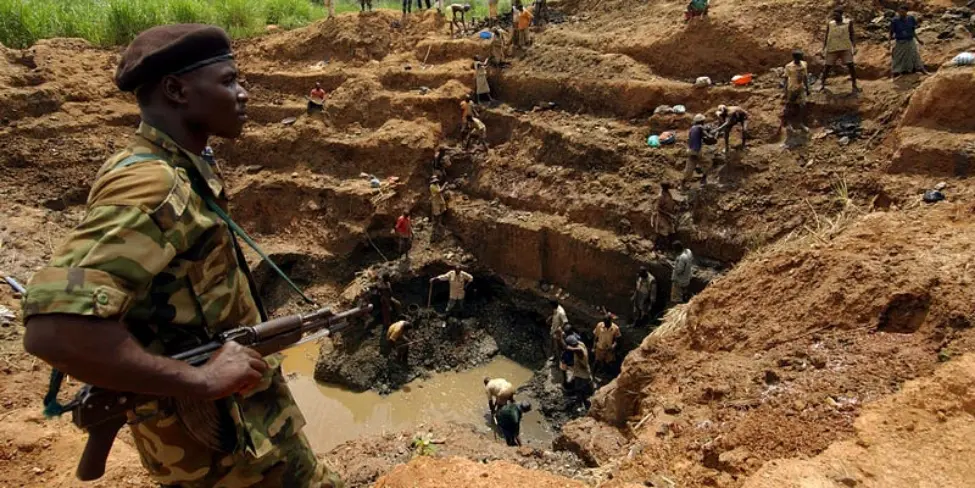
For over 30 years, armed militias in eastern Congo have sustained their operations through the mining and smuggling of what are known as conflict minerals—including coltan, gold, tin, tungsten, and cobalt. These raw materials are critical to powering everything from smartphones to fighter jets.
In 2025, the stakes grew even higher. The M23 rebel group, reportedly backed by neighboring Rwanda, seized the key cities of Goma and Bukavu. Since January alone, their offensive has left more than 7,000 civilians dead. The goal? Control over mineral-rich territories.
From the mountainous jungles of North Kivu to the southern Copper Belt, rebel groups and military forces are locked in a deadly contest for dominance. They’re not only battling each other—but seizing control of mines, extorting miners, and in many cases, forcing children into dangerous labor. M23 now controls all major crossings between Rwanda and the DRC’s eastern provinces—using that dominance to expand illicit mining and smuggling operations.
Rwanda has become a critical hub in this shadow trade. In 2024 alone, the country exported 150 tons of coltan—far more than its domestic production. The same goes for Uganda, which exported over $2 billion in gold in just two years, while barely producing any of its own. Burundi too plays a role, acting as a third transit point in this lucrative black market, enabled by corrupt border officials.
And it’s not just governments and militias profiting. International corporations have been linked to this exploitative chain. Amnesty International has flagged Chinese conglomerate Huayou Cobalt—supplier to tech giants like Apple and Samsung—for failing to report human rights violations in its supply chain. The DRC government has even filed criminal complaints against Apple in France and Belgium, accusing the tech giant of profiting from illegally sourced cobalt.
The human cost is staggering. Villagers are forced to flee, while children as young as ten mine cobalt with their bare hands. UN reports reveal that militias like M23 rake in hundreds of thousands of dollars each month from coltan mines. In Ituri province alone, armed groups earned an estimated $140 million in 2024 from mineral exploitation.
Efforts to sever the link between minerals and militias have repeatedly fallen short. Programs like ITSCI, the world’s primary mineral traceability initiative, have been marred by fraud and recently suspended for major lapses. Yet, companies continue to rely on their flawed certifications.
Critics argue that sanctions and labeling programs often backfire—hurting innocent artisanal miners, while warlords simply find new routes to smuggle their goods. But this crisis runs deeper than minerals.
Ethnic and geopolitical tensions—rooted in the 1994 Rwandan Genocide—continue to shape violence in the DRC. Long-standing conflict between Bantu farmers and Tutsi herders has sparked genocides, massacres, and mass displacements in Rwanda, Burundi, and Congo.
The M23 militia is largely composed of Congolese Tutsis, and claims it’s fighting to protect Tutsi refugees and communities under threat. While the fight for mineral wealth provides funding, the war itself is fueled by far older divisions.
The Great Rift Valley remains a land divided—not just by geography, but by war, greed, and forgotten promises. Its riches continue to enrich the powerful, while its people pay the price in blood.
And with peace talks delayed and military clashes escalating, the world is watching—but is it acting?
Reporting by Ehud Jones.