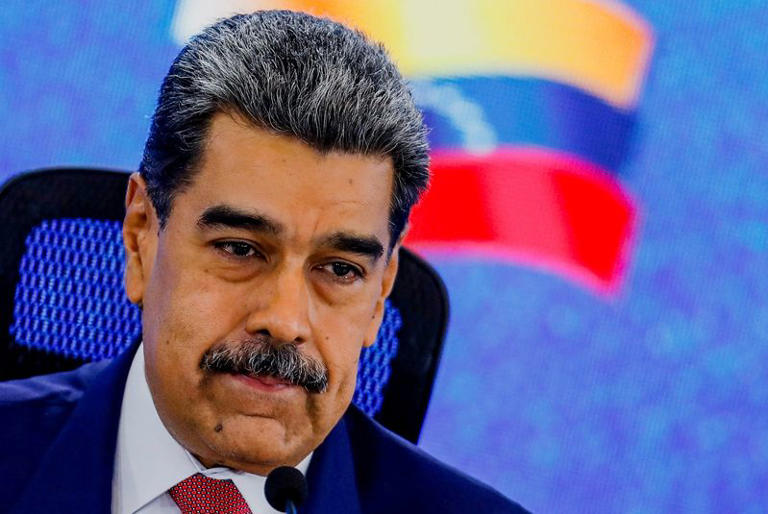
Tensions between the United States and Venezuela have escalated sharply, as Venezuelan President Nicolás Maduro described recent U.S. military actions in the southern Caribbean as an outright “act of aggression” against his country.
Speaking at a press conference on Monday, attended by top military officials and government advisors, Maduro made it clear that he views the recent incidents not as routine tensions or diplomatic disagreements, but as deliberate, targeted aggression by Washington.
“This isn’t tension,” Maduro said emphatically. “It is an aggression all down the line. It’s a police aggression, a political aggression, a diplomatic aggression, and an ongoing aggression of military character.”
The remarks follow a series of U.S. military operations in the southern Caribbean, aimed by the Trump administration at combating drug smuggling. Earlier this month, a U.S. strike resulted in the deaths of 11 individuals and the sinking of a Venezuelan vessel that the U.S. claimed was transporting illegal narcotics. Maduro denounced the strike as a “criminal attack” on Venezuela, questioning the legitimacy of the U.S. justification for the operation.
Maduro also highlighted a breakdown in diplomatic communications between the two nations. Historically, Caracas has maintained dialogue with Washington on a variety of matters, from negotiating hostage releases to election conditions. However, the Venezuelan president stated that current relations have effectively deteriorated.
“The communications with the government of the U.S. are thrown away,” he said. “They are thrown away by them with their threats of bombs, death, and blackmail.”
The president’s statements underscore a rising level of tension in the region, as the U.S. increases its military presence along Venezuela’s maritime borders. According to Washington, these operations are part of a broader campaign to crack down on organized crime and narcotics trafficking. Yet Maduro and other officials in Caracas have framed them as aggressive actions targeting Venezuela’s sovereignty.
Political analysts say the latest escalation may further complicate already strained relations between the two nations. The White House has maintained that its focus is on enforcing international law and combating the flow of illegal drugs from the region, but critics argue that the military approach risks inflaming political tensions and destabilizing the southern Caribbean.
Maduro’s speech also drew attention to the broader international implications of U.S.-Venezuela relations. By labeling the strikes as acts of aggression, Venezuela is sending a clear message to global audiences and regional actors, warning that any further U.S. military action could have serious consequences for diplomatic engagement and regional security.
In addition to condemning the U.S. operations, Maduro’s comments reflected concerns about domestic perceptions. Venezuelan officials have historically relied on strong nationalist rhetoric to consolidate internal support, and the latest accusations of aggression may strengthen public perception of Maduro as a leader resisting foreign interference.
As the situation develops, it remains unclear how the United States will respond to Maduro’s accusations. While Washington maintains that its military activities are intended solely to address drug trafficking, Caracas is framing the strikes as part of a broader, ongoing campaign of intimidation and coercion.
For now, Venezuelans and international observers alike are watching closely. With U.S. military assets increasing in the southern Caribbean, and Caracas positioning itself against perceived foreign aggression, the potential for escalation remains high. Analysts warn that any misstep could exacerbate tensions, with implications for both regional security and international diplomacy.
Reporting by Katy Moore.