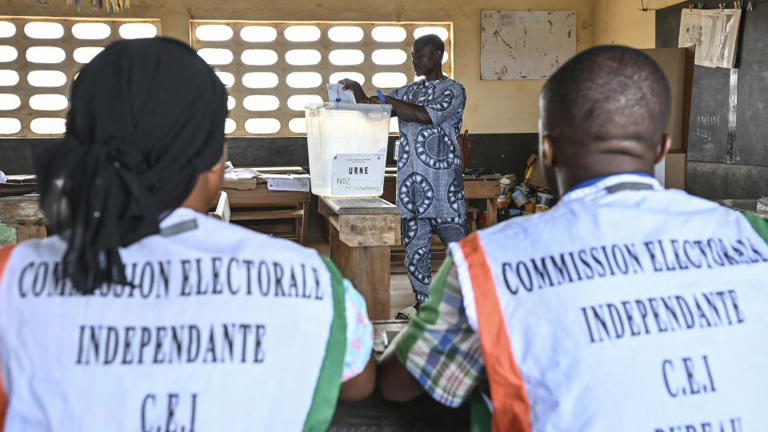
In the West African nation of Ivory Coast, voters are heading to the polls today as President Alassane Ouattara seeks a fourth term in office, facing little resistance from a fragmented opposition. The election, marked by controversy and political tension, could further cement Ouattara’s near two-decade grip on power.
Polling stations opened shortly after 8 a.m. GMT, following minor delays across several regions. Over 8.7 million Ivorians are registered to vote, though participation has historically hovered just above 50 percent in recent elections.
The 83-year-old Ouattara, who has led the world’s largest cocoa producer since 2011, is widely expected to retain power. His party, the Rally of Houphouëtistes for Democracy and Peace (RHDP), currently controls 169 of 255 seats in parliament. Supporters credit him with rebuilding the economy after years of civil war — achieving growth rates near 6 percent annually — but critics say prosperity hasn’t reached everyone. Nearly 38 percent of Ivorians still live in poverty, and youth unemployment remains high.
The lead-up to this vote has been marred by protests and arrests after several prominent contenders were barred from running — including former Credit Suisse executive Tidjane Thiam and ex-president Laurent Gbagbo, who still commands a loyal following. Their exclusion sparked demonstrations that left dozens dead and hundreds detained, reviving memories of the deadly electoral crises of 2010 and 2020, when violence claimed thousands of lives.
Authorities have restricted public gatherings and deployed over 40,000 security personnel nationwide to maintain order. President Ouattara has denied accusations of a political crackdown, insisting the vote will be fair and secure.
According to Séverin Yao Kouamé, a political analyst at the University of Bouaké, Ouattara benefits from what he calls a “favorable geopolitical climate,” as international partners, including France, remain largely focused elsewhere.
Among the four candidates challenging Ouattara are Simone Gbagbo, the former first lady, and Jean-Louis Billion, a former commerce minister under Ouattara. Both have pledged to boost employment and reform agriculture, but analysts say none pose a serious threat to the incumbent.
At his final rally in Abidjan on Thursday, President Ouattara told cheering supporters, “The growth has been huge, but we need to continue.”
A former International Monetary Fund deputy managing director, Ouattara is seen by backers as the architect of Ivory Coast’s infrastructure boom and relative stability.
Vote counting began as polls closed this evening, with provisional results expected within 48 hours. The outcome could determine whether Ivory Coast continues its current trajectory of growth — or faces renewed political unrest.
Reporting by Ehud Jones.