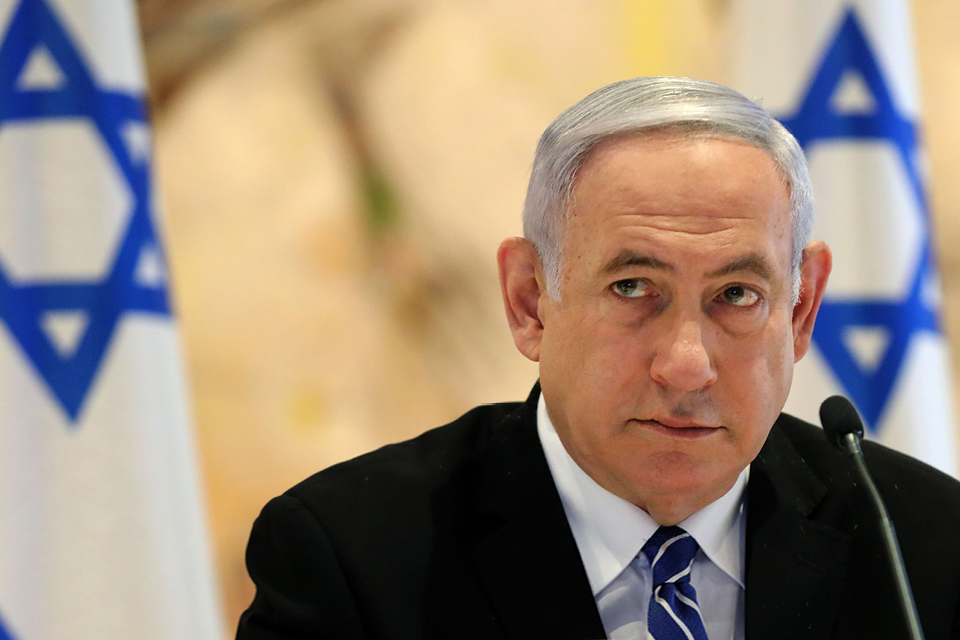
Israeli Prime Minister Benjamin Netanyahu has sharply criticized Qatar, accusing the Gulf state of being ‘tied to Hamas,’ as he defended Israel’s recent strike in Doha. The controversial attack targeted Hamas leaders meeting in the Qatari capital to consider a US-proposed ceasefire for Gaza.
In an interview with the Times of Israel on Tuesday, Netanyahu said the strike ‘was entirely justified’ and accused Qatar of failing to leverage its influence over Hamas. ‘It [Qatar] is tied to Hamas. It strengthens Hamas. It hosts Hamas. It funds Hamas. It has much stronger levers, and it chose not to do that,’ Netanyahu said.
The attack drew immediate condemnation from Qatar, a key US ally and mediator in the Israel-Hamas conflict. Qatar labeled the strike a ‘flagrant violation of all international laws and norms.’ Hamas confirmed that its top leaders survived the strike, though five lower-level members were killed.
On Monday, Qatar convened a summit of Middle Eastern nations in response, with the ruling Emir Sheikh Tamim bin Hamad Al Thani condemning Israel as ‘cowardly and treacherous.’ He criticized Israel for allegedly disregarding the safety of hostages in Gaza while pursuing an aggressive campaign aimed at making Gaza uninhabitable. ‘If you wish to insist on the liberation of hostages, why then do they assassinate all negotiators?’ he asked, calling Israel’s statements a ‘mere lie.’
Meanwhile, Israel has escalated its operations in Gaza with heavy airstrikes, prompting widespread evacuations of civilians. Over 64,000 Palestinians have been killed since the conflict began in October 2023, according to Gaza’s Health Ministry.
Amid international outcry, a team of independent experts commissioned by the United Nations’ Human Rights Council concluded that Israel’s actions in Gaza constitute genocide—a charge Israel has firmly rejected.
The pressure is mounting on Netanyahu from both domestic and international fronts to end hostilities and secure the release of the 20 hostages believed to still be alive in Gaza. With tensions high, regional leaders are calling for restraint, even as the humanitarian crisis deepens.
Reporting by Carl Montel.