We take a closer look at a familiar political question resurfacing in a very different era: who represents the future of American politics?
For many Americans, that question once had a clear answer. In 2008, a little-known senator from Illinois stepped onto a New Hampshire stage and delivered a message that would reshape modern political memory. Barack Obama, then an outsider challenging a deeply entrenched Democratic establishment, offered voters a sense of optimism, change, and possibility. His now-famous refrain — “Yes we can” — came to symbolize not just a campaign, but a generational moment.
Obama’s rise was marked by skepticism from party elites, concerns about his limited experience, and criticism of policies viewed at the time as radical. Yet his message resonated. While his presidency ultimately reflected mainstream Democratic governance, the promise he embodied left a lasting imprint. That promise, many believed, was extinguished with the rise of Donald Trump in 2016 — a political backlash that suggested the Obama vision had been overtaken by a far more polarized America.
But tonight, some Democrats are asking whether that story is finished — or simply paused.
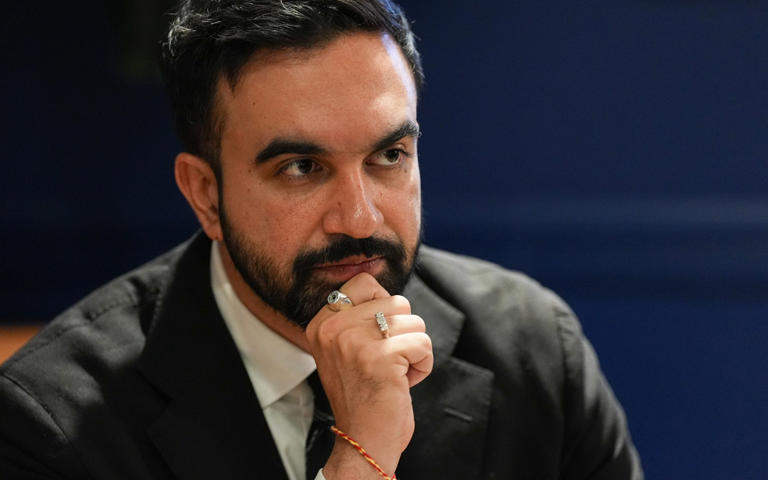
The New York City mayoral candidate has increasingly drawn comparisons to Obama, not only for his speaking style — blending polish with earnest conviction — but for the generational contrast he presents on the political stage. That contrast was on display during the most recent mayoral debate, where Mamdani stood out sharply against opponents associated with earlier Democratic eras.
Much like Obama in 2008, Mamdani began as a long-shot contender. His campaign was initially dismissed by party insiders, and even ideological allies questioned its viability. The Democratic National Committee largely kept its distance — until his momentum became impossible to ignore.
Unlike many rising candidates, Mamdani’s campaign was not tightly choreographed by party strategists. Instead, it has been described by supporters as organic and grassroots-driven. And as his popularity has grown, so too has the attention of Democratic veterans.
Several prominent figures from the Obama era have begun engaging with Mamdani’s campaign. Political strategist David Axelrod has visited campaign offices. Former DNC chair Patrick Gaspard has reportedly facilitated dialogue with party insiders. Veteran campaign strategist Jeffrey Lerner has joined the team. Even former President Obama has reached out personally to congratulate Mamdani on his progress.
For many observers, these gestures signal something significant: a willingness by parts of the Democratic establishment to step aside in the face of mounting pressure for generational and ideological change.
Still, Mamdani’s rise has not gone uncontested.
His chief rival, former New York Governor Andrew Cuomo, has struggled to regain political footing following his resignation amid sexual harassment allegations — allegations he has denied. Some critics have attempted to frame Mamdani’s success as circumstantial rather than substantive.
Others have focused sharply on Mamdani’s policy proposals, which include major reforms to public safety, expanded state involvement in essential services, and increased public spending on social programs. Opponents have labeled these ideas unrealistic, while supporters argue they reflect the urgency of economic and social crises facing working-class voters.
What is notable, analysts say, is that sustained attacks on Mamdani’s platform have not diminished his appeal. In fact, his base appears energized by his refusal to moderate his positions in response to criticism — a dynamic that political historians note bears resemblance to other populist movements, both left and right.
For years, Democrats have debated whether their party would experience a disruptive moment similar to the Republican Party’s transformation in 2016. Efforts by progressive figures such as Bernie Sanders fell short of securing full party control. Following electoral setbacks in 2024, Democratic leadership largely concluded that a return to moderation was the safest path forward. But voter enthusiasm suggests otherwise.
As polarization deepens, many Democratic voters appear less interested in compromise and more drawn to bold, unapologetic agendas. Mamdani’s supporters describe his campaign as a form of “hope-driven radicalism” — a belief that sweeping change, rather than incremental reform, is the only viable response to today’s challenges.
Political analysts note an important distinction: while Donald Trump’s rise was driven largely by reaction and disruption, Mamdani’s appeal lies in reconstruction — the idea that something new can be built after years of institutional breakdown.
Whether Zohran Mamdani ultimately wins his current race remains to be seen. But his emergence has already reignited a debate about the future direction of the Democratic Party — and about whom, if anyone, can credibly claim the mantle once carried by a young senator standing in New Hampshire nearly two decades ago.
For now, one thing is clear: the question of America’s political future is no longer settled.
Reported by Katy Moore.