Iraq has announced that a small contingent of U.S. military advisers will remain in the country, citing ongoing concerns over Islamic State activity in neighboring Syria.
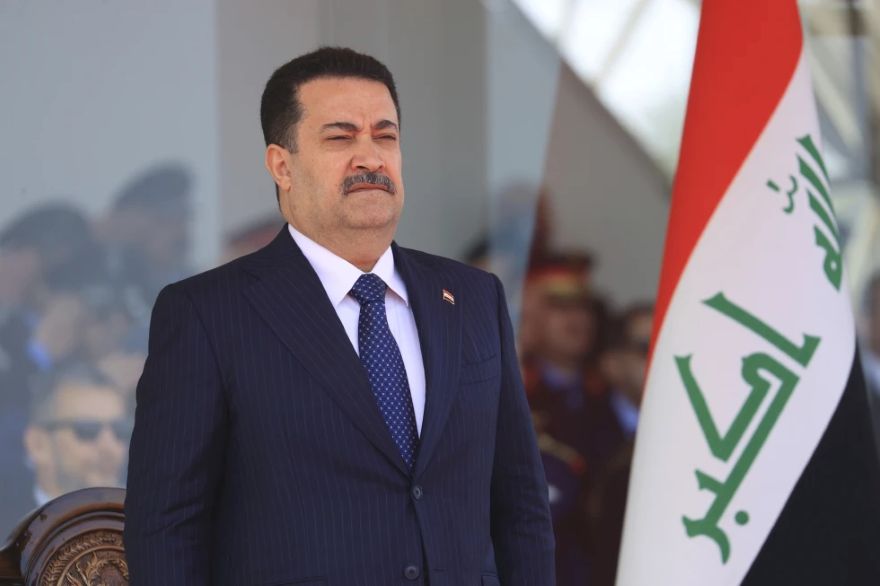
Iraqi Prime Minister Mohammed Shia al-Sudani told reporters in Baghdad that U.S. advisers and support personnel are stationed at Ain al-Asad air base in western Iraq, near Baghdad, and al-Harir air base in northern Iraq.
Originally, Baghdad and Washington had agreed to wind down the U.S.-led coalition fighting IS in Iraq by September, with several bases set for full withdrawal. However, Prime Minister al-Sudani explained that developments in Syria have required maintaining a small unit of between 250 and 350 advisers at Ain al-Asad.
The advisers are tasked with coordinating counter-IS surveillance and operations with the U.S. al-Tanf base in Syria, while other U.S. sites in Iraq are undergoing gradual reductions in personnel and operations.
Al-Sudani emphasized that, while the Islamic State no longer poses a significant threat inside Iraq, Baghdad remains vigilant given the ongoing instability in Syria following the fall of former President Bashar Assad last December.
The prime minister also addressed Iraq’s broader foreign policy, stressing a careful balance between relations with the United States and neighboring Iran. He stated clearly: “We put Iraq first, and we do not wish to act as a proxy for anyone. Iraq will not be a battlefield for conflicts.”
Al-Sudani further called on the U.S. to resume dialogue with Iran, describing previous “maximum pressure” policies as counterproductive and underlining the importance of treating Iran as an influential neighbor through direct diplomacy.
Tensions between Baghdad and Washington continue over the presence of Iran-backed militias in Iraq. The Popular Mobilization Forces, originally formed to fight IS, operate with significant autonomy, despite being formally under Iraqi military control. The government is pursuing disarmament and political integration of armed factions, encouraging them to either join state institutions or participate in the political process.
As Iraq prepares for parliamentary elections next month, al-Sudani highlighted that armed factions transforming into political entities retain the constitutional right to run for office, as the country looks to maintain stability and peaceful governance.
Iraq’s careful balancing act reflects both security priorities and regional diplomacy, as the nation continues to navigate threats from extremist groups while fostering dialogue with powerful neighbors.
Reporting by Carl Montel.