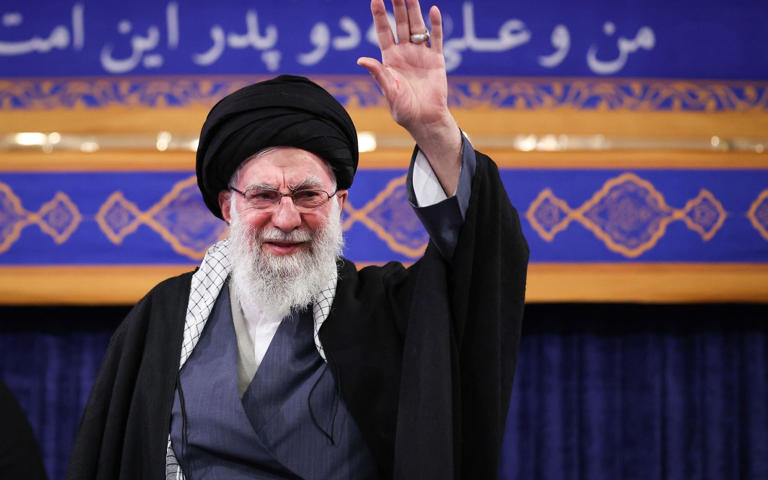
Iran’s Supreme Leader Ayatollah Ali Khamenei has publicly acknowledged the growing unrest sweeping the country and, in a rare move, signaled a willingness to engage in talks with demonstrators—while issuing a stern warning to those he labels as violent agitators.
In his first public remarks since protests erupted last weekend, Khamenei drew a clear distinction between what he described as “legitimate protest” and what he called “rioting.” Speaking on Saturday, the supreme leader said peaceful demonstrations are justified, but warned that violence would not be tolerated.
He stated that Iranian authorities are prepared to speak with protesters, but added that dialogue with what he termed “rioters” would be pointless, saying such individuals must be dealt with firmly.
The comments come as security forces continued their crackdown on unrest linked to Iran’s deepening economic crisis. At least three more people were killed overnight, bringing the reported death toll to at least ten since demonstrations began earlier this week. Human rights groups say dozens more have been wounded, many by live ammunition and pellet guns.
What began as protests over the collapsing Iranian currency has since evolved into broader anti-government demonstrations, spreading to more than 100 locations across 22 provinces. The unrest marks the most serious challenge to Iran’s leadership since the nationwide protests of 2022, sparked by the death of Mahsa Amini while in police custody.
Iran’s president, Masoud Pezeshkian, also acknowledged public anger, saying he would personally meet with protest groups if necessary. He cited Western sanctions as a major driver of Iran’s economic collapse, noting the rial has plunged to around 1.34 million to the U.S. dollar, while inflation has surged above 42 percent.
Meanwhile, Iran’s parliament signaled a possible political concession. A lawmaker announced that long-delayed legislation allowing regulated public assemblies may soon be brought to a vote. The proposal would permit demonstrations in designated locations approved by provincial authorities.
Despite these signals, violence continues to escalate. Videos circulating online show clashes between protesters and security forces, police vehicles set ablaze, and chants of “death to the dictator” echoing through city streets. Women have also joined the demonstrations, with footage showing female protesters being forcibly detained.
The situation has drawn sharp international attention. U.S. President Donald Trump warned that if Iranian authorities violently suppress peaceful protesters, the United States could intervene, saying America was “locked and loaded.” Iranian officials quickly responded, with parliamentary speaker Mohammad Bagher Ghalibaf warning that U.S. troops and bases in the region would become legitimate targets if Washington intervenes.
Khamenei, for his part, blamed “foreign enemies” for Iran’s economic instability, accusing outside forces and infiltrators of exploiting merchant protests to fuel anti-regime sentiment. He insisted that the country’s powerful bazaar class remains loyal to the Islamic Republic.
Irans supreme leader calls for talks with demonstrators
As protests enter a seventh day, the offer of dialogue from Iran’s supreme leader marks a notable shift—but whether it will ease tensions or further inflame the streets remains uncertain.
We will continue to monitor developments closely.
Reporting by Carl montel.