
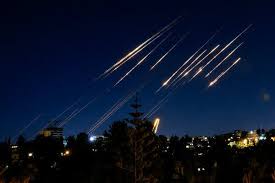
The Middle East is on edge as a deadly escalation unfolds between Israel and Iran—marking one of the most serious confrontations in the region in recent years.
Iran launched a barrage of missile strikes across Israel today, targeting major cities including Tel Aviv and Haifa. At least eight people have been confirmed dead, and over 100 injured, according to medical sources. Among the casualties is a young girl, just eight years old, killed in the coastal city of Bat Yam. Reports also indicate dozens remain missing.
The Iranian attack follows a series of intense Israeli airstrikes inside Iran earlier this week. Those strikes, which hit both civilian infrastructure and key energy sites—most notably igniting a massive blaze at the Shahran oil facility in Tehran—were said by the Israeli military to be directed at facilities linked to what it claims is Iran’s nuclear weapons program.
Iranian media, however, report that at least 80 people have been killed in those attacks, including 20 children, with more than 800 others wounded over a two-day span.
In the wake of these hostilities, Iran has canceled its participation in a sixth round of nuclear negotiations with the United States. Iranian Foreign Minister Abbas Araghchi stated there is “no justification” for further talks while what he described as Israeli aggression continues unabated.
Meanwhile, pressure is mounting in Washington. The US Council of Muslim Organizations—the country’s largest coalition of Muslim advocacy groups—has issued a stark warning to President Trump, urging him to reject what they call Israel’s “illegal and unprovoked war on Iran.” The group’s statement draws comparisons to the Iraq War, condemning the narrative around Iran’s nuclear program as misleading and potentially catastrophic.
They accuse the Israeli government of dragging the United States toward deeper conflict and call for an immediate halt to Israel’s military campaign.
On the international front, China is weighing in. In back-to-back phone calls with the foreign ministers of both Iran and Israel, Chinese Foreign Minister Wang Yi condemned Israel’s attacks as “brutal” and a clear violation of international law. He called for restraint and emphasized that diplomacy—particularly regarding Iran’s nuclear program—has not yet been exhausted.
Back in Washington, former US nuclear negotiator Alan Eyre expressed concern that Israel and Iran are now locked in what he calls a “dangerous, escalatory spiral.” Eyre warns that despite President Trump’s belief that Israeli pressure might force Iran back to the negotiating table, the likelihood of that outcome is slim, especially as public outrage in Iran grows.
As it stands, Israel faces little international pressure to de-escalate, and its long-term objectives remain unclear. Analysts continue to debate whether the Israeli government is focused solely on dismantling Iran’s nuclear infrastructure—or if it is aiming for something more far-reaching, like regime change in Tehran.
This is a rapidly developing story, and we’ll continue to bring you updates as they come in.
Reporting by Ehud Jones.