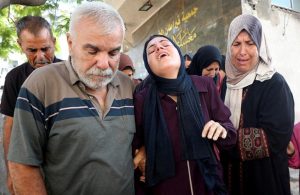
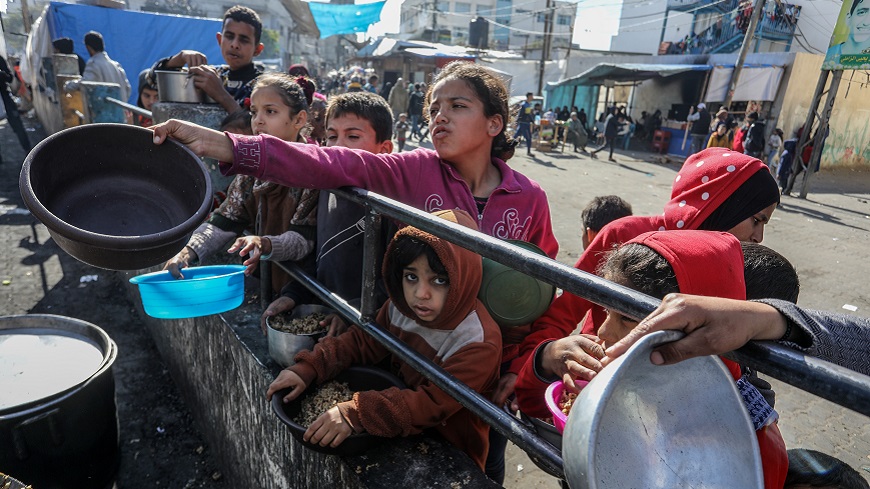
We turn to Gaza, where aid agencies warn the situation has reached an unimaginable crisis point as Israel’s blockade on humanitarian supplies stretches into its second month.
After 19 months of devastating war, life in Gaza has become a daily struggle for survival. Residents describe a grim reality: dwindling food, no fuel, and relentless airstrikes. Israel’s continued closure of border crossings since March has cut off vital humanitarian and commercial shipments, leaving 2.2 million Palestinians trapped in worsening conditions.
Ahmad Qattawi, speaking to us by phone from Gaza City, said, ‘The reality here is indescribable. We live in tragedy, searching every day for food and wondering if we’ll survive.’ With bakeries closed and prices skyrocketing, even basic vegetables are out of reach for most families. A kilogram of tomatoes, once affordable, now costs nearly $8 far beyond what many can pay. Qattawi says his family survives mainly on canned goods, forced to burn anything they can find—old clothes, shoes, debris—just to cook.
Aid groups warn that malnutrition is rising as supplies run out. The World Food Programme says its food stocks are depleted; all 25 WFP-supported bakeries have shut down, and its final shipments of flour have already been distributed.
Meanwhile, Israeli airstrikes continue across Gaza. Amjad Shawa, head of the Palestinian NGO Network, described the situation bluntly: ‘There’s no safe place left. We have attacks on shelters, tents, residential buildings. And everyone is starving. Even we humanitarians don’t know what to eat.’
Health care, too, is nearing collapse. The UN reports hospitals overwhelmed and unable to get critical medicine, vaccines, or equipment due to the blockade. Aid groups accuse Israel of using food and humanitarian aid as a bargaining chip—something international law prohibits.
The blockade is part of what Israeli officials call a ‘maximum pressure’ campaign aimed at forcing Hamas to release the remaining hostages and eventually dismantle the militant group. Israeli leaders have accused Hamas of diverting aid, while planning further military operations, including a possible call-up of tens of thousands of reservists.
Israel’s war began after Hamas-led militants attacked southern Israel in October 2023, killing nearly 1,200 people and taking 250 hostages. Israel’s military responded with a massive ground offensive and air campaign. Gaza’s Health Ministry now reports more than 52,000 deaths, with many more feared trapped under rubble.
UN officials warn that not only is Israel blocking aid from entering, but its military operations have cut off Palestinians’ access to farmland and fishing areas—essentially eliminating Gaza’s ability to feed itself. Gavin Kelleher of the Norwegian Refugee Council told reporters, ‘Palestinians aren’t just starving because aid isn’t coming in—they’re starving because they can’t grow or catch their own food.’
For many families, the fear of losing what little they have left is constant. Mahmoud Hassouna, a 24-year-old displaced from Khan Younis, told us, ‘My only wish is not to be displaced again. And after that, I just want this war to end.’
With no ceasefire in sight and aid agencies warning of a deepening humanitarian catastrophe, the people of Gaza face another uncertain and dangerous chapter.
Reporting by Carl Montel.