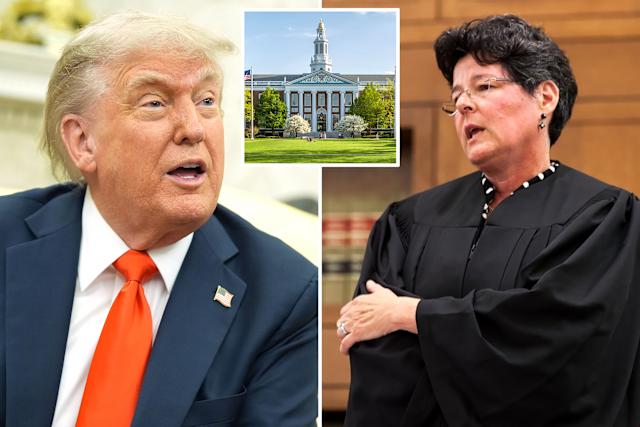
In a significant legal victory for higher education, Harvard University has successfully obtained temporary relief from the Trump administration’s controversial restrictions on international students. The policy, announced earlier this month by U.S. Immigration and Customs Enforcement (ICE), would have forced foreign students to leave the country or transfer schools if their universities shifted to online-only instruction due to the COVID-19 pandemic. Harvard, along with the Massachusetts Institute of Technology (MIT), filed a lawsuit challenging the rule, arguing that it endangered students’ academic careers and unfairly targeted institutions adapting to public health guidelines.
Legal Battle and Court Ruling
The U.S. District Court in Boston sided with Harvard and MIT, with Judge Allison Burroughs announcing that the federal government had agreed to rescind the policy and revert to previous guidelines. Under the March 2020 rules, international students were permitted to remain in the U.S. even if their universities transitioned to remote learning. The abrupt reversal by ICE had sparked outrage among educators, lawmakers, and business leaders, who warned that the rule would harm both students and the U.S. economy.
Harvard President Lawrence Bacow praised the decision, calling it a “major win” for students and universities nationwide. “This policy was not only cruel but also senseless,” Bacow stated. “It put hundreds of thousands of international students at risk of deportation simply because their schools were prioritizing safety during a pandemic.”
Broader Implications for Higher Education
The ruling provides immediate relief not just for Harvard and MIT but for universities across the country, many of which had joined legal challenges or submitted supporting briefs. Institutions such as Stanford, Cornell, and the University of California system had also voiced strong opposition, warning that the policy would disrupt research, weaken academic programs, and damage America’s reputation as a top destination for global talent.
The case also highlights the ongoing tension between the Trump administration and higher education institutions over immigration policies. Previous measures, such as travel bans and stricter visa approvals, have already led to declining international student enrollment. Educators fear that such policies could have long-term consequences, pushing future students toward universities in Canada, Europe, and Australia instead.
What Comes Next?
While the court’s decision is a temporary reprieve, the legal battle may not be over. The Trump administration could attempt to revise or reintroduce the policy, though time is running short before the fall semester begins. Meanwhile, universities are urging Congress to pass clearer protections for international students, whose contributions—both academic and economic—are seen as vital to U.S. innovation and competitiveness.
For now, Harvard and other institutions can breathe a sigh of relief. But as the pandemic continues to reshape education, the fight for fair and stable policies for international students remains far from settled.
Reporting by Katy Moore.