As Gaza reels from two years of war, humanitarian workers and analysts say one fact is plain — Hamas remains the de‑facto authority in Gaza, and its effort to hold power depends on retaining arms. Our report looks at how that reality is shaping security, governance and the fragile prospects for a lasting ceasefire.
Humanitarian teams inside Gaza often avoid saying the group’s name aloud, referring instead to Hamas as the “de‑facto authority.” That careful language reflects a hard truth: even after months of intense fighting, administrative networks linked to the group continue to be central contact points for aid agencies — and armed units tied to Hamas are enforcing order in many neighborhoods.
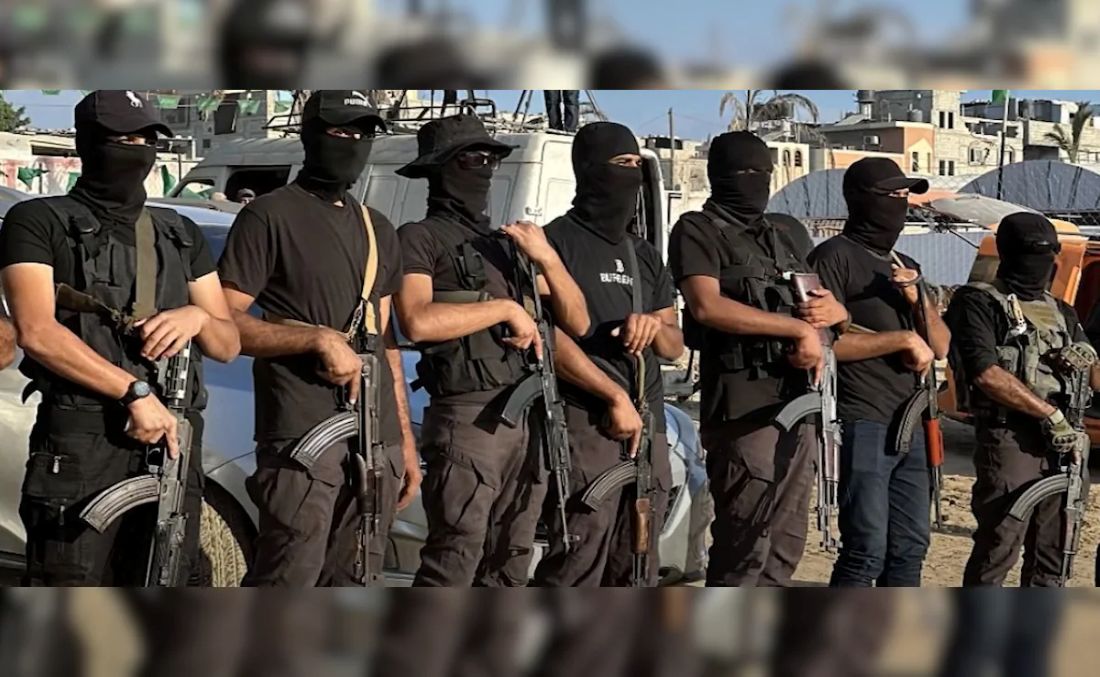
Since Israeli forces pulled back from some areas, Hamas fighters have moved quickly to reassert control across roughly half the territory still inhabited by more than two million people. Reports describe house raids, skirmishes with rival gangs, and public executions of people accused of collaboration — dramatic displays of force intended to deter rivals and restore order.
But that campaign raises a central dilemma. Under international ceasefire proposals, Hamas is expected to disarm. Yet senior Hamas officials and some mediators say the group will not surrender the light weapons it relies on to crush rivals and enforce discipline. In short: disarmament as written — and retention of control on the ground — are in direct tension.
Reactions among Gazans are mixed. Some residents welcome the clampdown as a bulwark against looting and lawlessness. “We need order,” one local told reporters, arguing that harsh measures restore a degree of security. Others condemn summary executions and warn that violent retribution will compound the territory’s suffering.
Analysts say the vacuum created by widespread destruction — and by the absence of any clearly declared alternative authority — has made it easier for the most organized armed group to fill the void. Israel, critics note, never outlined a post‑conflict government for Gaza and has restricted the Palestinian Authority’s role, leaving an opening Hamas has exploited.
The U.S. peace blueprint envisions a transitional administration of unaligned technocrats under international oversight and explicitly excludes Hamas from future governance. But negotiators have not agreed on timetables or enforcement mechanisms. And while some heavier weapons may be handed over, experts expect Hamas to cling to lighter arms that secure its local dominance — effectively remaining the de‑facto ruler, even if stripped of formal power.
Complicating matters further are contradictory signals from outside powers. Comments suggesting Hamas has been given latitude to target internal threats were followed by warnings that the group will be forcibly disarmed if it does not comply — raising the prospect of renewed violence if negotiations fail.
Bottom line: for Gaza’s civilians, the question of who governs is not just political — it is existential. Without a credible alternative to a force that already controls territory and institutions, the prospect of a durable peace looks tenuous. For now, Hamas’s bid to preserve an armed capability appears central to its strategy for holding power inside Gaza.
We will continue to follow developments on the ground and in the negotiating rooms.
Reporting by Carl Montel.