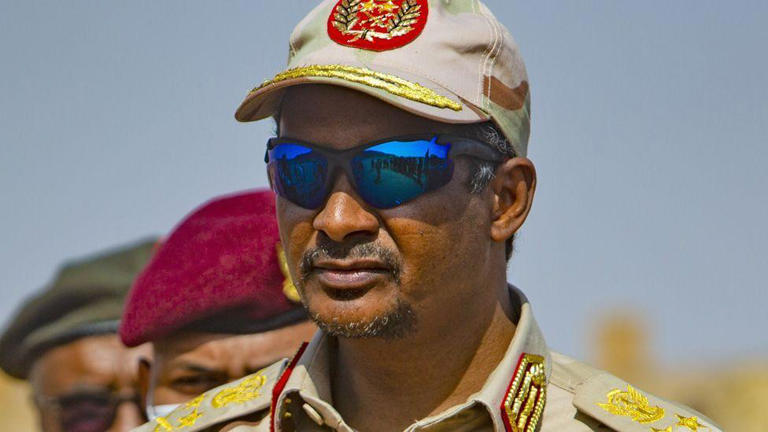
Sudan’s political and military landscape is dominated by one man—Mohamed Hamdan Dagolo, widely known as “Hemedti.” What began as humble beginnings trading camels and gold has transformed into commanding one of the most powerful paramilitary forces in Sudan, the Rapid Support Forces, now controlling nearly half the country.
Hemedti’s rise to power traces back to the arid deserts of Darfur. Born in the mid-1970s into the Mahariya clan of the camel-herding Rizeigat tribe, his early years were shaped by hardship and opportunity. Dropping out of school as a young teen, he earned his first fortune trading camels across Libya and Egypt, navigating the lawless terrain of Darfur, then a neglected and turbulent region.
In the early 2000s, as Sudan plunged into brutal conflict, Hemedti emerged as a commander in the Janjaweed militias—Arab paramilitary groups notorious for their violent campaigns against Darfur’s indigenous black populations. Human rights groups and international investigations have linked these forces to mass atrocities and genocide.
Over the years, Hemedti deftly consolidated power. He expanded his reach from battlefield commander to influential paramilitary leader and shrewd businessman. His family’s company, Al-Gunaid, became Sudan’s largest gold exporter, securing wealth and influence that rival any traditional political elite.
In 2013, the Janjaweed were rebranded as the Rapid Support Forces (RSF), formalizing Hemedti’s control. The RSF was modernized with new weapons, vehicles, and backing from foreign allies, including the United Arab Emirates, which has supplied drones and heavy weaponry. Hemedti also forged ties with Russia’s Wagner Group, securing military training and expanding his network.
Despite early promise as a potential reformer during Sudan’s 2019 revolution against longtime president Omar al-Bashir, Hemedti’s legacy became marred by continued brutality. When the RSF violently cracked down on peaceful protesters, accusations of rape, murder, and mass torture followed—charges that Hemedti denies.
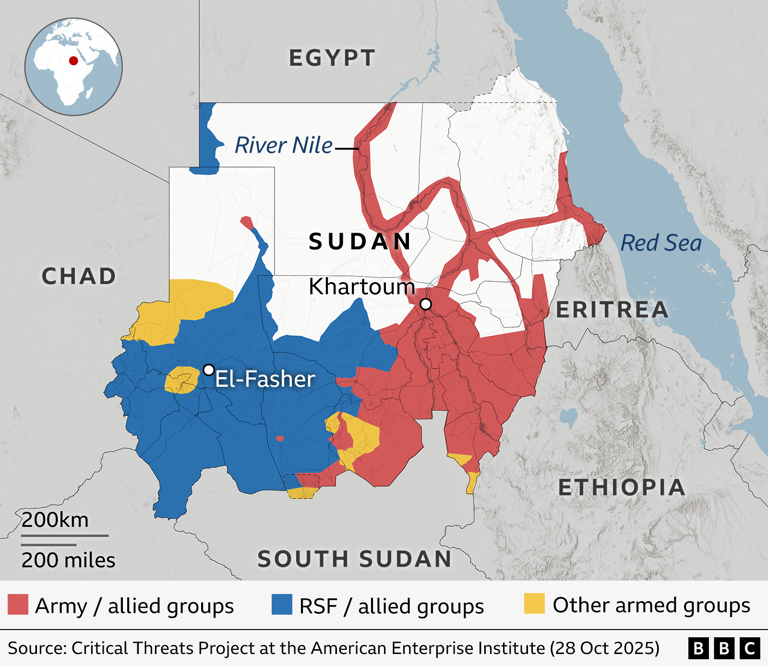
In recent years, tensions with Sudan’s regular army, led by General Abdel Fattah al-Burhan, escalated into full-scale civil war. The RSF’s seizure of key cities like el-Fasher in Darfur has been accompanied by devastating human rights abuses, including mass killings and displacement of civilians. The United Nations and international observers warn the violence could amount to genocide.
Despite serious allegations, Hemedti has remained a dominant figure, even forming a rival “Government of Peace and Unity” to challenge Khartoum’s authority. The RSF’s advanced drone capabilities, supported by foreign arms shipments, have played a critical role in securing their territorial gains.
As Sudan’s brutal conflict grinds on, Hemedti’s ambitions remain unclear—whether he seeks to carve out a breakaway state or become the ultimate power broker behind the scenes. One thing is certain: from trading camels and gold in the desert to wielding power over millions, Mohamed Hamdan Dagolo’s journey reflects both the complexities and tragedies shaping modern Sudan.
We will continue to follow this developing story.
Reported by Ehud Jones.