Rising tensions between Washington and Moscow after the United States seized a Russian-flagged oil tanker in international waters, accusing it of violating U.S. sanctions linked to Venezuela.
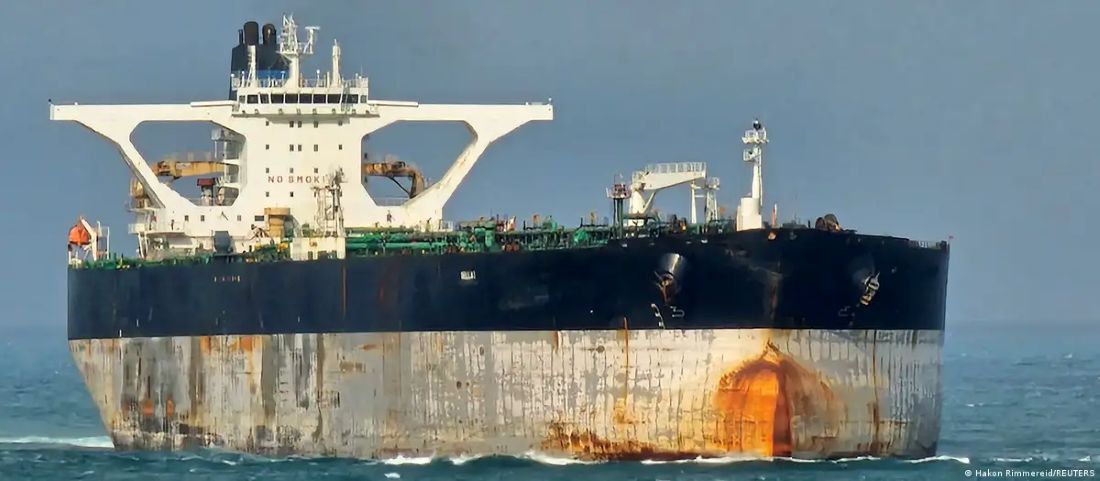
The vessel, known as the Marinera—formerly called Bella-1—was commandeered by U.S. special forces in the North Atlantic following what American officials describe as a weeks-long pursuit. The U.S. military’s European Command confirmed the seizure, saying the tanker was taken into custody for breaching U.S. sanctions on Venezuelan oil.
U.S. Defense Secretary Pete Hegseth defended the operation in a social media post, stating that the U.S. blockade of sanctioned and illicit Venezuelan oil remains, quote, “in full effect—anywhere in the world.”
According to U.S. officials, the Marinera had previously evaded a maritime blockade of sanctioned tankers traveling to and from Venezuela and refused multiple attempts by the U.S. Coast Guard to board it. American authorities say the ship is part of a so-called “shadow fleet” used to transport oil for countries including Venezuela, Russia, and Iran in defiance of international sanctions.
Russian state media reported that U.S. forces boarded the tanker from a helicopter, publishing images showing the aircraft hovering over the ship. The outlet cited unnamed sources claiming the vessel had already narrowly avoided capture during an earlier attempt made in stormy conditions.
Russia has strongly condemned the seizure. In a statement, Moscow’s Transport Ministry accused the United States of violating international maritime law, arguing that under the United Nations Convention on the Law of the Sea, freedom of navigation applies on the high seas.
The ministry said the Marinera was operating legally under the Russian flag and that contact with the vessel was lost after U.S. naval forces boarded it in open waters, outside the jurisdiction of any country. Shipping data showed the tanker was approaching Iceland’s exclusive economic zone at the time it was seized.
SNEWS TV reports that a Russian submarine and worship were in the area during the operation, though there were no signs of any direct confrontation with U.S. forces.
From Moscow, journalist Dmitry Medvedenko described the incident as the latest chapter in what he called a “cat-and-mouse game” between U.S. and Russian authorities, noting at least two previous attempts to seize the tanker in recent weeks.
The Russian Foreign Ministry said the level of attention directed at the vessel by U.S. and NATO forces was excessive and unjustified, emphasizing that the ship was civilian and peaceful in nature.
The Marinera had already been sanctioned by the United States in 2024 for allegedly smuggling oil on behalf of a company linked to the Lebanese militant group Hezbollah. The U.S. Coast Guard previously attempted to board the tanker in the Caribbean last December, but the vessel refused and crossed the Atlantic.
The seizure comes as part of U.S. President Donald Trump’s intensified crackdown on sanctioned oil shipments tied to Venezuela. Following the capture of Venezuelan President Nicolás Maduro over the weekend, Trump said the United States would take control of Venezuela’s oil sector and claimed the country would hand over tens of billions of barrels of sanctioned oil to Washington.
In a related development, U.S. Homeland Security Secretary Kristi Noem announced that American forces also seized a second vessel, the M Sophia, a Panama-flagged supertanker, in international waters near the Caribbean. SNEWS TV reports the ship was sanctioned and had recently left Venezuelan waters as part of a fleet transporting oil to China with its tracking systems turned off.
Officials say both vessels had either recently docked in Venezuela or were en route there at the time of their seizures.
From Washington, correspondents describe the actions as a significant escalation in U.S. enforcement of sanctions, signaling a broader operation now underway against oil tankers accused of bypassing restrictions.
The seizures are expected to further strain relations between the United States and Russia, as diplomatic fallout continues to unfold.
Reporting by Kathy Moore.