
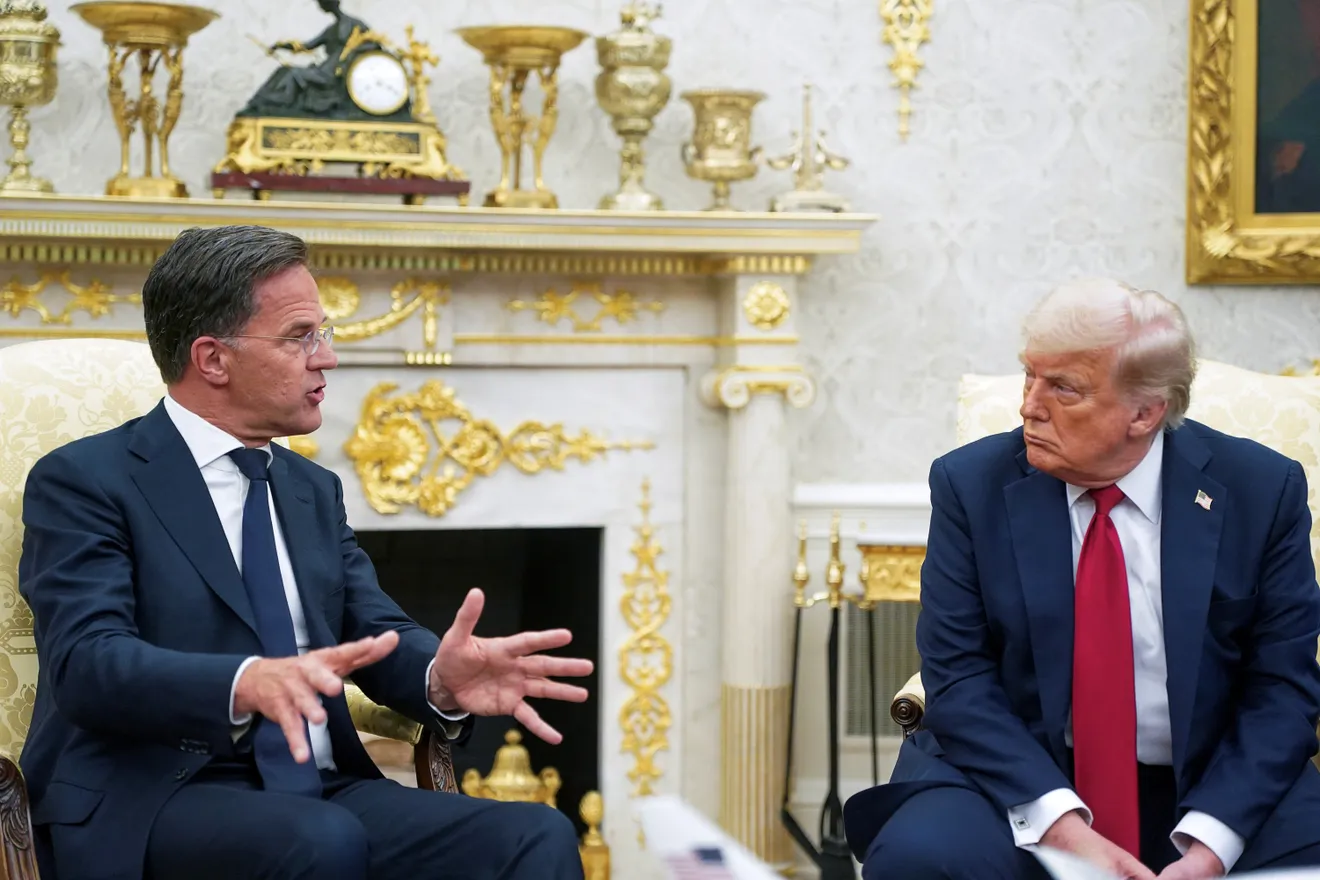
We begin tonight with escalating developments in the ongoing war in Ukraine — and a sharp shift in U.S. strategy under President Donald Trump. In a bold and forceful move, President Trump has vowed to ramp up military support for Ukraine through NATO channels — and is now threatening harsh economic consequences for Russia and its trading partners if peace talks don’t succeed in the next 50 days.
Speaking from the Oval Office on July 14 alongside NATO Secretary General Mark Rutte, President Trump announced that U.S.-supplied weapons would be delivered to NATO for transfer to Ukrainian forces. Simultaneously, Trump warned of “very severe” secondary tariffs targeting nations doing business with Russia, unless a ceasefire agreement is finalized within the specified time frame.
“We’re going to be doing very severe tariffs if we don’t have a deal in 50 days,” Trump stated, signaling mounting frustration with Moscow’s defiance and efforts to end the war.
The message was clear: Trump wants swift results and is losing patience with Russian President Vladimir Putin.
“I’m disappointed in President Putin. I thought we would’ve had a deal two months ago,” Trump added. “He didn’t fool me — but he’s fooled a lot of people over the years.”
The three-year conflict, sparked by Russia’s invasion of Ukraine, has killed tens of thousands and displaced millions. Trump, who previously promised to end the war “within days” of returning to office, is now intensifying diplomatic and economic pressure in what appears to be a shift toward direct action.
The military aid now being routed through NATO is financed primarily by European nations — a point Trump emphasized during the announcement.
“We’re in for a lot of money, and we just — we don’t want to do any more,” he said.
NATO’s Mark Rutte confirmed that Trump had personally called him to push the plan forward, ensuring Ukraine’s defense without draining U.S. resources.
“It’s a really big deal,” Rutte remarked. “This is just the first wave — more military equipment is coming.”
Among the promised hardware: advanced air defense systems, including Patriot missiles and batteries. According to the plan, several allied countries will send existing Patriot systems to Ukraine, while the United States will replace those systems with fresh supplies. The first shipments are expected to arrive within days.
Ukrainian President Volodymyr Zelenskyy expressed gratitude via social media, thanking Trump for his “willingness to support Ukraine” and help secure a lasting and just peace.
Zelenskyy noted that their recent conversation focused on ways to better protect civilians and strengthen Ukraine’s defenses in the face of continued Russian aggression.
Trump’s evolving stance on Ukraine follows a rocky relationship with Zelenskyy. Back in February, the two clashed publicly in the Oval Office, and Trump briefly paused U.S. intelligence sharing and weapons deliveries — a decision that was reversed just last week.
The Pentagon had also halted some arms transfers amid a strategic review of American stockpiles. But now, with Trump’s renewed focus and European nations footing more of the bill, aid is flowing once again.
Meanwhile, Russia has still not agreed to the ceasefire Ukraine accepted back in March. Trump’s latest comments suggest growing tension — and possibly a more confrontational phase in U.S.-Russia relations under his leadership.
With weapons on the move and economic threats on the table, President Trump is dramatically reshaping America’s involvement in the Ukraine conflict — placing both Moscow and NATO allies on alert.
We will continue monitoring international reaction and what this means for the global security landscape.
Reporting by Megan Owen