In a major escalation in trans-Atlantic tensions, as President Donald Trump issues an unprecedented ultimatum to Europe — demanding the sale of Greenland to the United States or facing sharply higher tariffs.
In a series of posts on Truth Social this weekend, President Trump announced that imports from eight NATO member nations will be hit with escalating U.S. tariffs unless a deal is reached for what he called the “complete and total purchase of Greenland.”
The countries targeted include Denmark, Norway, Sweden, France, Germany, the United Kingdom, the Netherlands, and Finland.
According to the president, tariffs will begin at 10 percent on February 1 and rise sharply to 25 percent by June 1. The new penalties would stack on top of existing U.S. tariffs already imposed on European and British goods, potentially pushing total effective tariff rates into the mid-teens or even mid-20 percent range in sectors such as metals and automobiles.
The announcement has sent shockwaves through Europe. Ambassadors from the 27-member European Union are now set to hold an emergency meeting on Sunday, convened by Cyprus, which currently holds the EU’s rotating presidency.
European officials say the move threatens the EU–U.S. trade agreement finalized just months ago. Senior European Parliament member Manfred Weber said approval of the deal is now effectively frozen, citing what he called Trump’s “threats regarding Greenland.”
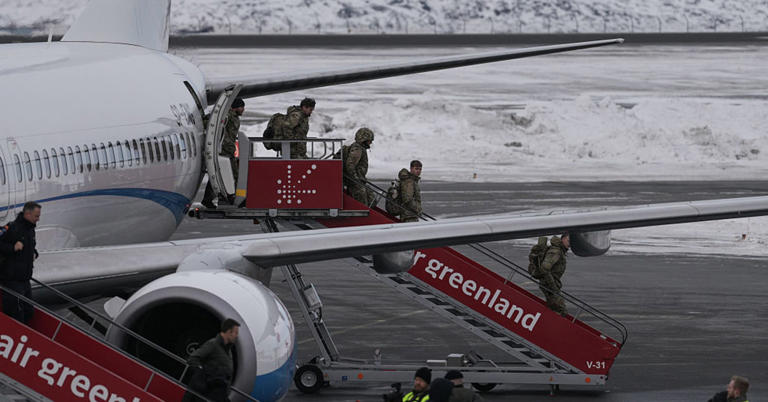
The White House claims the tariff threat is tied to recent troop movements by European allies in Greenland, which Trump characterized as dangerous and destabilizing. The president has suggested that the United States needs Greenland for national security and has repeatedly floated the use of tariffs as leverage — similar to tactics he previously employed in global trade disputes.
European leaders have strongly rejected the ultimatum. European Commission President Ursula von der Leyen framed the dispute as more than trade, calling it a test of Western unity and values.
Danish Prime Minister Mette Frederiksen said the move came as a surprise, noting recent constructive talks with U.S. officials. She denied any hostile intent behind troop deployments in Greenland, describing them as transparent efforts to enhance Arctic security in cooperation with NATO allies.
Other European leaders echoed that message. French President Emmanuel Macron warned that intimidation would not influence Europe’s position, while Sweden’s prime minister said his country would not be “blackmailed.” EU foreign policy chief Kaja Kallas cautioned that the dispute only benefits adversaries like Russia and China by deepening divisions among allies.
The controversy also raises legal and constitutional questions in the United States. President Trump did not cite specific statutory authority for the new tariffs, though analysts say the move appears to mirror his previous use of emergency economic powers. The U.S. Supreme Court is expected to rule as soon as next week on the legality of similar tariffs, potentially putting this latest tranche at risk.
Trade experts warn the episode highlights the instability of unilateral trade threats. Scott Lincicome of the Cato Institute said the announcement underscores the risks of relying on executive power rather than binding international agreements.
The dispute is also straining NATO, the 32-member military alliance built on mutual defense. European leaders have warned that any attempt to seize Greenland by force would irreparably damage the alliance, though some analysts say the tariff threat may signal Trump is shifting away from military options.
On Capitol Hill, bipartisan concern is growing. A U.S. congressional delegation currently visiting Copenhagen pushed back against the president’s narrative, saying there is no immediate security threat in Greenland. Senators from both parties urged de-escalation, warning that tariffs on allies would raise prices for American families while benefiting geopolitical rivals.
Lawmakers emphasized that Denmark and Greenland have expressed willingness to partner with the United States — but not under coercion.
As tensions mount, the future of U.S.–Europe relations, NATO unity, and global trade stability now hang in the balance.
We will continue to follow this developing story.
Developed by Lisa Lomami.