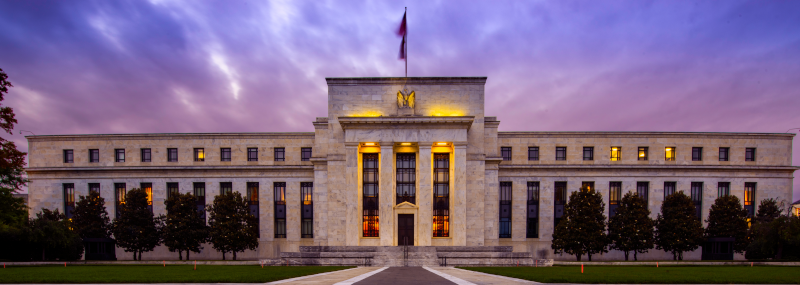
Growing recession concerns are rippling through the U.S. economy after Federal Reserve Chair Jerome Powell signaled that more interest rate cuts may be coming — a move meant to cushion the slowdown in hiring that’s begun to weigh on growth.
Speaking before the National Association of Business Economics in Philadelphia, Powell said that while the ongoing federal government shutdown has disrupted the release of official economic data, the Fed’s outlook for jobs and inflation hasn’t changed much since its last meeting in September — when it made its first-rate cut of the year.
At that meeting, officials projected two more cuts this year and another in 2026 — steps aimed at lowering borrowing costs for Americans taking out mortgages, car loans, and business credit.
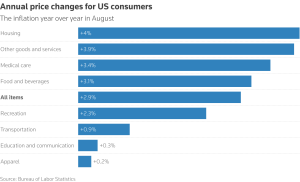
Powell emphasized that the central bank is now more concerned about the weakening job market than about inflation, which currently stands at 2.9 percent, largely due to tariff pressures. He stated, “Rising downside risks to employment have shifted our assessment of the balance of risks.”
Economists say Powell’s comments leave little doubt about the Fed’s next move.
Michael Feroli, chief U.S. economist at JPMorgan Chase, told clients that the remarks were “strong confirmation” that another rate cut is likely at the Fed’s October 28th and 29th meeting.
Powell also hinted that the Fed could soon halt the reduction of its $6.6 trillion balance sheet, a process that’s been quietly shrinking the central bank’s holdings of Treasury and mortgage-backed securities. He said the Fed “may approach that point in coming months.”
Powell also defended the Fed’s controversial bond-buying program from the 2020–2021 pandemic years — a move he said helped stabilize markets and support the economy during a historic crisis.
Critics, including Treasury Secretary Scott Bessent and some close to the Trump administration, argue the policy widened inequality by boosting Wall Street more than Main Street. Powell conceded that, in hindsight, the Fed “could have — and perhaps should have — stopped asset purchases sooner,” but added that doing so likely wouldn’t have changed the overall economic trajectory or prevented post-pandemic inflation.
Powell also addressed recent Senate efforts to strip the Fed of its ability to pay interest on the reserves that banks hold at the central bank — a key tool the Fed uses to control short-term interest rates.
While the proposal was defeated 83 to 14, it drew rare bipartisan backing from both Republicans Rand Paul and Ted Cruz and Democrat Elizabeth Warren. Powell warned that without this authority, the Fed “would lose control over rates” and be unable to carry out its mission of balancing inflation and employment.
As hiring cools and the Fed prepares to act again, all eyes are now on the October meeting, where officials could take the next big step to steady a slowing economy. For now, the message from the Fed is clear — growth is slowing, risks are rising, and rate cuts are on the horizon.
Reporting by Noko David.