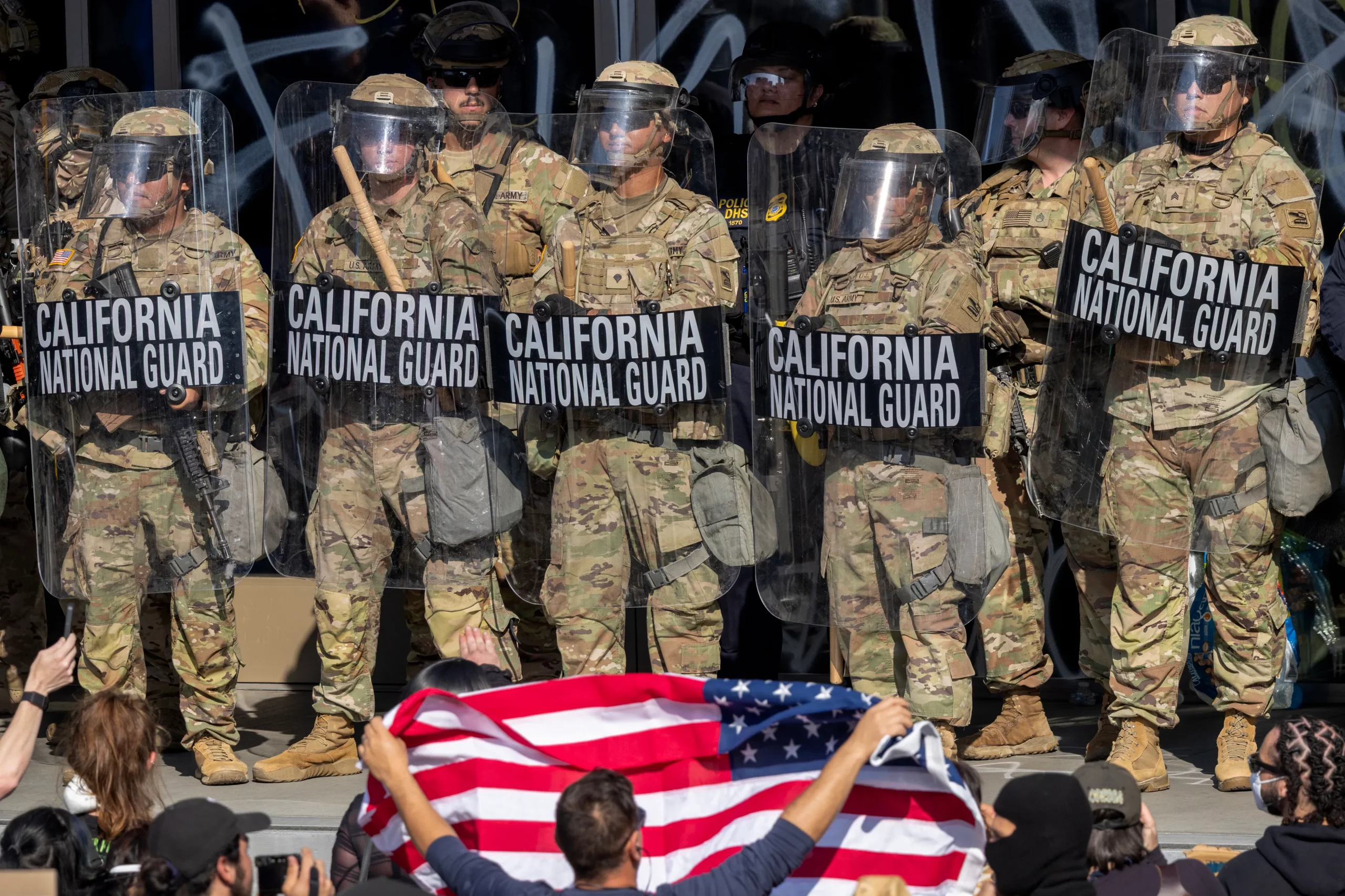
We begin with breaking news out of California, where a major legal battle is brewing over control of the state’s National Guard.
Late Thursday, U.S. District Judge Charles Breyer issued a temporary restraining order against President Donald Trump’s deployment of the California National Guard in Los Angeles. The judge called the president’s move “illegal” and ordered that authority over the Guard be returned to California Governor Gavin Newsom “forthwith.”
But just hours later, a three-judge panel from the U.S. Court of Appeals for the 9th Circuit temporarily blocked that order — effectively putting Judge Breyer’s ruling on hold until at least June 17, when a full hearing is scheduled.
This legal tug-of-war began earlier this week when California officials filed an emergency motion accusing the Trump administration of federal overreach. They argued that using the National Guard for general law enforcement in response to protests amounts to a violation of state sovereignty and the U.S. Constitution’s Tenth Amendment — which reserves policing powers to the states.
Judge Breyer, who is the brother of retired Supreme Court Justice Stephen Breyer, agreed. In a strongly worded opinion, he wrote: “The president’s actions exceed his statutory authority and violate the Tenth Amendment.” He added, “The power to police is a fundamental function of state government.”
California’s legal team argued that the protests across the state — largely peaceful — had been adequately managed by local and state law enforcement. They said Trump’s decision to deploy federalized troops introduced unnecessary risk, escalated tensions, and promoted unrest instead of calming it. In their words: “They’ve brought a warrior culture to American cities — and now they’ve turned their sights on California.”
In response, the Trump administration called the restraining order “unprecedented and dangerous,” arguing that it undermines the Commander-in-Chief’s constitutional role. Officials say the deployment was necessary for national security and to restore order during a time of civil unrest.
The case is now heading to the 9th Circuit Court, and legal experts say it could quickly land before the U.S. Supreme Court, given the constitutional implications and the high-stakes question of state versus federal authority over the National Guard.
For now, Judge Breyer’s order is frozen, but the legal showdown is just beginning.
We will continue tracking every development in this story as it unfolds.
Reporting by Katy Moore.