The heartbreak and horror in Israel continue to mount, as Iranian missile strikes have directly targeted hospitals and residential neighborhoods—leaving devastation, grief, and urgent calls for international action.
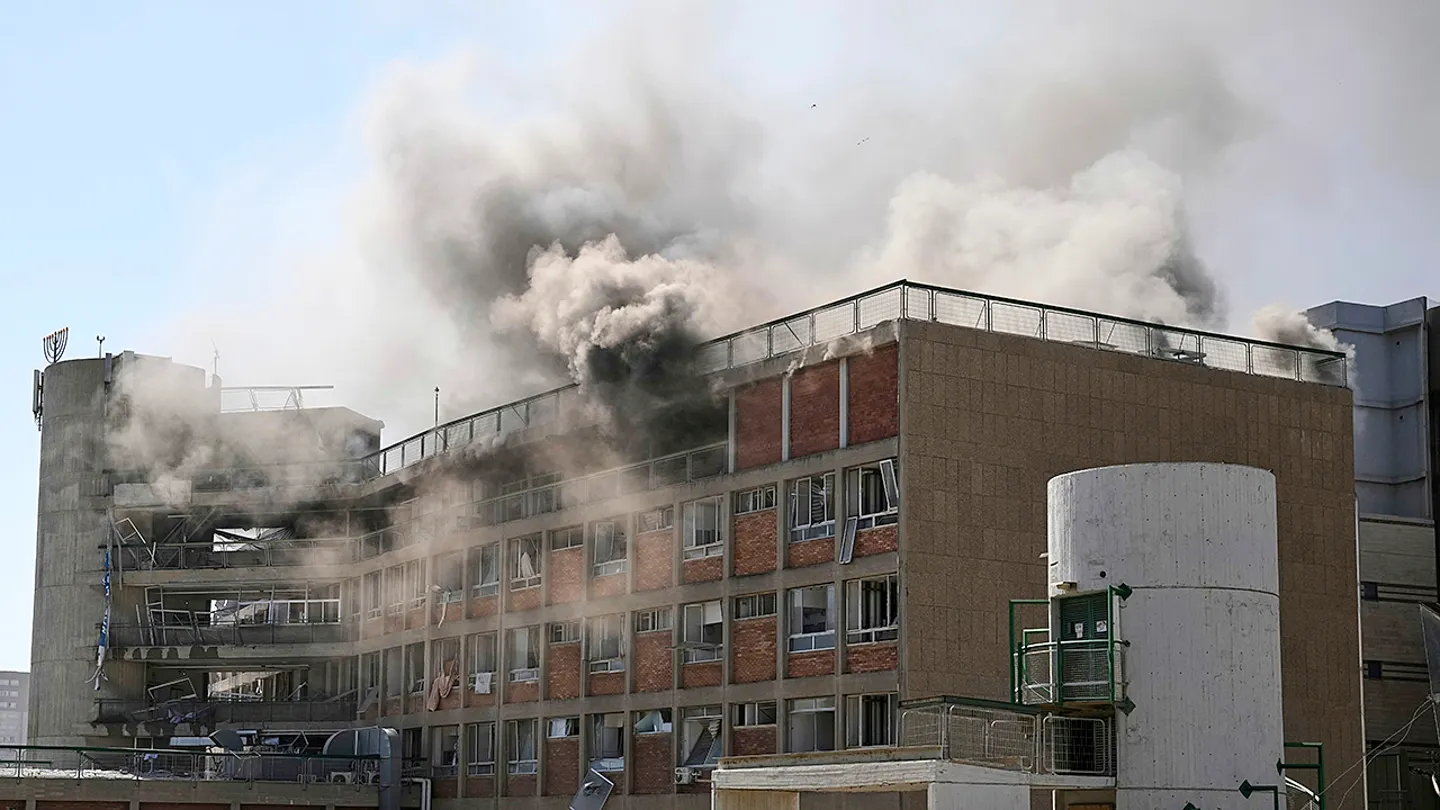
At approximately 5 a.m. local time Thursday, a barrage of Iranian ballistic missiles rained down on central Israel. Among the hardest-hit areas was the city of Be’er Sheva, where Soroka Medical Center suffered a direct strike. The hospital’s pediatric ward was damaged, and at least six people were seriously wounded.
Israeli Prime Minister Benjamin Netanyahu, surveying the aftermath, delivered a stark message: “We are hitting nuclear and missile targets with precision. They are hitting hospitals. That says it all.”
Other cities, including Tel Aviv, Ramat Gan, and Holon, were also struck. In Rishon LeZion, a residential building was obliterated, leaving residents like Ariel Levin-Waldman and his family fighting for survival.
Levin-Waldman recounted the terrifying moments: “There was a flash, then darkness. We couldn’t breathe. I thought we’d be buried alive.” He dug through debris to free his mother-in-law, severely injured when a bookcase hit her, and carved an escape route for his wife and children—one of them just seven weeks old.
Outside, glass shredded his feet as he fled, his infant daughter briefly lost in the chaos. “I was wandering the street, nearly naked, covered in blood, screaming, ‘Where is my child?’” They were later reunited at Sheba Medical Center, along with dozens of others who received emergency and psychological care.
But the horror didn’t end there. Less than a day later, another missile exploded near their temporary shelter in Rehovot, shaking buildings and lives once more.
Since this new phase of hostilities erupted on June 13, Iran’s missile campaign has claimed 24 Israeli lives and injured over 800. The victims are from all backgrounds—Jewish and Arab, young and old, civilians and first responders alike.
In the northern Arab town of Tamra, four women were killed when a missile leveled their home. In Tel Aviv, Israeli opposition leader Yair Lapid narrowly avoided tragedy when a missile shockwave shattered the bedroom of his one-year-old granddaughter—her crib covered in glass.
Lapid told reporters: “This is the enemy we face. A regime intent on wiping us out, targeting even babies. We must eliminate the nuclear and missile threats—for Israel and the world.”
Elsewhere, in Petah Tikva, a large residential building was hit with a missile carrying nearly a ton of explosives. Four people were killed. Coalition lawmaker Hanoch Mildwisky lives just across the street. “The blast left windows hanging from their frames, and walls cracked deep,” he said. “Iran must never be allowed nuclear capabilities. Their intentions are clear, and deadly.”
Even those saving others aren’t immune. Jamal Waraki, a Muslim volunteer with the ZAKA emergency service, had just rescued an elderly man from rubble—only to discover his own home had been destroyed by another strike hours later. Now, he sleeps in his car, waiting for new housing arrangements.
Lihi Griner, a household name in Israel thanks to her stint on Big Brother, shared her harrowing experience when a missile hit her neighborhood: “There was a boom like I’ve never heard. We were in our safe room with the kids. When it ended, we came out to total destruction. Walls cracked, windows blown out, balconies gone.”
Despite the destruction, many families—like Griner’s—are taking it one day at a time, focusing on survival and the small victories.
And for the Levin-Waldman family, one such moment came four days after the attack—when they received a call from the city of Rishon LeZion. Their beloved dog, Zvika, had been found alive. A small beacon of hope amid the ruins.
As this conflict rages on, one truth is becoming increasingly clear: Iranian missiles are not just striking military infrastructure—they are hitting homes, hospitals, and hearts. The human cost is profound, the danger ongoing, and the response—according to Israel—must be decisive.
We will continue to monitor this story closely.
Reporting Carl Montel