
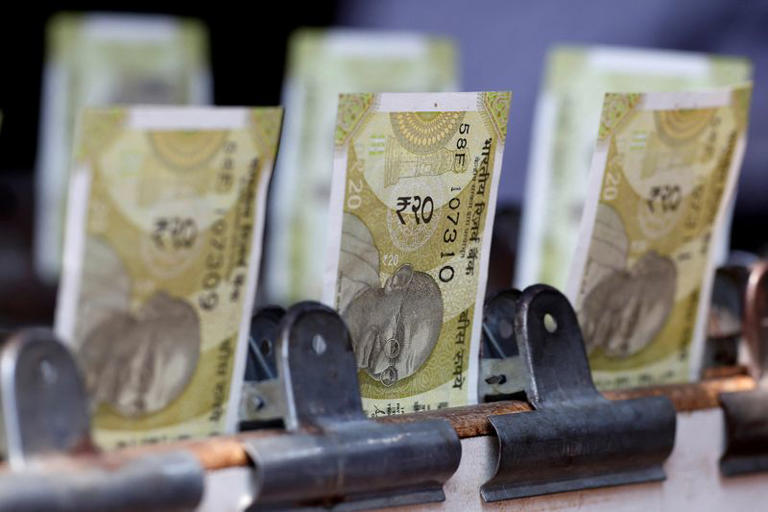
The Indian rupee looks set for a rebound this Tuesday as the U.S. dollar falls to its lowest point in nearly four months, easing pressure on the struggling currency. The dollar’s decline is being driven by a strengthening Japanese yen and growing market uncertainty linked to unpredictable U.S. policy moves under President Donald Trump.
After closing at 91.94 against the dollar last Friday, the rupee is expected to open between 91.68 and 91.72. Indian markets were closed on Monday for a public holiday. The rupee slipped over 1% last week, approaching the 92-per-dollar mark for the first time in recent memory, fueled by heavy equity outflows which have now totaled nearly $4 billion this January alone.
Experts highlight that the rupee’s slide isn’t just due to portfolio withdrawals; rising bullion imports have further exacerbated demand for foreign currency. This has increased expectations of further depreciation, fueling a cycle of growing dollar demand.
Indian companies have been ramping up their currency hedging, while speculators have increased their long-dollar bets, creating a feedback loop that continues to weigh on the rupee, according to bankers monitoring the market.
Despite ongoing depreciation, the Reserve Bank of India (RBI) has been actively intervening, supplying dollars at multiple levels rather than defending any specific exchange rate, a strategy confirmed by Abhishek Goenka, founder and CEO of India Forex Advisors. He noted, “The RBI’s current approach indicates a clear policy priority: to support economic growth rather than aggressively defending the currency.”
The dollar’s slump stems from a combination of factors, including the yen’s rally, looming concerns about a potential U.S. government shutdown, and uncertainty over Trump’s policy decisions, all of which have softened demand for the greenback globally.
In addition to these market dynamics, the RBI took further steps last Friday to inject over $23 billion in liquidity into the banking system, including a $10 billion buy/sell foreign exchange swap facility, aimed at easing pressure on the rupee.
Adding to the positive sentiment, India and the European Union recently concluded negotiations on a landmark trade agreement, a significant development especially amid strained relations with the United States.
Reporting by Noko David.