President Donald Trump’s recent whirlwind trip through the Middle East has sparked debate and deep reflection in Israel—not for what was said, but for what wasn’t. Despite skipping a stop in Israel, Trump’s visit is being seen by many experts as a game-changing opportunity for the Jewish state—if its leaders are willing to seize it.
While Air Force One did not land in Tel Aviv, the message from Washington was unmistakable: support for Israel remains firm. From Riyadh to Doha, President Trump echoed Israeli priorities, condemning the October 7 Hamas attacks, urging Saudi Arabia to join the Abraham Accords, and warning Iran against pursuing nuclear weapons. He even floated the idea of turning Gaza into what he called a “freedom zone,” suggesting U.S. involvement in postwar governance.
Speaking to Fox News Digital, Avner Golov of MIND Israel described the region as being on the brink of transformation.
“A wave is coming,” he said. “And Israel must choose—ride it or be swept under.”
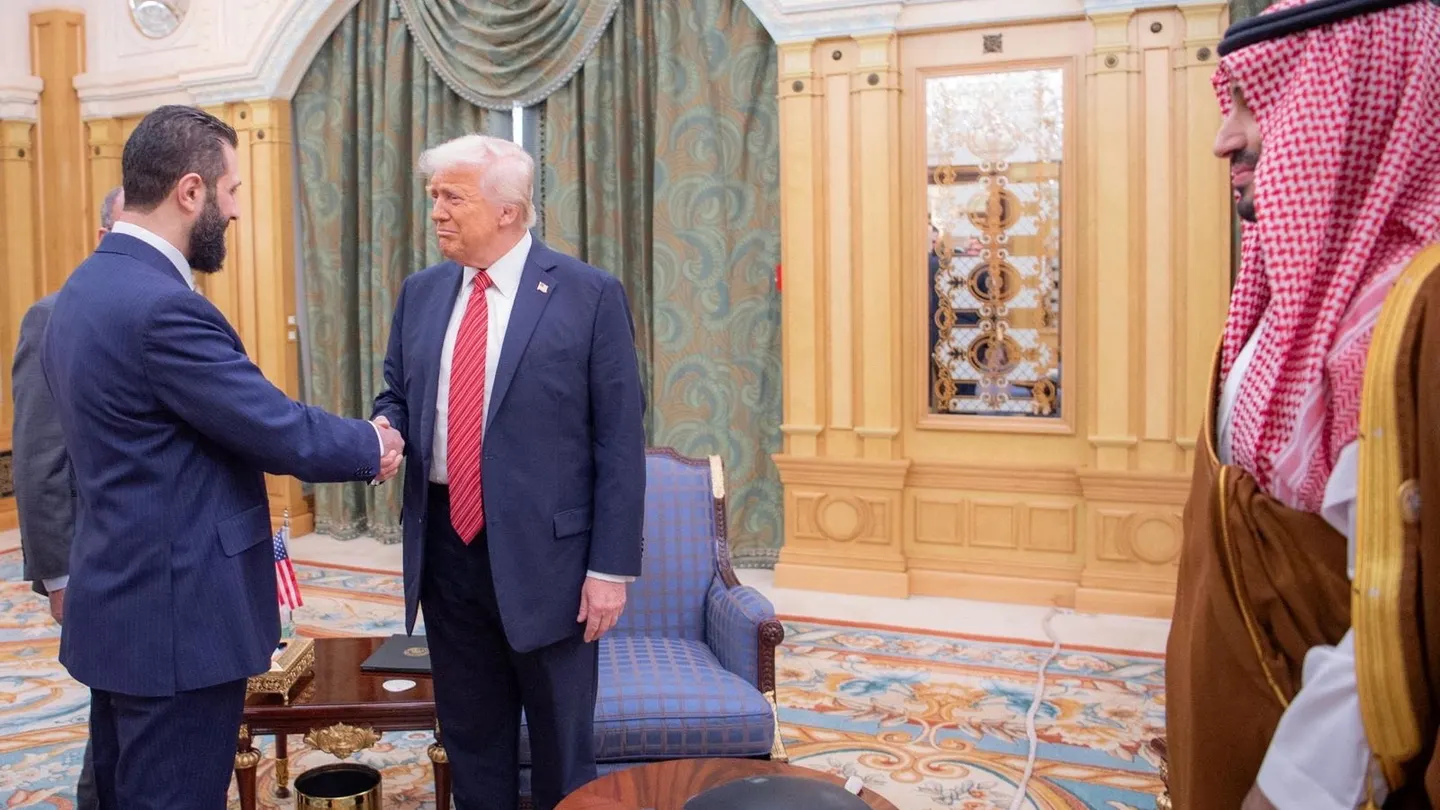
While Trump did not meet directly with Israeli officials during the trip, Secretary of State Marco Rubio was in direct contact with Prime Minister Benjamin Netanyahu. According to a State Department readout, the U.S. reaffirmed its “ironclad” support for Israeli security and its opposition to a nuclear-armed Iran—following what was described as a historic meeting between Trump and Syria’s President Ahmed al-Sharaa in Saudi Arabia.
Still, the optics were hard to miss. Channel 12’s Amit Segal noted the discomfort within Israel as Air Force One soared over its airspace en route to meetings in countries historically hostile to the Jewish state.
“This isn’t personal,” Segal said. “It’s not Trump vs. Netanyahu. It’s America First—Trump makes decisions based on U.S. strategic interests.”
Analysts warn, however, that Israel may be letting critical opportunities slip away. Former Israeli intelligence chief Tamir Haiman said that while developments in Saudi Arabia and Syria aren’t necessarily bad for Israel, inaction could make them so. Haiman emphasized that Israel had leverage to shape arms deals and policy direction—but failed to use it.
“We had two levers—our consent on U.S. arms to Saudi Arabia and America’s on lifting sanctions on Syria,” he said. “Both were lost.”
The urgency increased following Trump’s reported pause on U.S. airstrikes against Iranian-backed militants after a missile landed near Tel Aviv. Soon after, the administration quietly removed Israeli–Saudi normalization as a requirement for a separate U.S.–Saudi nuclear deal.
Inside Israel, debates rage over the Gaza war. While some leaders push to keep military pressure on Hamas, others call for a ceasefire to secure the release of remaining hostages. One of them, 21-year-old American Israeli Edan Alexander, was freed this week in a deal brokered by the U.S., Qatar, and Hamas—with Israel playing a minor role.
Some Israeli officials are now warning that Washington’s back-channel diplomacy risks sidelining Israel at a pivotal moment.
Golov argues that it’s time for Israel to stop reacting and start influencing events. That includes pressuring Washington to hold Qatar accountable for allegedly funding Hamas and amplifying incitement through Al Jazeera.
“We can’t do that alone,” Golov said. “We need to anchor ourselves in a regional alliance—with Saudi Arabia, the UAE, Jordan—countries equally threatened by a rising Muslim Brotherhood.”
The underlying message? Trump may have opened the door, but it’s up to Israel to walk through it.
Reporting by Carl Montel