Calls to boycott this summer’s World Cup are gaining momentum, as mounting criticism targets the United States ahead of its role as co-host of the global tournament alongside Canada and Mexico.
With kickoff scheduled for June 11 and the final set for July 19 at MetLife Stadium in New Jersey, concern is spreading across the international soccer community over U.S. immigration policies, foreign policy posture, and the Trump Administration’s growing influence within FIFA.
The latest spark came from Swiss attorney Mark Pieth, who once oversaw FIFA reform efforts, urging fans to avoid traveling to the United States altogether. In an interview with a Swiss newspaper, Pieth warned that political repression and aggressive immigration enforcement could put visiting fans at risk.
“You’ll see it better on TV anyway,” Pieth said, adding that travelers who run afoul of authorities could be swiftly deported.
His remarks quickly reverberated across the soccer world. Former FIFA President Sepp Blatter amplified Pieth’s warning on social media, publicly questioning whether the World Cup should proceed under current conditions. While Blatter himself remains a controversial figure, his comments added fuel to a debate that is now reaching lawmakers, federations, and fans alike.
Critics of the tournament point to what they describe as a violent immigration crackdown under the Trump Administration, recent travel bans, expansionist rhetoric toward Greenland and Venezuela, and sweeping tariffs imposed on U.S. trading partners. They argue these policies undermine the spirit of an international sporting event meant to unite nations.
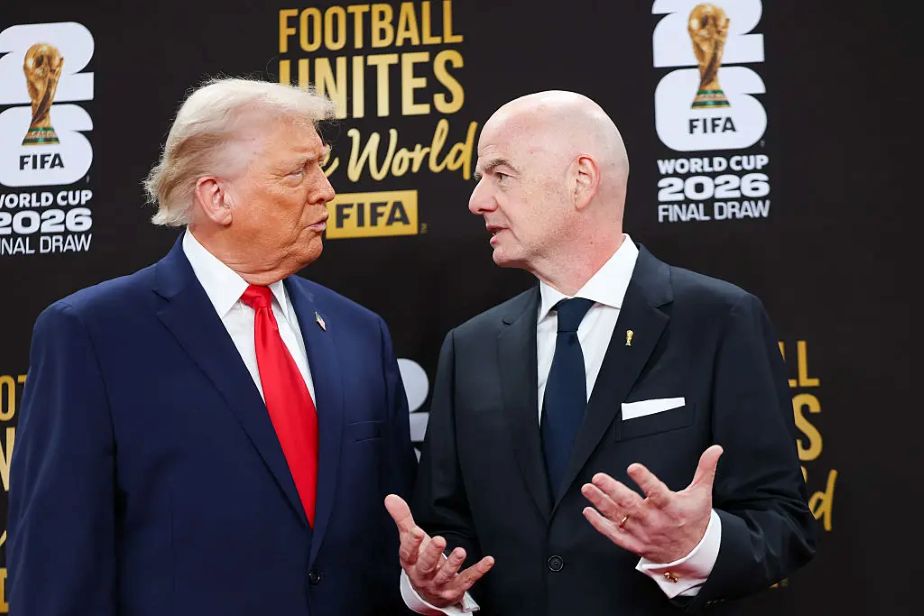
At the same time, scrutiny has intensified around the close relationship between President Trump and FIFA President Gianni Infantino. Trump has been repeatedly honored by FIFA leadership, including receiving a newly created FIFA Peace Prize, while FIFA has opened an office inside Trump Tower in New York. A replica of the World Cup trophy has also been displayed in the Oval Office for years.
Despite efforts by the U.S. government to reassure visitors—including a fast-tracked visa program for ticket holders and the creation of a federal World Cup task force—international unease continues to grow.
In Germany, senior soccer official Oke Göttlich said it is time to seriously consider a boycott, drawing parallels to Cold War–era Olympic boycotts. Several German lawmakers echoed that sentiment, warning that escalating tensions—particularly Trump’s push to assert control over Greenland—could force national teams to reconsider participation.
Similar calls are emerging elsewhere in Europe. British lawmakers have suggested that England, Scotland, and Wales consider boycotting the tournament as a political statement, while French officials on the left have floated the idea of moving matches entirely to Canada and Mexico.
Public sentiment appears divided but increasingly vocal. Nearly half of respondents in a recent German poll said they would support a boycott if the U.S. pursued territorial claims over Greenland. In the Netherlands, more than 150,000 people have signed a petition urging their national team to stay home in protest of U.S. foreign policy.
For some fans, the decision may already be made for them. New U.S. travel restrictions affecting dozens of countries—including Senegal, Iran, Haiti, and Ivory Coast—could prevent supporters from attending, even if their teams qualify.
Despite the growing chorus of concern, history suggests a boycott remains unlikely. Previous World Cups have gone ahead despite widespread outrage, including the 2022 tournament in Qatar amid allegations of labor abuses. No major national federation ultimately withdrew.
French Sports Minister Marina Ferrari underscored that reality this week, saying there is currently no official push to boycott and emphasizing the importance of keeping sport separate from politics.
Still, as geopolitical tensions rise and the countdown to kickoff continues, pressure on FIFA and participating nations is intensifying—raising questions about whether the world’s biggest sporting event can truly remain insulated from global politics.
Reporting by Kana Malory