
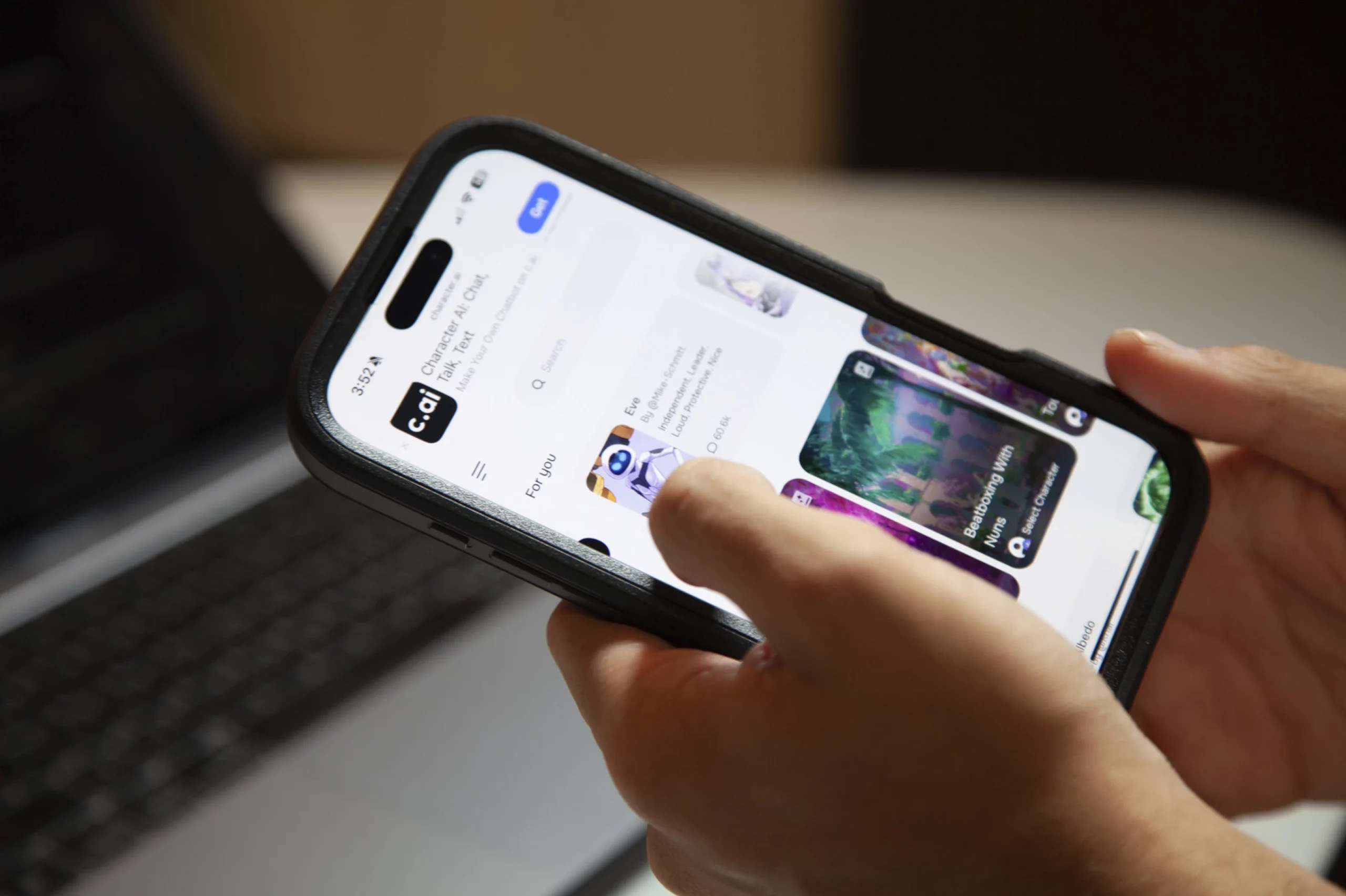
A new digital frontier is unfolding in the lives of teenagers across America. It’s not social media or gaming, this time it’s artificial intelligence. A growing number of teens are turning to AI not just for help with homework or online searches, but for something much more personal: companionship.
Fifteen-year-old Kayla Chege, a high school sophomore from Kansas, chats with AI daily, asking about everything from school supplies to smoothie recommendations. But she’s not alone. A new study from Common Sense Media reveals that over 70% of teens have tried AI companions and half of them use them regularly.
These digital friends, like Replika or Character.AI — are designed to simulate conversations, emotions, even empathy. And many teens say they now feel more comfortable opening up to AI than to real people.
[ Ganesh Nair, 18, Arkansas]
“AI is always available. It never gets bored with you. It never judges.”
That was Ganesh Nair, an Arkansas teen who used to enjoy the emotional comfort AI offered until a friend used a chatbot to break up with his girlfriend. Nair called it “dystopian” a warning sign of how far this technology might go in replacing human connection.
[Infographic – Common Sense Media AI Teen Survey]
-
31% of teens say chats with AI are as fulfilling as talking to friends
-
33% have discussed serious issues with AI instead of real people
-
Half say they don’t trust AI’s advice but still use it
Researchers, including Dr. Michael Robb of Common Sense Media, say these results are startling. Adolescence, they argue, is a vital time to build emotional intelligence, something AI, no matter how smart, can’t truly teach.
[Dr. Michael Robb]
“If teens only talk to AI, they miss learning how to read facial expressions, negotiate conflict, or consider other perspectives.”
The study also highlights real dangers: weak age restrictions, exposure to inappropriate content, and a dependency that could stifle creativity and critical thinking.
[Dr. Eva Telzer, UNC Chapel Hill]
“Even 8-year-olds are using AI now. Many parents have no idea. This is moving fast — faster than any of us expected.”
Among the most concerning findings? Teens are using adult-oriented AI apps like SpicyChat to explore their identities. Others, like 17-year-old Bruce Perry, say they lean on chatbots for schoolwork, outfit choices, even crafting emails — sometimes instead of thinking for themselves.
[Soundbite – Bruce Perry, 17, Arkansas]
“If you tell me to plan an essay, I’d open ChatGPT before picking up a pencil.”
And what about the future? Teens like Perry and Nair worry that kids growing up with AI companions may lose motivation to engage in real-world friendships, outdoor play, or emotional resilience.
Nair says while social media let teens be seen, AI now fulfills a deeper longing: to be understood. But that, he warns, may come at a cost.
“AI is the new addiction,” he says. “It’s replacing connection with simulation.”
As the digital landscape evolves, one thing is clear, artificial intelligence is no longer just a tool. For many teens, it’s becoming a companion, a guide, and in some cases, a substitute for human relationships.
From Kansas to Arkansas and beyond, young people are navigating this brave new world. And experts say now is the time for families, educators, and policymakers to catch up.
Reporting by Katy Moore.