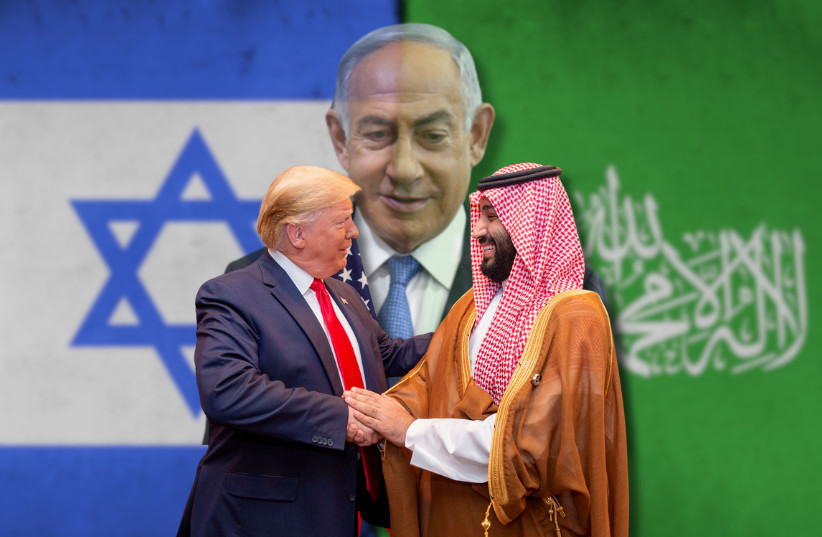
We turn to the Middle East, where shifting U.S. foreign policy is raising questions about America’s role as an ally to Israel. As President Donald Trump prepares for a high-profile visit to Saudi Arabia next week, concerns are growing over the direction of U.S.-Saudi nuclear talks — and whether Israel’s security interests are being left behind.
During the Biden administration, American officials made it clear to Saudi Arabia: any deal allowing the Kingdom to develop a civilian nuclear program would require a peace agreement with Israel. But now, according to a Reuters report, President Trump is breaking from that approach, separating the nuclear issue from the push for Israeli Saudi normalization.
This shift removes a key incentive that Washington once used to encourage a historic peace deal between Riyadh and Jerusalem.
Adding to Israeli worries, Trump is expected to finalize a multibillion-dollar arms deal with Saudi Arabia during his upcoming visit — another condition the Biden administration had previously tied to normalization efforts.
(photo credit: CHAIM GOLDBERG/POOL, REUTERS, SHUTTERSTOCK)
Earlier this week, Israeli leaders were reportedly caught off guard when Trump announced from the Oval Office that he had struck a deal with Yemen’s Houthi rebels: the U.S. would stop targeting them, and they would stop firing on American ships. Notably, Israel was left out of those talks.
The big question now: will Trump’s team consult with Israeli officials as Saudi Arabia moves forward on its nuclear ambitions? Under Biden, key figures like senior advisor Brett McGurk and envoy Amos Hochstein regularly engaged with Israeli leaders, including Prime Minister Benjamin Netanyahu and opposition leader Yair Lapid. But this time, it’s unclear whether the same level of coordination will happen.
Republican voices are also divided. Senator Lindsey Graham has stated firmly that he won’t support any defense pact with Saudi Arabia unless it includes normalization with Israel. Yet others within the party warn that if the U.S. doesn’t support Riyadh’s civilian nuclear plans, China might step in — offering the Saudis’ technology with no restrictions or safeguards.
As tensions rise and alliances shift, it has been a challenging week for U.S.-Israel relations under Trump’s leadership. With the president’s trip to Riyadh just days away, Israeli officials — and much of the world — are watching closely to see whether any announcements will bring positive news for the region.
We will continue to follow these developments and bring you the latest.
Reporting by Carl Montel.