
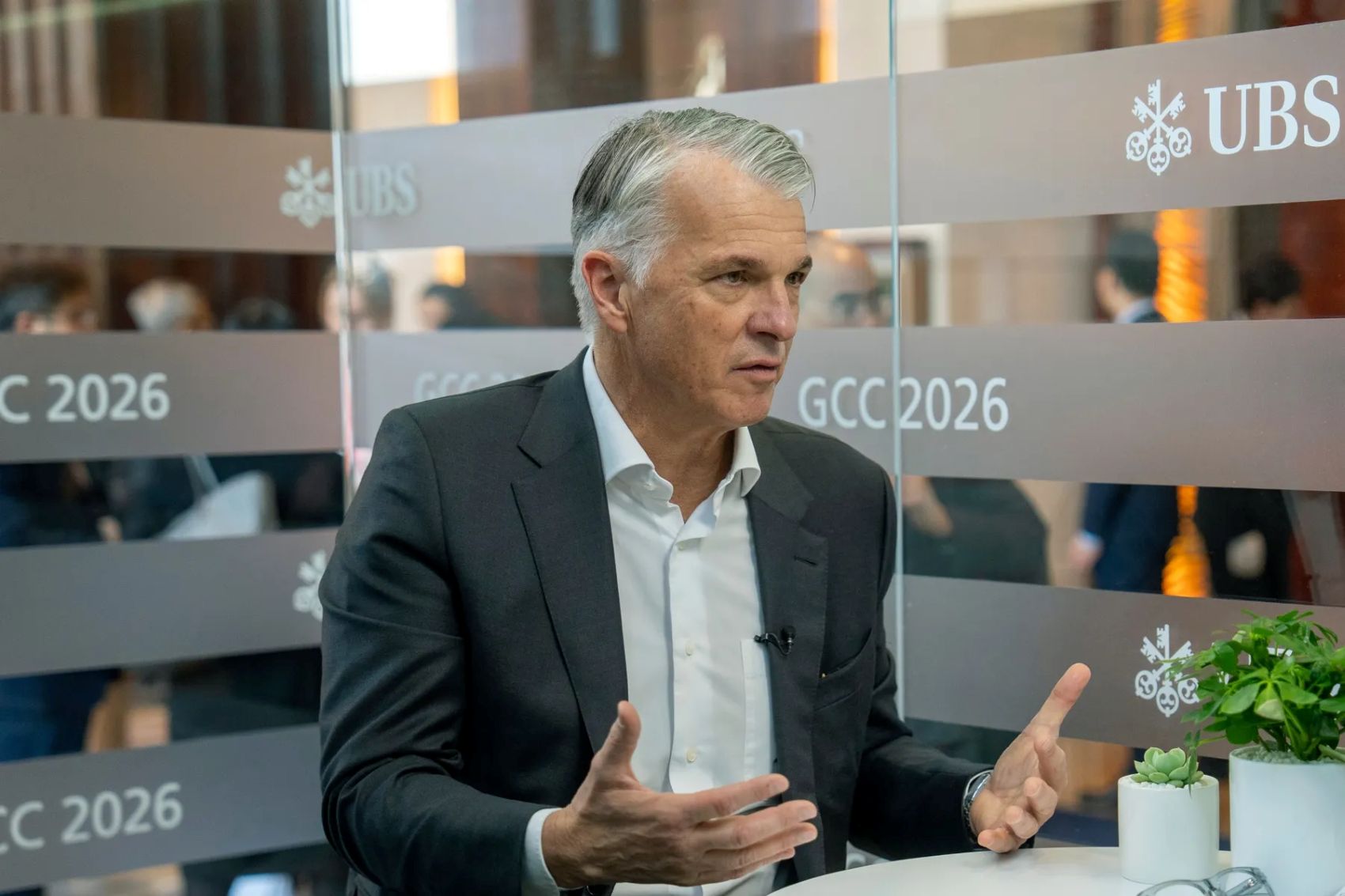
The chief executive of UBS, Switzerland’s largest bank, is warning that proposed changes to the country’s banking rules could go too far and threaten both competitiveness and economic growth.
Speaking to Bloomberg TV from Shanghai, UBS CEO Sergio Ermotti said the Swiss government’s planned banking reforms risk overreaching, adding that UBS needs a regulatory framework that allows it to compete globally.
Ermotti described the reform debate as a political process and said he expects more clarity later this year. While he acknowledged growing political interest in fully understanding the proposals, he said there is no guarantee the final outcome will be acceptable to UBS.
At the center of the dispute are proposed rules that could require UBS to hold up to 26 billion dollars in additional capital, following its takeover of Credit Suisse. UBS leadership has warned that, in its current form, the plan could damage Switzerland’s economy and jeopardize the bank’s business model.
Swiss lawmakers are now exploring compromise options, including allowing UBS to use AT1 bonds to meet part of its capital requirements—an approach that would reduce the need for more costly common equity.
UBS has been reviewing strategic options since last year, including discussions with U.S. officials about a possible relocation of its headquarters, though Ermotti stressed the bank remains proud of its Swiss identity.
While regulatory uncertainty clouds UBS’s outlook at home, Ermotti struck an optimistic tone on Asia, where the bank is accelerating growth. UBS plans to hire about 100 new staff in wealth management across the region this year, increase capital in China, and issue a so-called Panda bond to raise funds locally.
The bank is also expanding further in Japan, across wealth management, investment banking, and other core businesses. According to Ermotti, Asia has become UBS’s strongest growth engine, contributing 25 to 30 percent of group profits in recent years. Total invested assets in the Asia-Pacific region now exceed one trillion dollars.
Meanwhile, UBS is nearing the final phase of integrating Credit Suisse, with global clients expected to migrate to UBS systems by the end of the first quarter. Some IT systems and data centers will be shut down, leading to job cuts. Ermotti said the bank plans to limit redundancies to fewer than 3,000 positions by early 2027.
Reports suggest Ermotti plans to step down as CEO in April 2027, once the Credit Suisse integration is fully completed.
As Switzerland debates how tightly to regulate its biggest bank, UBS is balancing domestic pressure with global expansion—at a critical moment for the country’s financial sector.
Reporting by Noko David.