We begin with breaking developments from the U.S. Federal Reserve. Despite mounting political pressure from former President Donald Trump, the Fed is holding its ground, quite literally by keeping interest rates steady for the fifth consecutive time this year.
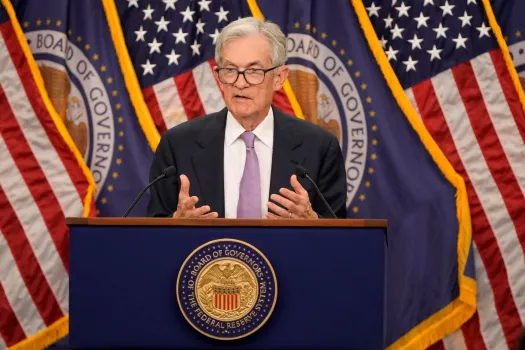
At the center of the monetary standoff is Federal Reserve Chair Jerome Powell. Speaking at a press conference earlier today, Powell signaled that the Fed will take a wait-and-see approach before making any changes, especially in response to ongoing economic uncertainties, including the impact of recent tariffs championed by the Trump administration.
Jerome Powell, Fed Chair: “We’ve learned the process is probably going to be slower than expected. We still have a long road ahead in assessing how tariffs are affecting inflation and overall economic growth.”
The benchmark interest rate remains at approximately 4.3%, a decision backed by nine members of the Federal Open Market Committee — including Powell. But not everyone agreed. In a rare public split, Fed Governors Christopher Waller and Michelle Bowman voted to cut rates, the first time in more than three decades that two Washington-based governors dissented in a single decision.
Powell’s cautious tone dashed hopes for a rate cut as soon as September. Following his remarks, the likelihood of a cut at the Fed’s next meeting fell from nearly 60% to just 45%, according to CME FedWatch data essentially flipping a coin on Wall Street. Major U.S. markets reacted immediately, turning red in the wake of Powell’s comments.
Lauren Goodwin, Chief Strategist, New York Life Investments: “The markets clearly interpreted Powell’s tone as a step back from a September rate cut.”
The Fed is walking a tightrope between curbing inflation, which remains above its 2% target, and protecting a job market that, while still resilient, is showing signs of cooling. The latest inflation reading is due tomorrow, with expectations pointing to a 2.7% annual increase in core prices.
While Trump has repeatedly called on the Fed to lower rates to stimulate growth, Powell made it clear that premature action could backfire, potentially overheating the economy. Trump’s latest call came just as the second-quarter GDP was released, showing a healthy 3% growth rate though it follows a 0.5% contraction in Q1.
The political intrigue doesn’t stop there. Analysts believe today’s dissenting votes may be more than economic in nature. Fed watchers say Waller and Bowman could be positioning themselves as contenders to succeed Powell, whose term ends in 2026.
Michael Feroli, JPMorgan Chase Economist: “These votes may say more about auditioning for the Fed chair seat than about the actual economy.”
The future of interest rates now hangs on three remaining Fed meetings this year — in September, October, and December. Though projections from June indicated two rate cuts by year’s end, Powell emphasized that no decisions have been made yet.
As for the job market, concerns persist. June’s private-sector job growth — excluding government hires — was modest, with only 74,000 new positions, mainly in health care. Economists like Tom Porcelli of PGIM warn the labor landscape may be weaker than it appears.
Tom Porcelli, PGIM Fixed Income: “We’re in a much slower hiring environment than most people realize.”
Whether the Fed’s resistance will hold, or whether Trump-aligned voices will shift the balance, remains to be seen. For now, borrowing costs on mortgages, car loans, and credit cards are unlikely to ease anytime soon.
Stay with SNEWS TV for the latest from Washington and beyond.
Reporting by Noko David.